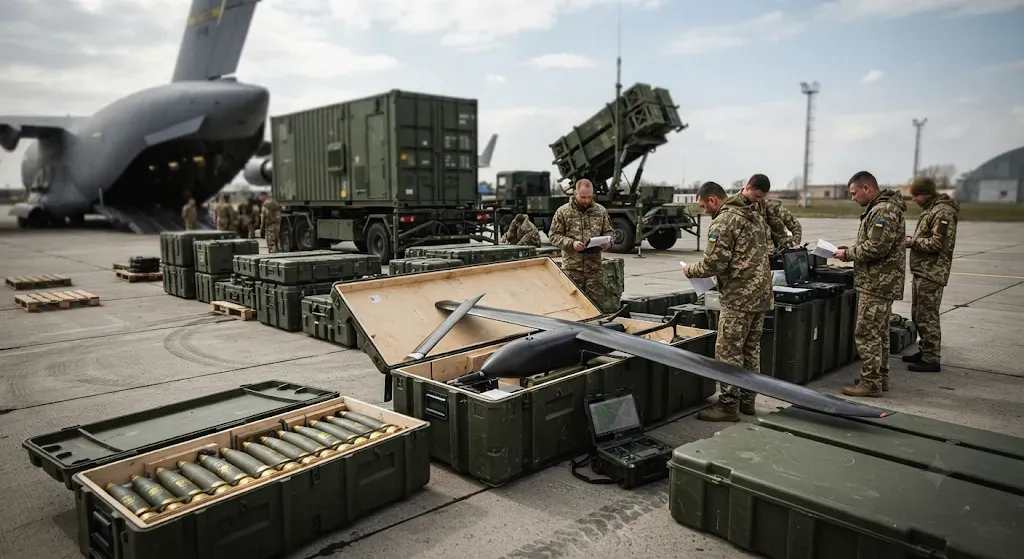
BELGIUM; UKRAINE —The European Commission executed a capital disbursement of EUR 1.71 billion directed toward Ukraine's military supply chains. This financial allocation operates within the structured parameters of an ongoing €90 billion support mechanism established earlier in the year. Funding is earmarked specifically for the acquisition of tactical uncrewed aerial systems, artillery munitions, and advanced air defense apparatuses, encompassing early-warning radar arrays and interceptor missiles. Approximately two-fifths of this capital stream is channeled directly into procurement contracts with industrial manufacturers based inside member states of the European Union, while the remainder supports domestic Ukrainian production capabilities.
This financial transfer underscores a systematic effort to accelerate military equipment delivery schedules amid ongoing regional conflict. By embedding local manufacturing mandates alongside EU-based defense contractors, the funding mechanism seeks to fortify cross-border industrial integration and secure steady logistics pipelines. This latest capital release represents the eighth tranche deployed under the defense component of the overarching financial program, reflecting an accelerated disbursement schedule designed to address immediate capability gaps on the ground.
Defense equipment manufacturers, aerospace contractors, and supply chain operators across Europe face heightened production demands as a direct result of these sustained capital infusions. The policy framework actively incentivizes joint ventures and technological alignment between domestic defense firms and external suppliers, altering long-term procurement strategies. For regional policymakers and regulatory bodies, managing these large-scale capital flows requires strict compliance audits and continuous oversight to ensure operational milestones are achieved without administrative bottlenecks.
Capital markets and institutional investors are increasingly factoring geopolitical risk premiums and defense sector allocations into portfolio valuations. The integration of regional supply chains creates new revenue visibility for tier-one and tier-two industrial component suppliers. However, tight delivery timelines and capacity constraints within the manufacturing base introduce execution risks that stakeholders must monitor closely as subsequent funding tranches are deployed over the upcoming operational cycles.