UNITED STATES OF AMERICA —A federal funding package totaling 12 million dollars has been allocated for critical municipal water network upgrades in Fort Smith, Arkansas. The initiative focuses on mitigating systemic vulnerabilities tied to aging transmission pipelines that pose continuous operational risks to the regional drinking water network. The U.S. Environmental Protection Agency (EPA) operates as an independent executive agency of the United States federal government tasked with environmental protection matters. John Boozman serves as a United States Senator representing the state of Arkansas in the federal legislature.
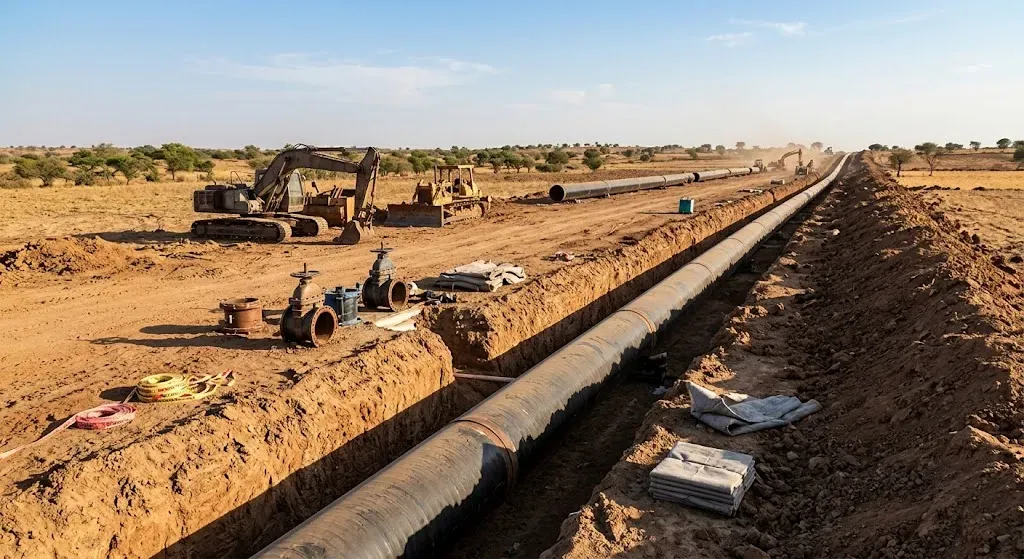
The core engineering scope centers on the deployment of approximately three miles of 48-inch-diameter raw water transmission infrastructure stretching from Crawford County directly into the municipal boundaries of Fort Smith. This capital expenditure addresses long-standing vulnerabilities associated with legacy water delivery networks, aiming to eliminate potential service disruptions for residential and industrial end-users across the wider regional valley. Financing for the overhaul is sourced directly through designated Congressional Directed Spending allocations, following the fulfillment of necessary regulatory and administrative obligations by local municipal authorities.
Regional municipal utility providers and civil engineering stakeholders face a pressing mandate to modernize legacy municipal utility networks to accommodate sustained demographic expansion and industrial scaling. Chronic deterioration in underground fluid transmission assets routinely compromises baseline system resilience, elevating the probability of widespread service interruptions. Targeted capital injections into bulk raw water transport systems directly mitigate these operational vulnerabilities, aligning municipal utility management frameworks with federal environmental standards regarding long-term resource security.
Capital allocators and municipal bond investors view targeted federal infrastructure grants as a critical mechanism for stabilizing local public utility balance sheets without escalating local debt burdens. By securing non-repayable Congressional Directed Spending for heavy civil engineering projects, municipal governments insulate regional ratepayers from steep utility rate hikes while enhancing regional economic competitiveness. Industrial operations and commercial enterprises dependent on uninterrupted high-volume water access benefit significantly from the structural risk reduction achieved through modernized transmission pipelines.