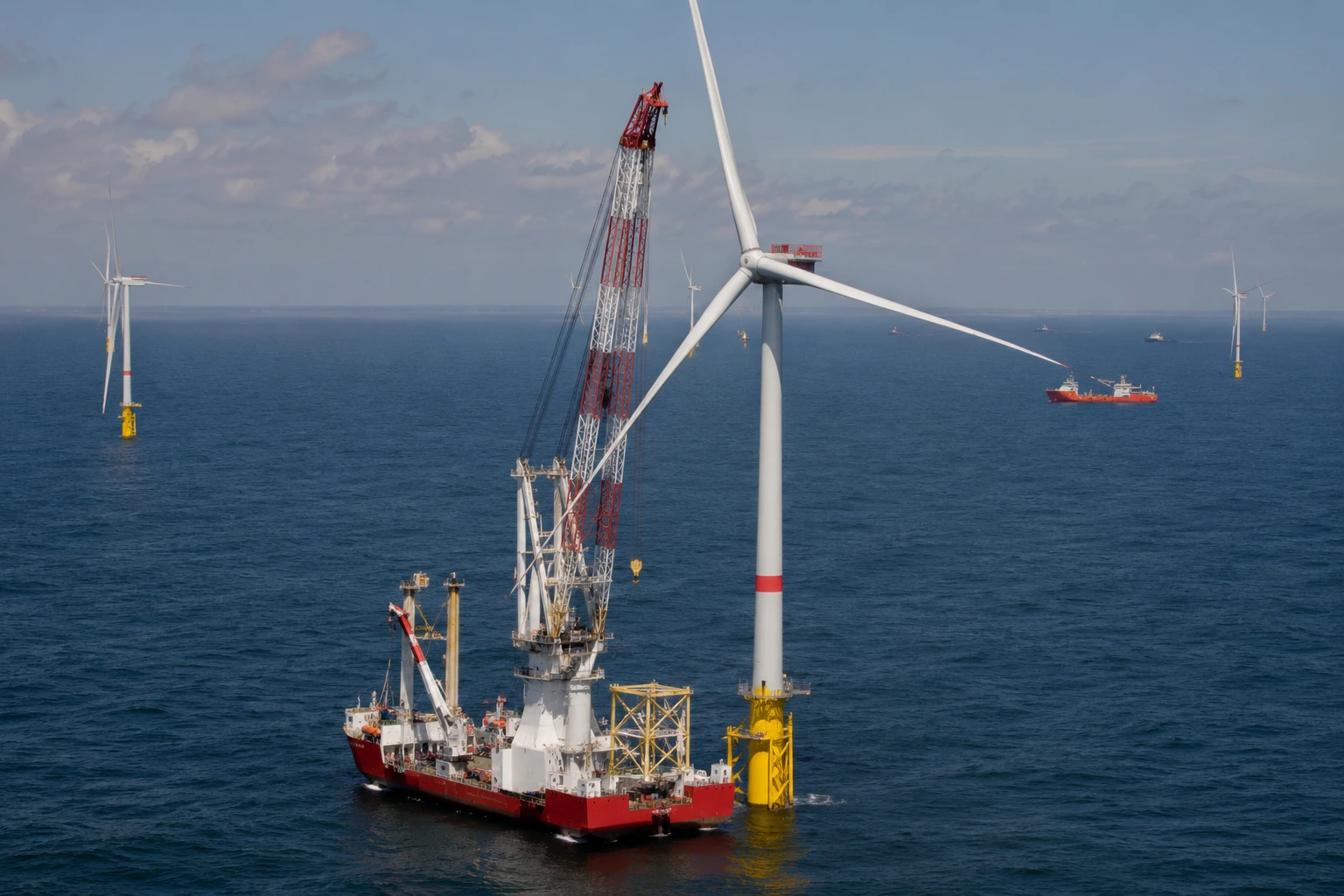
UNITED KINGDOM —Developers and regulators aiming to deploy commercial-scale floating offshore wind turbines in the Celtic Sea face stringent environmental compliance and consenting requirements. To address ecological data gaps, a three-year underwater acoustic monitoring project valued at £2.7 million has been initiated off the coast of the United Kingdom. Deploying seabed recording stations across key marine locations will generate a continuous baseline dataset of underwater noise and wildlife behavior, helping de-risk infrastructure investments and accelerate project approvals.
The initiative, known as the SubSea Soundscape project, is funded through The Crown Estate’s Offshore Wind Evidence and Change programme and executed by a consortium including the Offshore Renewable Energy Catapult, Celtic Sea Power, and the University of Exeter. The Offshore Renewable Energy Catapult is a UK-based technology innovation and research center dedicated to accelerating the development of offshore renewable energy technologies. Celtic Sea Power is a regional body established to build local supply chains and drive the commercialization of floating offshore wind energy in the Celtic Sea region.
Standard environmental surveys often operate on localized spatial frameworks, making it difficult to capture the wide-ranging movements of marine mammals across extensive sea areas. By utilizing a network of seabed acoustic sensors spaced roughly 20 kilometers apart, the project establishes a regional monitoring grid. This macro-level acoustic mapping approach enables statutory authorities and offshore developers to evaluate cumulative environmental impacts, optimizing marine spatial planning and minimizing ecological disruptions during turbine construction and operation.
Accelerating environmental impact assessments is vital for hitting national clean energy targets and unlocking commercial capital in floating wind infrastructure. Public access to this standardized marine acoustic data will reduce survey duplication costs for private developers while shortening regulatory review cycles. The initiative strengthens supply chain confidence across the United Kingdom's maritime and offshore energy sectors, offering a replicable blueprint for balancing ocean energy expansion with ecological protection.