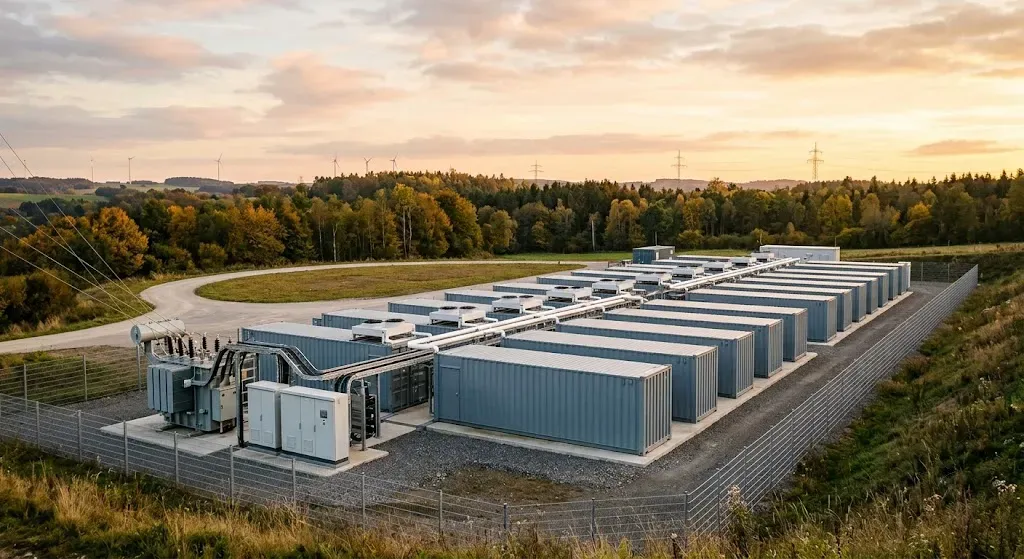
GERMANY —Flower German Tolling has concluded the final phase of a portfolio transaction by acquiring two operational battery storage assets in Germany. The transaction encompasses a 12.5 megawatt facility offering 40 megawatt-hours of storage capacity located in Borken within the Hesse region, alongside a larger 48 megawatt installation with 120 megawatt-hours of capacity situated in Berga, Thuringia. These assets were originally secured through agreements established with renewable energy developer Chint Solar Europe. This latest closure incorporates a combined 60.5 megawatts and 160 megawatt-hours of capacity into the company's regional deployment, successfully fulfilling a broader 112-megawatt portfolio acquisition strategy designed to bolster grid stability measures across key European industrial territories.
The operational integration of these storage assets addresses critical grid balancing challenges driven by the rapid expansion of intermittent renewable power sources across Central Europe. As wind and solar generation capacity scales upward, grid operators face heightened transmission volatility and frequency fluctuations, necessitating fast-responding stabilization infrastructure. Battery energy storage systems (BESS) provide essential ancillary services, absorbing excess supply during peak production windows and injecting power rapidly during shortfalls. This transactional milestone highlights the accelerating capital deployment toward grid-scale storage infrastructure, which serves as a foundational component for modernizing regional energy transmission architectures and mitigating integration bottlenecks.
This transaction directly impacts utility-scale renewable developers, regional transmission system operators, and industrial energy traders operating within the Central European electricity market. The incorporation of substantial storage capacity alters competitive dynamics in domestic ancillary service markets, increasing liquidity and competitive bidding for frequency containment reserves. Furthermore, developers and engineering firms specializing in clean energy infrastructure face heightened activity as institutional capital flows consistently into flexible grid assets. Regional regulatory bodies and policy planners must adapt market frameworks to accommodate rapid storage expansion, ensuring appropriate remuneration models for grid-stabilisation services while maintaining system reliability standards.
For institutional investors and energy asset managers, this development signifies the maturation of the battery storage sector as a distinct, income-generating asset class independent of direct generation subsidies. Market participants are increasingly relying on algorithmic optimization platforms to maximize revenue streams through automated energy trading across spot and balancing markets. The successful closure of these German assets demonstrates ongoing cross-border capital deployment by Nordic market leaders seeking geographic diversification. Consequently, corporate strategy in the European energy sector is pivoting toward integrated asset optimization portfolios that combine generation assets with intelligent storage capabilities to optimize risk-adjusted returns in volatile commodity markets.
Flower is a subsidiary of Flower Infrastructure Technologies, operating as a digital energy asset optimization and trading firm that manages a portfolio of flexible power assets through automated platforms. Chint Solar Europe functions as an international renewable energy project developer specializing in photovoltaic installations and utility-scale clean technology infrastructure.