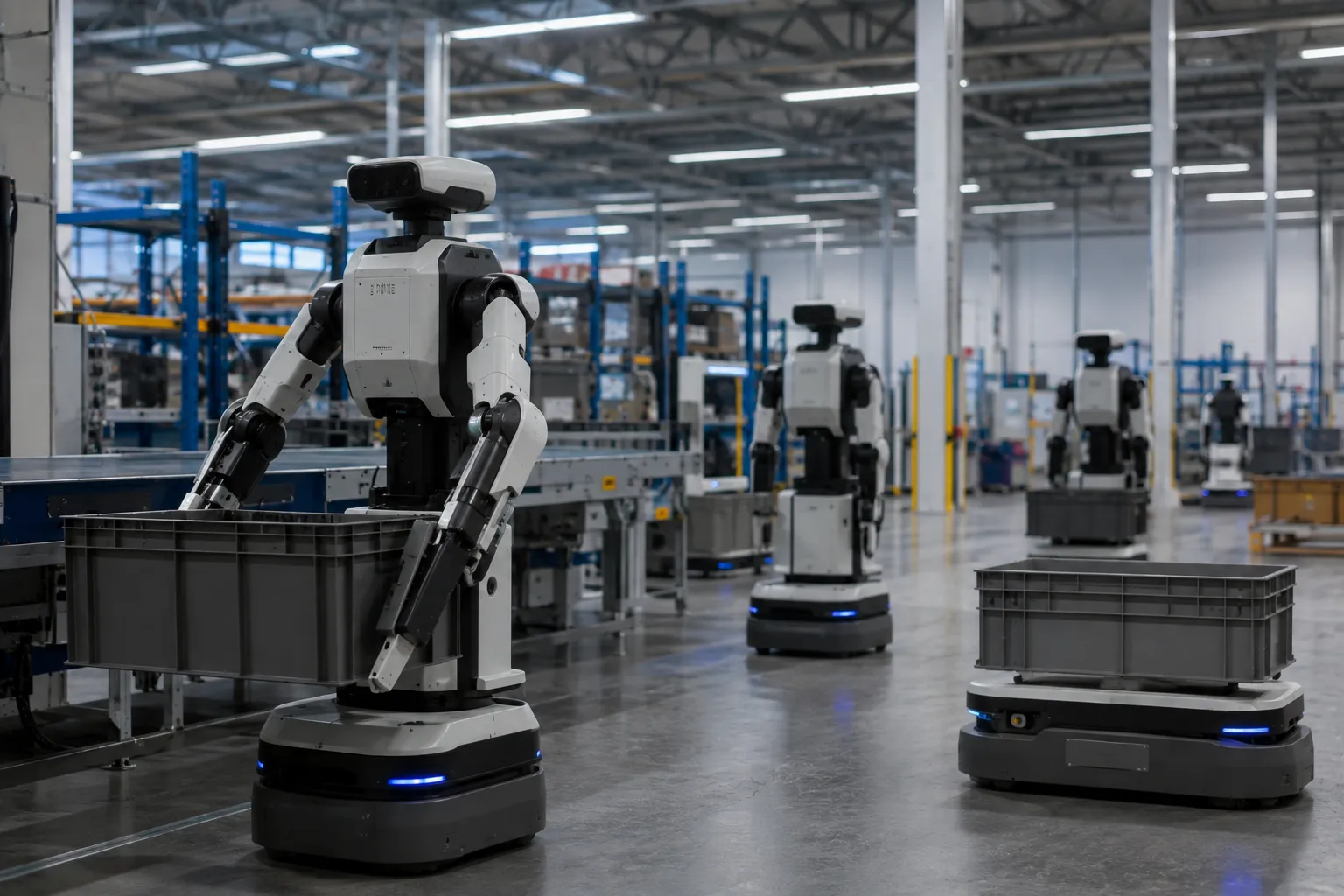
UNITED STATES OF AMERICA —Formic has secured $50 million in Series B growth capital to advance its physical artificial intelligence and robotics commercialization platform. The financing round was led by Mercato Partners, with participation from Light Ray Ventures, Lightscape Partners, Citi, and debt financing provided by S2G Investments. The capital injection is designated to accelerate the enterprise's transition from task-specific automation toward general-purpose robotics, strengthening its underlying software and operational capabilities.
This development matters because it addresses a persistent bottleneck in industrial automation: the gap between theoretical robotic capabilities and practical, productive deployment in real-world factory environments. By evolving its platform to support general-purpose robotics, the organization can apply operational intelligence gathered across multiple sites to optimize increasingly complex tasks. This shift primarily impacts mid-market manufacturers in the United States, allowing them to integrate advanced automation without assuming the traditional balance sheet risks associated with purchasing and integrating proprietary hardware.
The broader manufacturing sector is currently navigating intense pressure to reshore production and expand domestic capacity, particularly in strategic industries such as aerospace, defense, medical devices, and energy. Regulatory and economic incentives are increasingly favoring localized supply chains, yet small and medium-sized enterprises often lack the capital to execute traditional automation projects. By deploying a Robots-as-a-Service model, this platform removes upfront capital expenditure barriers, enabling a wider swath of the industrial base to modernize operations and increase output resilience.
For Formic, a Chicago-based enterprise founded in 2020 that combines robotic equipment, deployment software, field operations, and production data into a unified service, this funding supports expansion into new verticals like metal fabrication. The strategy leverages continuous data collection to refine artificial intelligence models, creating a compounding network effect where each deployment improves the overall system's efficiency. Investors are betting on a scalable commercialization engine that can standardize physical artificial intelligence across diverse manufacturing environments, positioning the company as a critical infrastructure provider for the modernized United States industrial base.