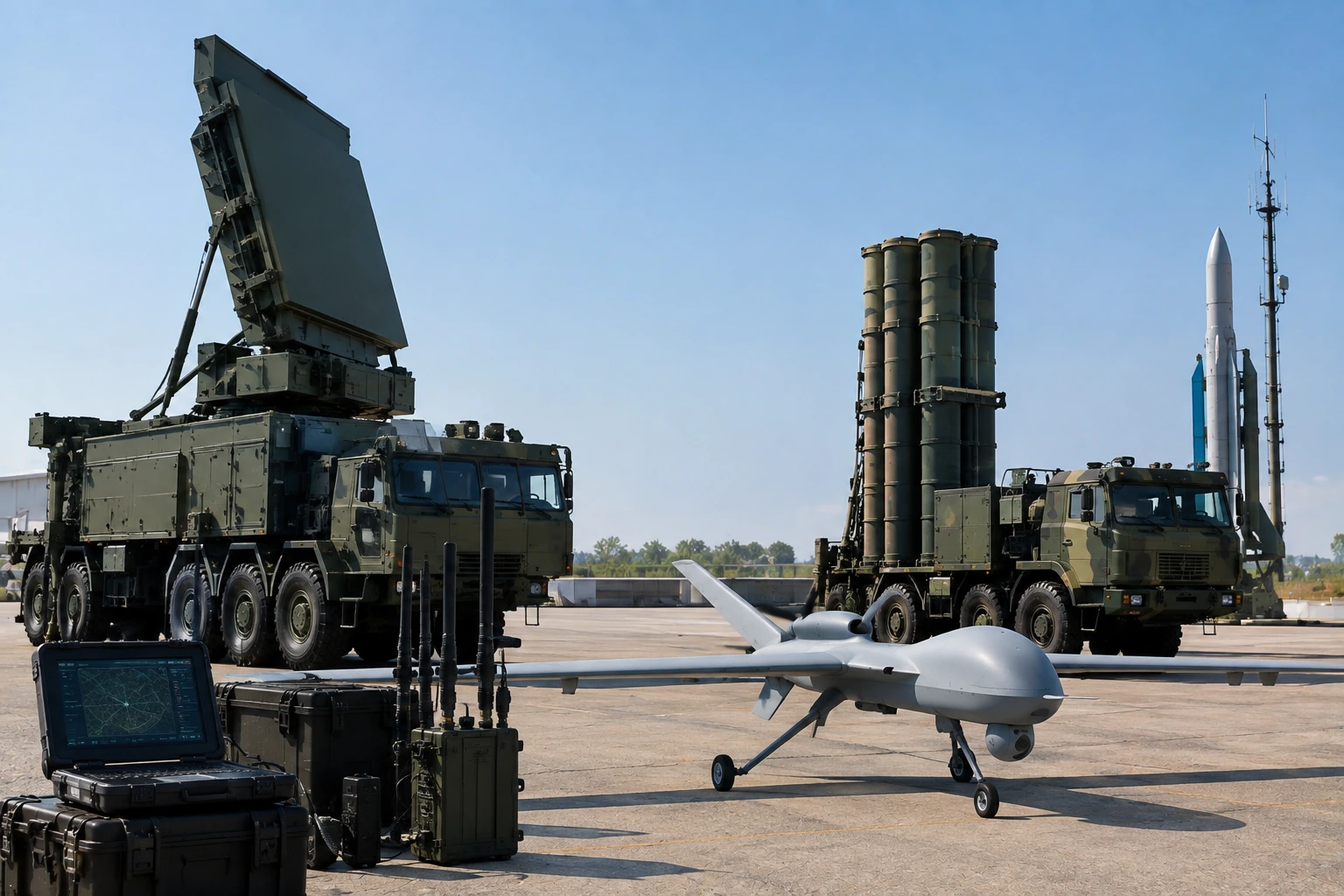
FRANCE —Gallium Defense, a Paris-based aerospace and security technology firm established in 2026, has successfully closed a 7.1 million euro seed financing round. The investment syndicate was spearheaded by Keen Venture Partners and 360 Capital, alongside contributions from Omnes Capital and Polytechnique Ventures. This capital injection is explicitly designated to accelerate the industrial production of the company’s inaugural product, the GDS-10 radar system, with commercial and military order books scheduled to open in the first quarter of 2027.
The enterprise specializes in developing active electronically scanned array radar systems tailored for civil and military applications. By integrating commercial off-the-shelf components with advanced embedded computing capabilities, the firm aims to drastically reduce manufacturing expenses while maintaining operational efficacy. This strategic approach directly addresses a widening security deficit, as a substantial majority of global critical infrastructure and military installations currently lack adequate protection against modern unmanned aerial vehicle threats due to the prohibitive costs of legacy detection systems.
This development carries significant implications for the European defense industrial base. As asymmetric aerial threats continue to proliferate, security policymakers and infrastructure operators are increasingly pressured to adopt scalable, cost-efficient countermeasures. The successful capitalization of this venture signals a broader market shift toward agile, software-defined hardware solutions that can be rapidly deployed across diverse operational environments. Furthermore, it reinforces regional efforts to bolster domestic supply chains for essential security technologies, reducing reliance on imported defense electronics.
For investors and industry stakeholders, the impending market entry of the GDS-10 platform presents a notable disruption to traditional radar manufacturing paradigms. The allocated funds will also support the expansion of engineering teams, the refinement of artificial intelligence models for threat classification, and the execution of global operational demonstrations. By targeting a substantial reduction in unit costs without compromising detection reliability, the company is positioned to capture market share in both the civil aviation security and national defense sectors, potentially reshaping procurement strategies for mid-tier defense budgets.