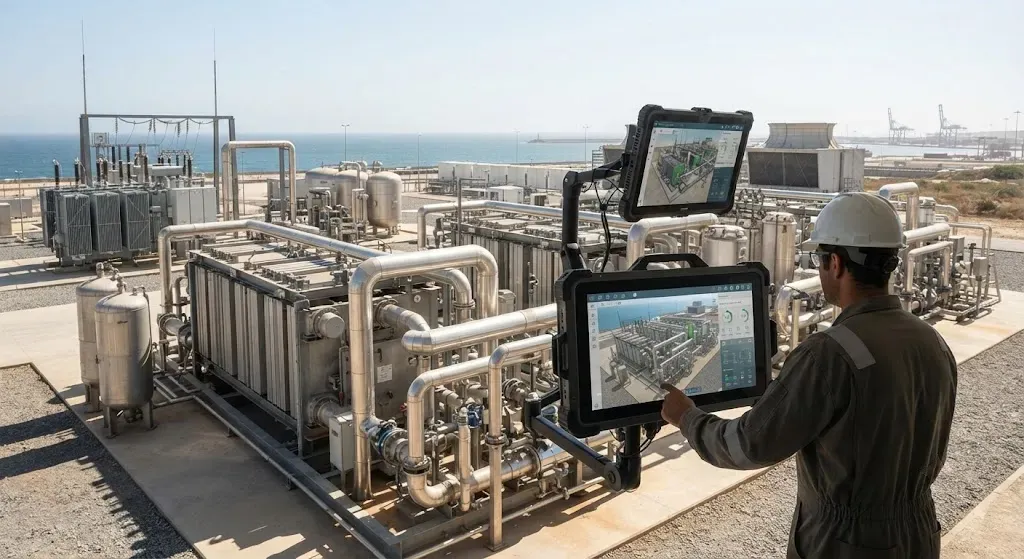
GERMANY; PORTUGAL —Galp Energia has selected Siemens to deploy industrial digital tools at its GalpH2Park facility located in Sines, Portugal. Under the partnership, the site will implement specialized software solutions, including a predictive physics-based digital process twin and analytical software suite. The plant features a 100 MW initial capacity and is targeted to commence operations by the end of the year, with an expected annual production capacity of up to 15,000 tons of green hydrogen.
Siemens AG is a Germany-headquartered technology corporation focused on industrial automation, digital transformation, infrastructure, and mobility solutions. Galp Energia is a Portugal-based integrated energy enterprise engaged in oil and gas exploration, refining, renewable power generation, and energy transition projects.
Deploying advanced predictive modeling and real-time operational optimization directly addresses one of the most critical hurdles facing the green hydrogen sector: high production costs driven by variable electricity pricing and power consumption. By integrating live facility telemetry with power grid data and market pricing, digital process twins enable automated operational scheduling and dynamic energy sourcing. Estimated efficiency gains of up to 15 percent in energy consumption significantly improve the overall project economics and long-term commercial viability of large-scale green hydrogen infrastructure.
This initiative impacts the European renewable energy, industrial automation, power utilities, and green technology sectors. The adoption of digital orchestration software at utility-scale electrolysis facilities sets a operational precedent for industrial decarbonization efforts across the European Union. For industrial energy consumers and infrastructure investors, incorporating digital optimization tools provides a practical framework for mitigating operational expenditure risks in zero-emission fuel production.
From a market perspective, the integration underscores a growing strategic focus among industrial capital developers to pair capital-intensive hardware projects with specialized enterprise software. Establishing digital twin environments early in project lifecycles allows energy assets to adapt to shifting power market dynamics, maximize operational uptime, and support national and regional greenhouse gas reduction commitments, including an anticipated annual reduction of 110,000 tons of Scope 1 carbon dioxide emissions at the Sines facility.