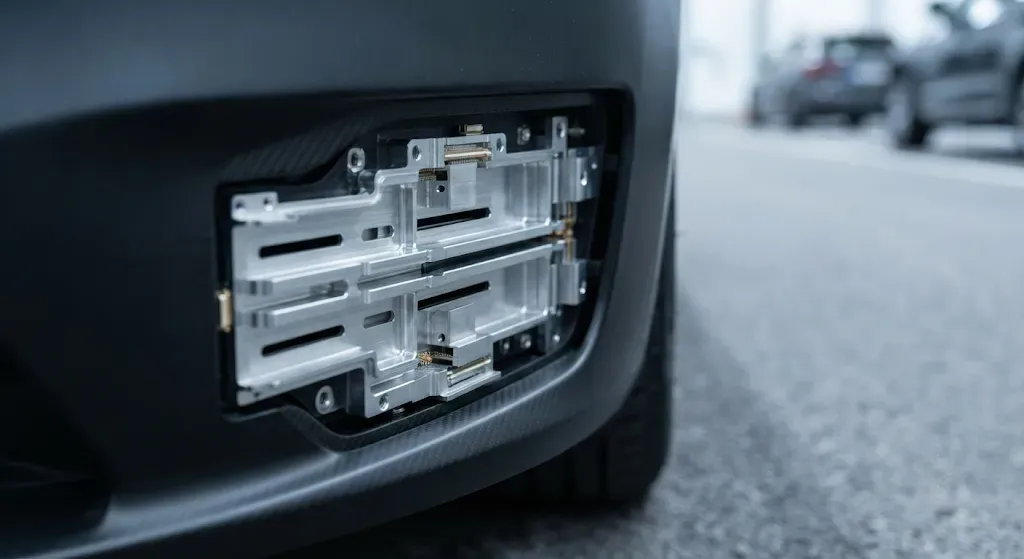
CHINA; SWEDEN —Gothenburg-based Gapwaves has secured an initial contract valued at approximately 6 million SEK from an Asian Tier 1 automotive supplier to engineer waveguide antennas for advanced driver assistance systems. The agreement involves designing, developing, and delivering prototype and pre-series units intended for front and corner radar sensors utilized in critical safety functions like emergency braking and adaptive cruise control. Deliveries under this phase are scheduled to occur between 2026 and 2027.
This engagement positions the technology provider within the supply chain of a major global automotive component manufacturer, enhancing its operational foothold in key Asian markets. By targeting high-resolution radar applications, the collaboration addresses the rising performance demands driven by active vehicle safety regulations and autonomous driving trends. Successfully navigating this developmental phase is intended to culminate in a formal production agreement ahead of a projected commercial manufacturing rollout in early 2029.
For automotive component makers and vehicle manufacturers, the adoption of waveguide architecture offers a pathway to achieve stringent range and resolution thresholds while maintaining cost efficiencies. As automotive safety standards compel deeper integration of perception sensors, component suppliers are increasingly evaluating specialized high-frequency antenna systems to manage interference and spatial constraints. Securing early-stage validation with a top-tier industry participant serves as a benchmark for commercial viability in next-generation driver assistance architectures.
Gapwaves develops wireless solutions utilizing patented waveguide technology primarily applied in millimetre-wave antennas for autonomous driving and safety radar systems. Founded as a spin-off from research at Chalmers University of Technology, the firm operates on the Nasdaq First North Growth Market Stockholm. Commercial expansion relies heavily on transitioning initial prototyping contracts into long-term series production agreements spanning multi-year vehicle manufacturing lifecycles.