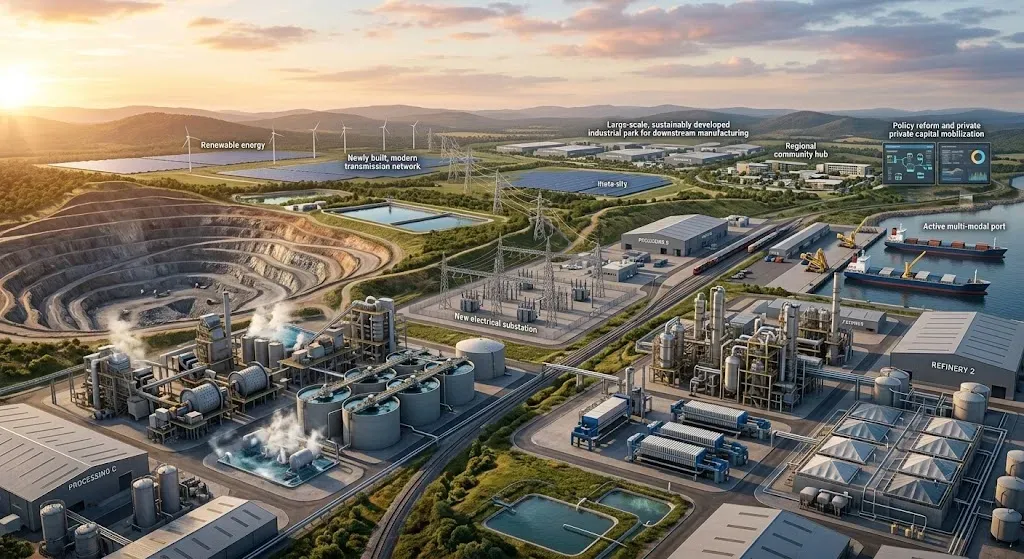
ARGENTINA; BOLIVIA —Eight national governments have formally established collaborative economic partnerships aimed at transforming their domestic mineral sectors into catalysts for industrial modernization and workforce expansion. The coordinated initiative focuses on modernizing regulatory frameworks, upgrading digital geological databases, and establishing robust environmental and social safeguards to attract long-term private sector capital.
This strategic push is driven by the surging global demand for critical materials essential for advanced manufacturing and renewable energy technologies. By streamlining licensing procedures and fostering local value addition, the initiative seeks to mitigate supply chain vulnerabilities while ensuring that host nations capture a larger share of economic benefits derived from raw material extraction.
Industrial sectors dependent on battery manufacturing, electronics, and green energy infrastructure face substantial restructuring as new processing hubs and industrial corridors emerge across multiple continents. Institutional lenders and development finance institutions are scaling up blended finance mechanisms, combining public policy support with private equity guarantees to de-risk investments in emerging resource markets.
For institutional investors and corporate strategists, this coordinated policy shift opens new avenues for capital allocation in developing resource economies while introducing heightened regulatory compliance demands. Enterprises operating within these jurisdictions must align with rigorous environmental benchmarks and invest heavily in local workforce development to secure long-term operational licenses.
The World Bank Group is an international financial institution that provides loans and grants to the governments of low- and middle-income countries for the purpose of pursuing capital projects.