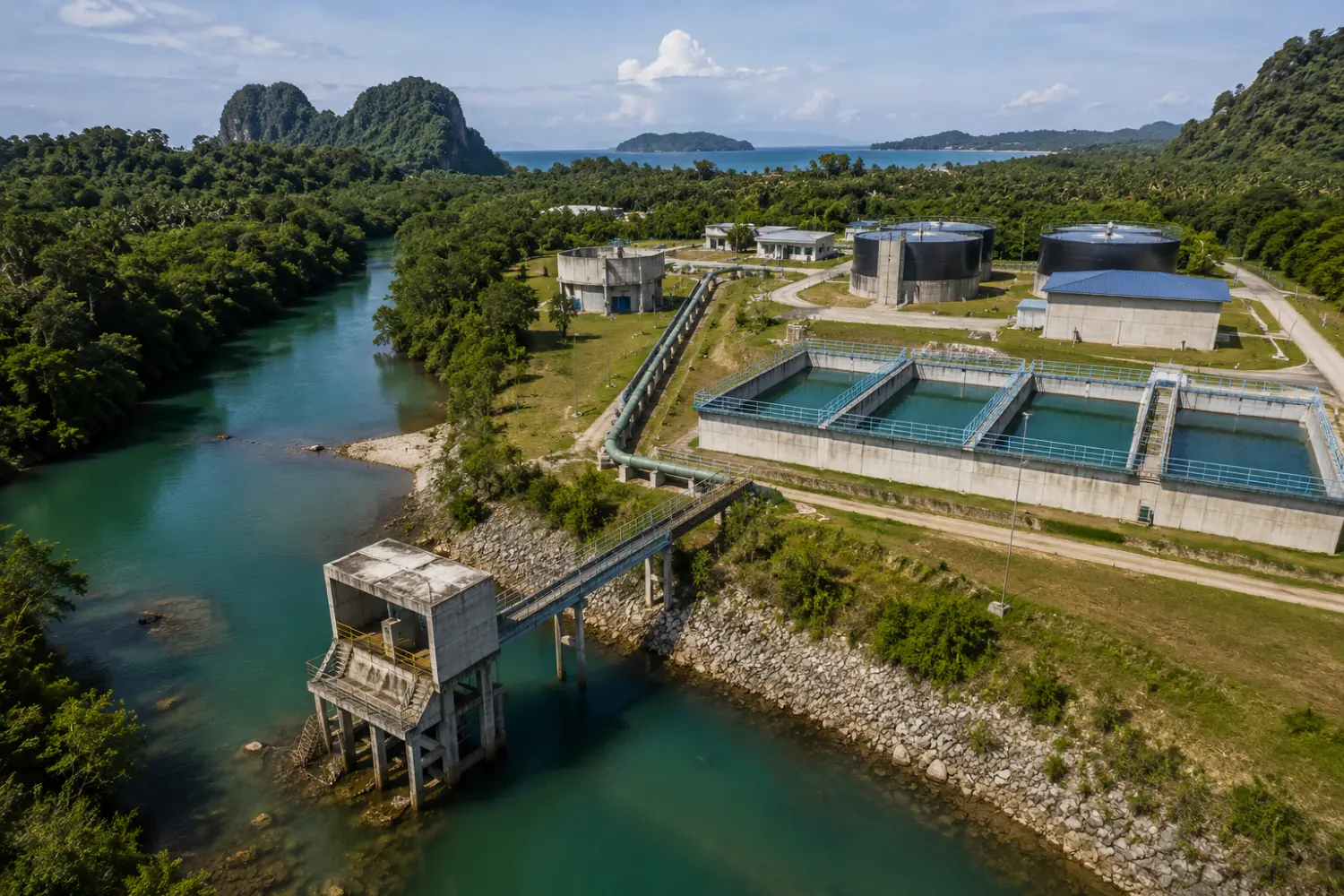
MALAYSIA —Google has allocated US$160 million to develop integrated water and digital infrastructure in the Malaysian state of Negeri Sembilan. The initiative centers on the construction of an off-river storage reservoir and a modern water treatment facility along the Linggi River. Malaysian engineering conglomerate Gamuda Berhad has been selected to execute the construction phase. Upon project completion, operational ownership of the assets will be formally transferred to Menteri Besar Negeri Sembilan (Incorporated), the statutory body responsible for managing state assets.
This development addresses a critical intersection of technological expansion and municipal resource management. Hyperscale data centers require substantial and reliable water supplies for cooling operations, often raising concerns about local resource depletion. By designing a facility with a daily output capacity of 65 million liters of potable water, the project ensures that the upcoming data center campus in Springhill Industrial Park operates without compromising regional public water access. Furthermore, the reservoir actively captures excess rainfall and river flow during peak seasons, introducing a secondary benefit of flood risk mitigation for adjacent vulnerable communities.
The strategic allocation of capital carries significant implications for the regional engineering, procurement, and construction sector. Securing this mandate reinforces the role of domestic contractors in executing complex, dual-purpose utility projects. For the local water utility landscape, the intervention represents a substantial augmentation of public infrastructure without direct fiscal burden on the state. It establishes a replicable framework for public-private collaboration, where multinational technology firms co-invest in foundational civic utilities to secure their operational prerequisites while delivering measurable environmental, social, and governance outcomes.
For investors and market analysts, this move signals a maturing approach to data center site selection in Southeast Asia. Viability is no longer determined solely by land availability or power grid access, but increasingly by sustainable water stewardship and community integration. Google, a global technology subsidiary of Alphabet Inc. specializing in cloud computing and artificial intelligence, continues to expand its regional footprint. Partnering with state entities demonstrates a calibrated strategy to align rapid digital infrastructure deployment with long-term regional resilience and workforce development in the clean energy sector.