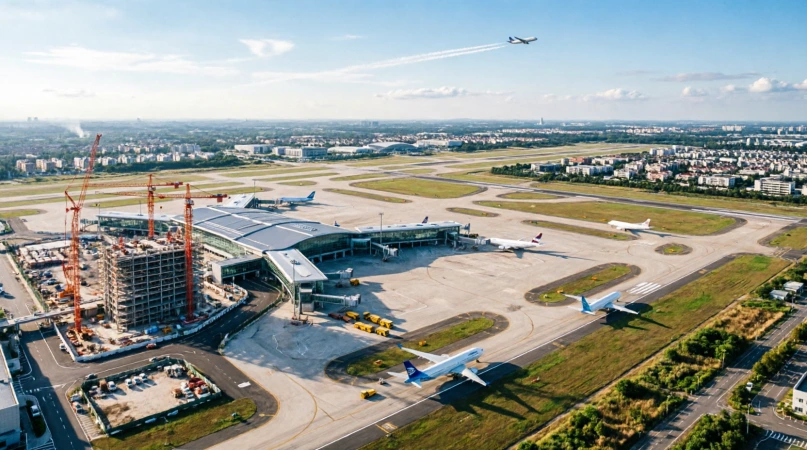
GUATEMALA —Guatemala is executing a multi-year effort to modernize its air transport network through a newly approved $250 million financing agreement with the World Bank. The capital will fund extensive rehabilitation across key commercial and regional air hubs, alongside systematic structural reforms within the country's aviation authority through 2033. The execution will be overseen by the Directorate General of Civil Aviation under the government's strategic roadmap aimed at establishing the nation as a regional transport hub by 2044.
The World Bank Group is an international financial institution that provides loans, grants, and technical assistance to developing nations to support economic advancement and reduce poverty. Operating globally across more than 100 countries, the organization finances large-scale public sector projects, infrastructure improvements, and private sector development initiatives.
The investment addresses long-standing infrastructure bottlenecks and technical deficiencies across Guatemala's aviation sector. Key operational upgrades will target La Aurora International Airport in Guatemala City and Mundo Maya International Airport in Petén, alongside regional facilities in Puerto Barrios, Quetzaltenango, and Huehuetenango. Planned civil works include runway and apron resurfacing, climate-resilient storm drainage installation, modern airfield lighting, upgraded navigation and surveillance systems, and specialized training for air traffic controllers and emergency response crews.
Air transport infrastructure serves as a vital economic driver for Central America, directly underpinning regional commerce, foreign direct investment, and tourism, which currently accounts for roughly 5 percent of Guatemala's gross domestic product. By upgrading facilities to meet international safety and operational benchmarks, the program seeks to accommodate projected growth in annual passenger traffic from 5.2 million estimated in 2025 to over 11.2 million by 2040.
For private enterprises, institutional investors, and logistics operators, modernizing aviation assets establishes the foundation for expanded air cargo capacity and increased international flight frequency. Improved airfield reliability and upgraded safety standards reduce operational risks for commercial airlines while laying necessary groundwork for future private sector participation in civil aviation assets.