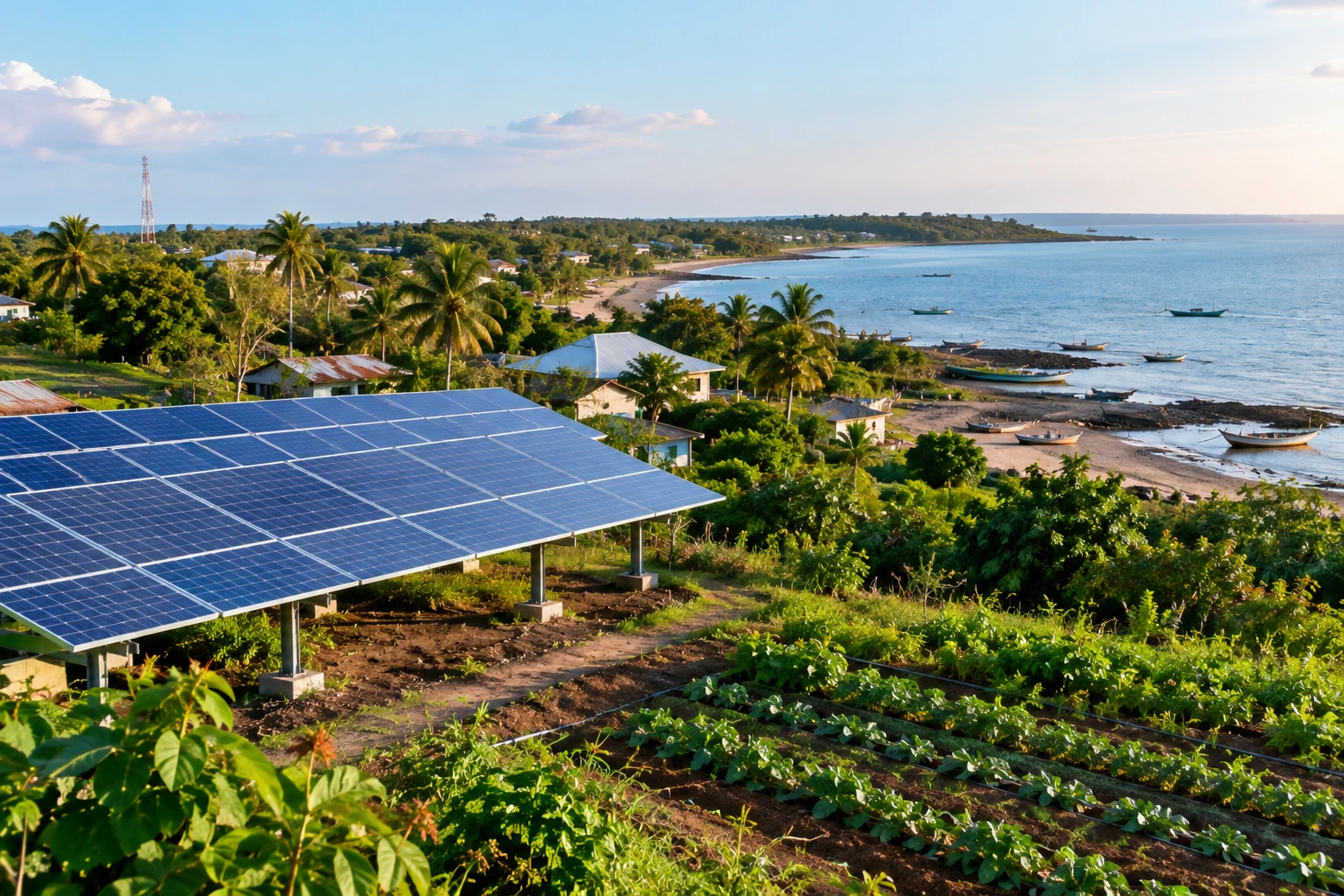
GUINEA-BISSAU —Guinea-Bissau has formally operationalized the regional RESIslands program to build climate adaptation strategies and compile bankable investment proposals. The launch initiates technical stakeholder sessions aimed at pinpointing institutional capacity gaps, establishing risk mitigation priorities, and building upon current ecological programs. Ten preliminary concepts covering early warning mechanisms, coastal defenses, agricultural calendars, water security, fisheries protection, urban infrastructure, and renewable energy integration are under review for project pipeline development.
The project is part of a broader 30-month readiness venture financed by the Green Climate Fund and executed via the United Nations Economic Commission for Africa. The United Nations Economic Commission for Africa is a regional arm of the United Nations tasked with promoting economic and social development across its member states in Africa. The wider RESIslands initiative spans nine member nations of the African Island States Climate Commission, focusing on institutional frameworks, capacity building, risk evaluation, and project pipeline generation.
This initiative is critical for Guinea-Bissau due to severe environmental vulnerabilities across its low-lying coastal zones, key agricultural land, and the Bijagós archipelago. Severe coastal erosion, rising sea levels, shifted precipitation patterns, and saltwater intrusion directly jeopardize local food production, agricultural supply chains, and commercial fisheries. Establishing robust regional risk data and institutional frameworks enables public bodies to deploy capital efficiently into resilient infrastructure and local warning technologies.
For institutional investors, development finance institutions, and commercial contractors, the establishment of a structured project pipeline creates targeted entry points for green infrastructure financing across West Africa. Converting national environmental goals into standardized investment proposals reduces project underwriting risk and accelerates international capital allocation. Local commercial sectors—including agribusiness, small-scale logistics, and coastal tourism—stand to gain long-term stability as adaptive infrastructure reduces systemic operational disruptions.