
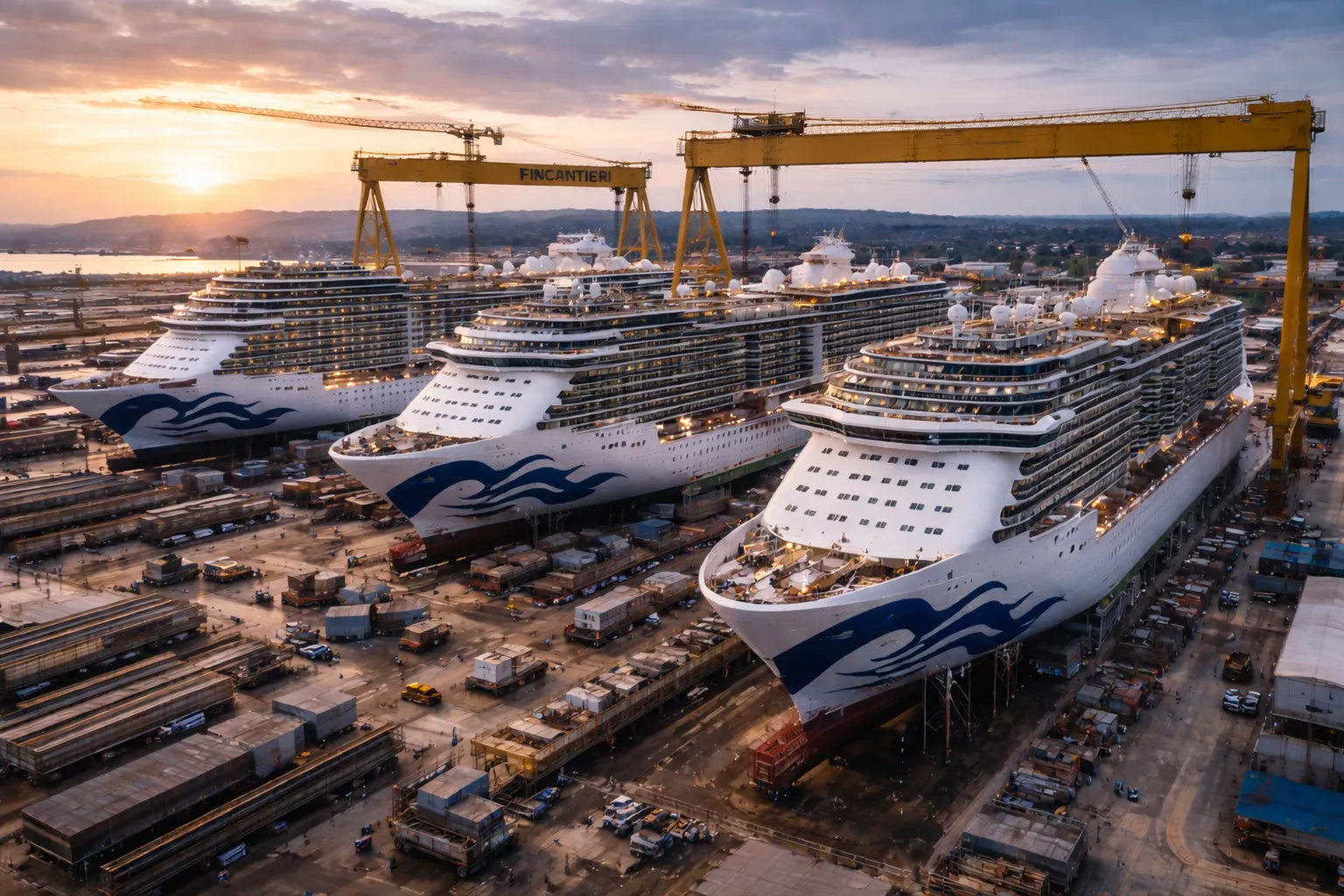
The Gujarat government has approved a new Shipbuilding and Repair Policy, 2026, aiming to establish integrated manufacturing clusters and expand state capacity to 5 million deadweight tonnage by 2047. The framework introduces capital assistance, interest subvention, and infrastructure support to attract industrial investment into the marine sector.
The state government of Gujarat has approved the Shipbuilding and Repair Policy, 2026, setting a target to scale shipbuilding capacity to 5 million deadweight tonnage (DWT) by 2047, according to official disclosures. The policy replaces the previous framework from 2010 and proposes the development of greenfield shipyards through integrated mega shipbuilding parks.
Authorities have identified two initial locations for cluster development: a 990-hectare site with a 6.75-kilometer waterfront in Chhachhi, Kutch district, and an 870-hectare zone with over 7 kilometers of coastline in Kuchhadi, Porbandar. Three additional locations are currently under evaluation. The initiative introduces a structured capital assistance mechanism. Individual shipyards are eligible for Rs 100 million or 10 percent of eligible fixed capital investment, whichever is lower. Integrated park developers can access up to Rs 150 million or 20 percent. A separate provision offers Rs 25 million or 20 percent for marine equipment clusters adjacent to main parks, alongside an early-bird incentive providing an additional 5 percent benefit.
Fiscal support extends to a maximum 7 percent interest subvention, effectively lowering financing costs to 5 percent. Other operational incentives include stamp duty exemptions, electricity and water subsidies, and dredging support to offset high capital expenditure. The policy mandates long-term waterfront access, single-window clearances, and common infrastructure to reduce manufacturing costs. It also finances skill development centers and research institutions to address technical manpower shortages.
This intervention positions Gujarat to capture a larger share of global shipbuilding demand as international buyers seek alternatives to East Asian yards facing capacity constraints. The cluster model aims to compress supply chain costs for domestic shipping companies and offshore logistics operators. By coupling capital grants with OPEX support, the state seeks to lower entry barriers for private yards and marine equipment manufacturers. The emphasis on dredging and waterfront leasing addresses long-standing operational bottlenecks that have limited capacity utilization at Indian shipyards.
For investors, the policy signals a structured regulatory environment, potentially improving project bankability. Engineering and infrastructure firms may see near-term opportunities in park development, while steel and component suppliers could benefit from expanded local sourcing requirements over the medium term.
About GlobeNewsInfo
GlobeNewsInfo.com is a business news platform providing latest updates on global business developments, projects, and contract opportunities across diverse sectors and regions. The platform is designed to serve as a trusted source of information for companies, investors, and professionals worldwide.