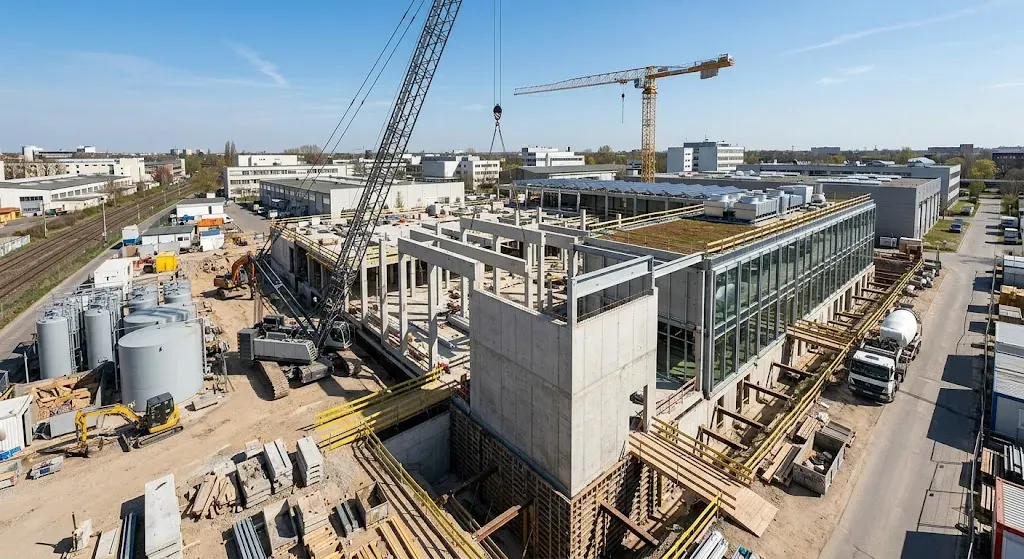
GERMANY —German construction enterprise HOCHTIEF has been selected to execute a project valued at approximately EUR 70 million to establish an advanced collection research facility for the Museum für Naturkunde Berlin, Germany’s foremost natural history institution. The undertaking involves developing a secondary campus situated in Berlin-Adlershof, engineered to house half of the museum's extensive repository comprising 30 million specimens.
HOCHTIEF Aktiengesellschaft is a global engineering-led construction group specializing in complex infrastructure, transportation, building, and energy projects across international markets. The designated property encompasses a three-story architectural layout integrating high-capacity storage units, advanced laboratory spaces, quarantine zones, decontamination capabilities, and dedicated digital cataloging zones. General planning responsibilities were assigned to agn, focusing the design on resource conservation through green roofing systems, integrated green facades, renewable power inputs, and low-carbon construction materials targeting BNB Silver green-building certification.
This municipal development addresses critical capacity constraints for public cultural repositories while demonstrating the increasing corporate demand for sustainable public sector infrastructure. Constructing specialized laboratory and archival facilities requires strict adherence to environmental controls and technical specifications, positioning firms with certified engineering competencies advantageously within public procurement pipelines. The undertaking builds upon historical precedents involving specialized life-science and institutional projects delivered across the region.
For commercial real estate developers, institutional investors, and engineering contractors, the initiative underscores persistent capital deployment in civic research assets despite broader macroeconomic headwinds. Securing long-term public sector orders provides revenue visibility for tier-one construction conglomerates, while strict municipal energy mandates signal ongoing regulatory shifts toward sustainable material compliance in public building tenders.