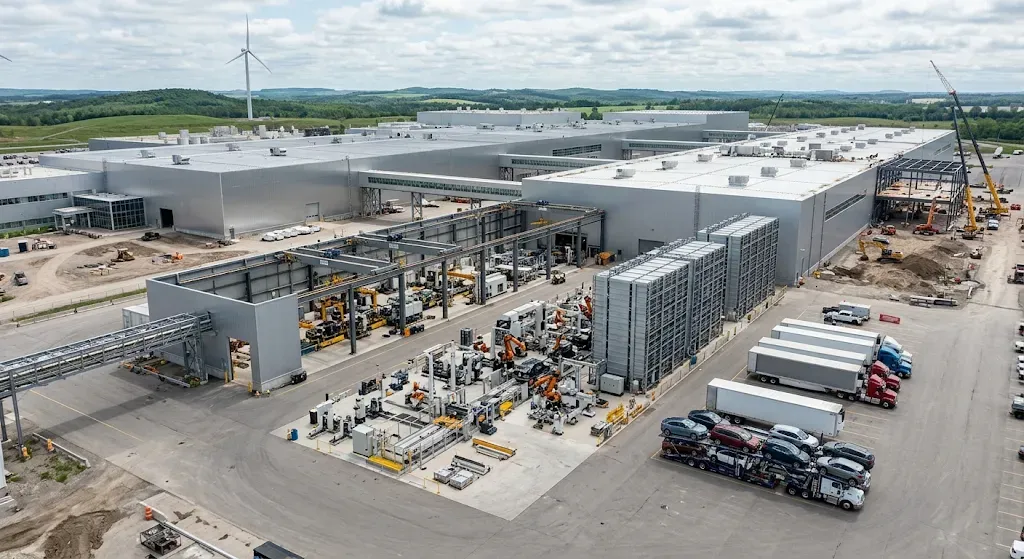
CANADA —Honda Motor Company has structured an extensive capital allocation totaling CAD 867 million directed at bolstering its integrated vehicle production network across North America. The initiative focuses heavily on scaling up manufacturing infrastructure for hybrid-electric powertrains and next-generation vehicle models to address sustained consumer demand. Headquartered in Tokyo, Japan, Honda Motor Company is a multinational conglomerate renowned for designing, developing, and manufacturing automobiles, motorcycles, and power equipment on a global scale. As part of this broader multi-facility strategy, the enterprise committed CAD 166 million specifically toward facility retooling and technological upgrades at its manufacturing complex in Alliston, Ontario. This operational adjustment positions the Canadian facilities to manage advanced hybrid systems and gasoline-powered variants, while also reinstating local engine assembly lines that previously operated off-site or relied on external sourcing.
This strategic financial deployment is critical for legacy automakers navigating the transitional phase toward electrification without sacrificing immediate profitability derived from internal combustion and hybrid architectures. By reinforcing localized supply chains and assembly capabilities close to major consumer markets, the organization aims to insulate its operations from cross-border logistical friction and tariff volatility. The capital infusion also secures the employment continuity of over 4,000 workers at the Ontario operations, maintaining regional economic stability while updating plant configurations to handle sophisticated powertrain integration.
The operational adjustments directly influence the automotive manufacturing sector, Tier-1 and Tier-2 component suppliers, and regional labor markets throughout Canada and the broader North American trade zone. Regional suppliers stand to benefit from long-term procurement requirements aligned with the stepped-up assembly volumes of hybrid systems. Furthermore, federal and provincial administrative bodies are actively participating through collaborative partnerships designed to secure advanced manufacturing mandates and maintain industrial competitiveness within the domestic market.
For institutional investors and industry stakeholders, the move signals a pragmatic mid-term hedging strategy that prioritizes hybrid-electric platforms alongside pure battery-electric investments, mitigating near-term consumer adoption bottlenecks. The capital expenditure supports the corporate objective of launching 15 hybrid models globally by the end of the decade, designating North America as a primary commercial hub. Maintaining high utilization rates across existing industrial footprints while modernizing assembly lines allows the enterprise to optimize capital expenditure efficiency relative to constructing greenfield facilities.