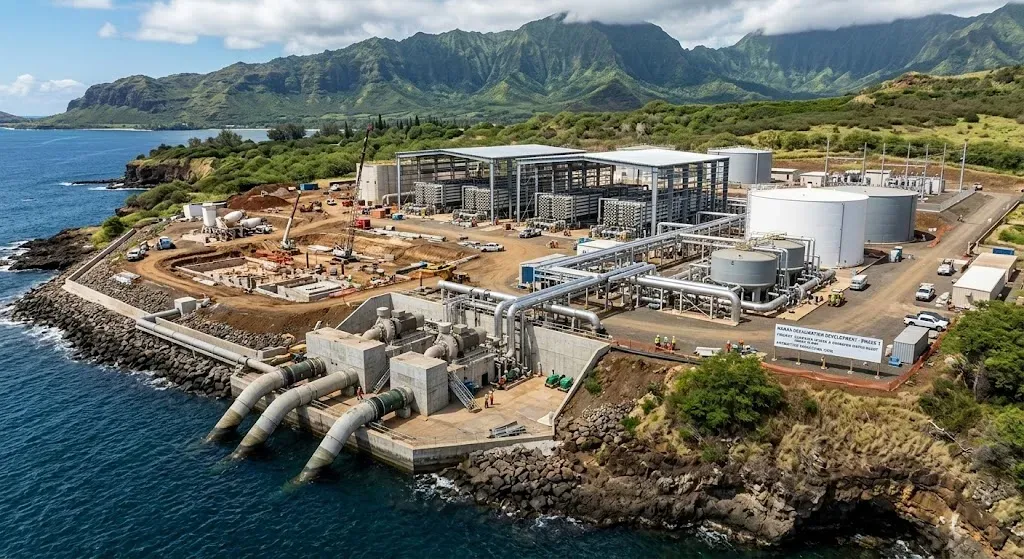
UNITED STATES OF AMERICA —The U.S. Environmental Protection Agency (EPA) has committed a $109 million financial package through a federal infrastructure lending program to support a major utility provider in Hawaii. The capital will fund the design and construction of an industrial-scale reverse osmosis seawater desalination plant situated on the island of Oahu. This new infrastructure asset is engineered to yield 1.7 million gallons of potable water daily, providing an alternative supply stream for island residents and commercial users while mitigating the depletion of regional subsurface aquifers.
The financing mechanism deployed for this project involves a subordinate lien structure, granting the borrower enhanced budgetary flexibility by positioning the repayment obligation behind senior bond commitments. Additionally, the funding arrangement incorporates a principal repayment deferral period spanning the construction phase, a provision designed to insulate local utility ratepayers from immediate tariff spikes. The initiative forms part of a broader federal effort to upgrade critical municipal utility systems and enhance regional resource resilience.
This capital allocation directly addresses long-term resource scarcity in central and western districts of Oahu, where arid conditions and rising demand place persistent stress on conventional freshwater supplies. By introducing a scalable, weather-independent production method, the utility can decouple drinking water availability from seasonal precipitation patterns. This shift reduces the long-term operational vulnerability of municipal supply grids serving densely populated residential zones and military installations.
The transaction underscores a growing market trend toward alternative water augmentation technologies, such as desalination and advanced reuse, among municipal authorities facing environmental constraints. For engineering, procurement, and construction firms, as well as specialized equipment manufacturers operating in the water treatment sector, municipal investments of this scale signal sustained demand for complex infrastructure delivery. Financial institutions and municipal bond markets also eye such federally backed credit facilities as a stable asset class for infrastructure debt portfolios.