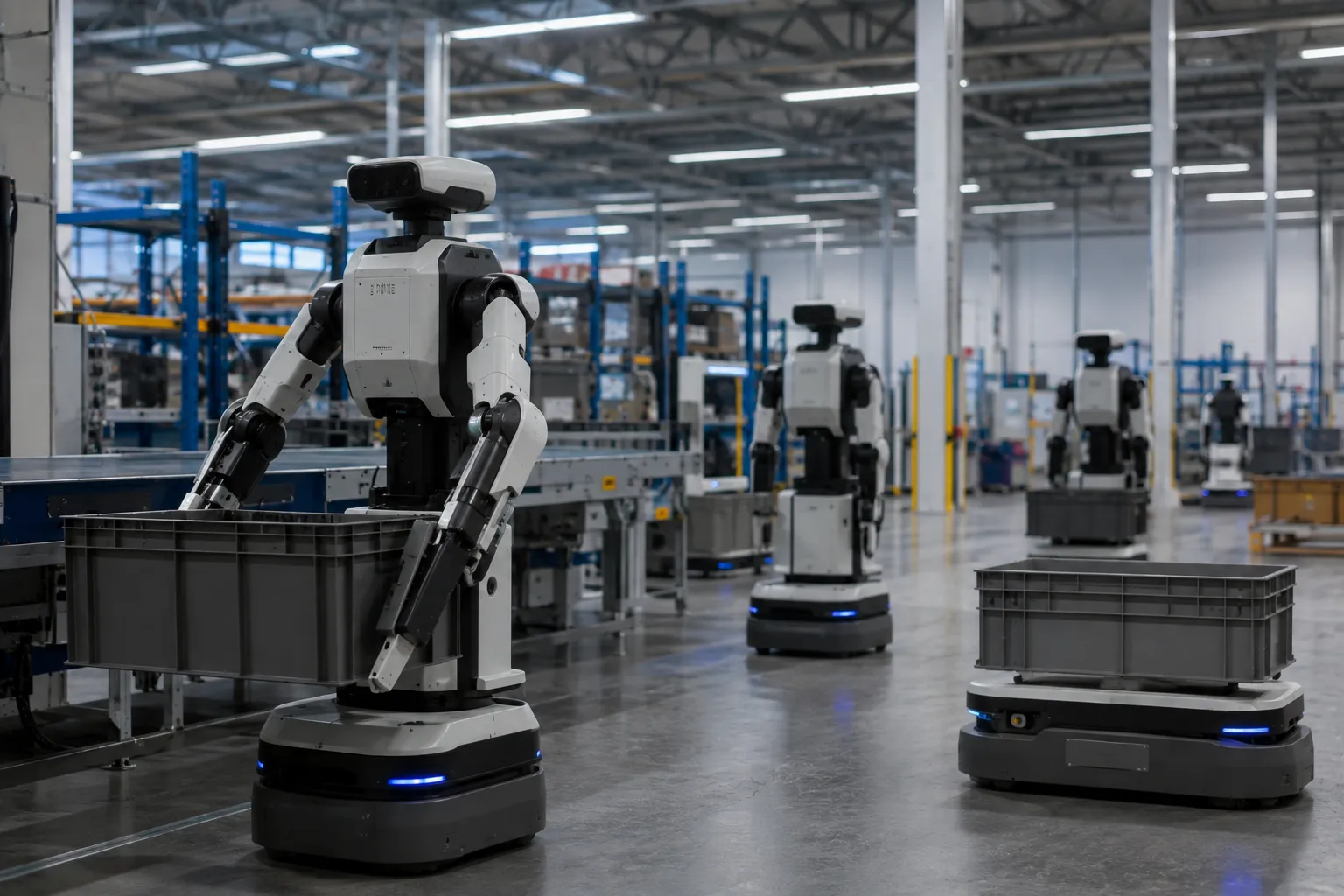
BRAZIL; INDIA —Humyn Labs has successfully closed a USD 47 million Series A funding round to expand its physical artificial intelligence data infrastructure and deployment capabilities. Founded in 2026 by Manish Agarwal and Ishank Gupta, the organization specializes in converting real-world human operational data into verified, multi-sensory training datasets for frontier robotics and autonomous systems. The financing package consists of a USD 26 million equity investment led by Accel, alongside participation from several institutional investors, and a USD 21 million venture debt facility arranged by Lighthouse Canton and Trifecta Capital. The capital injection is designated for scaling deployment readiness infrastructure in Brazil, South Korea, and India, enhancing proprietary capture hardware, and establishing operational footholds in San Francisco, London, and Seoul.
This development addresses a fundamental bottleneck in the advancement of embodied artificial intelligence. While algorithmic models have progressed rapidly, the scarcity of high-fidelity, real-world training data remains a critical constraint for robotics deployment. By systematically capturing human operational data across diverse environments such as manufacturing facilities, agricultural sites, and logistics hubs, the company provides a verified, multi-sensory data pipeline. This capability transforms raw human experience into structured, training-ready datasets encompassing visual, auditory, and kinetic modalities, which are essential for training robust physical AI systems.
The implications for the global robotics and artificial intelligence sectors are substantial. Industries reliant on automation, including advanced manufacturing, supply chain logistics, and agricultural technology, will benefit from accelerated deployment cycles. The operational footprint across more than twenty countries in Latin America, East Asia, and South Asia positions the entity to aggregate diverse, region-specific operational data. This geographic diversification mitigates the risk of model bias and ensures that autonomous systems can adapt to varied environmental and operational conditions worldwide.
For investors and technology stakeholders, this funding round signals a strategic shift in capital allocation toward the foundational layers of the artificial intelligence stack. With the company reportedly achieving over USD 50 million in annualized revenue within its first six months, the investment underscores strong market validation for specialized data infrastructure providers. As the physical AI market matures, enterprises and robotics developers will increasingly depend on third-party data enrichment engines to bridge the gap between theoretical model capabilities and reliable real-world execution, creating a highly defensible market position for early infrastructure leaders.