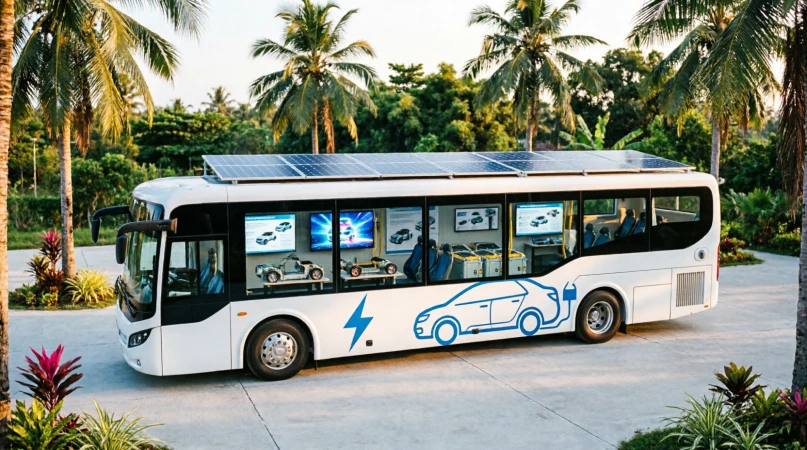
INDONESIA; KOREA (SOUTH) —Hyundai Motor has initiated a educational initiative across East and North Jakarta, Indonesia, focused on strengthening local capacity in science, technology, engineering, and mathematics (STEM) centered on electric vehicle (EV) technologies. Implemented alongside local government education authorities and non-governmental partner organizations, the program deploys an electric bus converted into a mobile learning station to deliver specialized coursework to 13 middle schools through late 2027.
Indonesia represents a primary hub for electric vehicle manufacturing and battery supply chain development in Southeast Asia. By introducing EV concepts, interactive digital simulations, and practical engineering modules directly into secondary school curricula, the automotive manufacturer aims to foster foundational technical skills in a prospective workforce while strengthening corporate positioning in a key growth market.
This initiative underscores a broader shift among global automakers, where corporate social responsibility programs are closely aligned with long-term industrial policy and market penetration strategies. In developing regions prioritizing clean energy transitions, infrastructure limitations often hinder educational access. Utilizing a mobile unit equipped with advanced digital learning tools offers a scalable model for public-private partnerships aiming to bridge regional technological divides.
For businesses and market participants, the move highlights how early-stage community engagement and educational investments can support supply chain localizing efforts. As global vehicle manufacturers build production facilities in Southeast Asia, developing local technical familiarity with electrified transportation systems enhances brand equity, supports talent acquisition pipelines, and reinforces regulatory alignment with host government sustainability agendas.
Hyundai Motor Company, established in 1967 and headquartered in Seoul, South Korea, is a global automotive manufacturer operating in more than 200 countries. The company produces a range of vehicles, including internal combustion engines, hybrids, and zero-emission electric and hydrogen fuel-cell models.