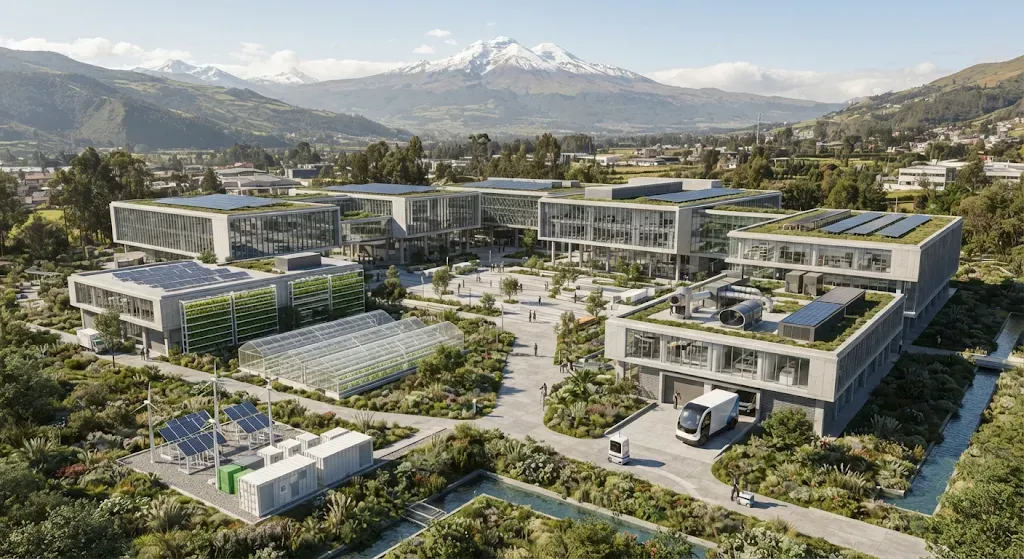
ECUADOR —The Inter-American Development Bank (IDB) has cleared a $43.5 million Specific Investment Loan to fund the creation of a science and technology park at the National Polytechnic School in Quito. Structured with a 25-year repayment period, a 5.5-year grace period, and a SOFR-linked interest rate, the financing is extended to the university and backed by a sovereign guarantee from the Republic of Ecuador.
The Inter-American Development Bank (IDB) is a multilateral development institution established in 1959 to finance public-sector initiatives and deliver technical expertise across 26 Latin American and Caribbean countries. Operating under the IDB Group Country Strategy with Ecuador for 2026 to 2030 and the LAC Crece agenda, the bank uses concessional and non-concessional lending to advance economic modernization and institutional capacity in member states.
Commercializing university research remains a persistent bottleneck across much of Latin America, often leaving scientific output isolated from industrial needs. By anchoring research laboratories, collaborative workspaces, technology transfer units, and the university's Geophysical Institute inside a single campus in Quito, the project targets Ecuador's Northern Region, which accounts for 45% of formal enterprises and 44% of national gross value added.
Dedicated research, development, and innovation hubs will focus on materials and industrial testing, energy, geosciences, biotechnology, and artificial intelligence. For domestic manufacturers, energy operators, and tech firms, closer access to specialized testing and applied research can lower early-stage technical risk and shorten product development cycles without requiring large standalone laboratory investments.
The initiative also aligns public research priorities with broader industrial competitiveness goals by pairing physical infrastructure with training in innovation management and entrepreneurship. Jointly funded R&D&I projects involving the university, private enterprises, public agencies, and peer institutions are designed to turn academic prototypes into scalable commercial applications.
For corporate decision-makers and institutional investors monitoring Andean markets, the park creates a structured channel to co-develop applied technologies, tap specialized technical talent, and access co-financed research programs. Companies active in industrial testing, energy systems, biotech, and AI stand to benefit most from formalizing partnerships with Quito's research ecosystem as project execution advances.