CAMBODIA; INDONESIA —The International Maritime Organization (IMO) has introduced Blue Solutions, a regional programme designed to help Cambodia, Indonesia, Malaysia, the Philippines, Thailand and Viet Nam implement measures to reduce greenhouse gas emissions from maritime transport. Announced during the 51st ASEAN Maritime Transport Working Group meeting in Phnom Penh, Cambodia, the initiative will be delivered in partnership with Partnerships in Environmental Management for the Seas of East Asia (PEMSEA).
Germany’s International Climate Initiative (IKI) is providing funding, with EUR 5.9 million initially approved for the first phase. The programme is expected to continue through January 2031. Its activities will focus on identifying and demonstrating practical decarbonization options, including electrification of port infrastructure and vessels, adoption of cleaner technologies and improvements in port and shipping operations.
Blue Solutions will also help participating countries establish greenhouse gas emissions baselines, prepare national action plans and strengthen technical capacity. Regional cooperation and knowledge-sharing are intended to enable governments and port operators to assess potential interventions and adapt approaches to local operating conditions. The project sits within the IMO’s broader GreenVoyage2050 Programme, which supports developing countries in advancing maritime decarbonization.
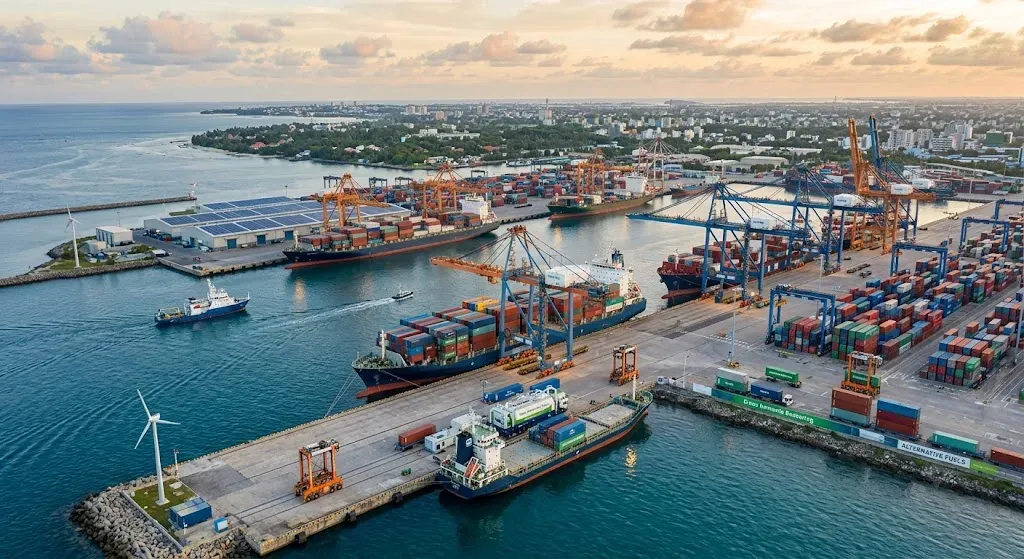
Ports are a central focus because they connect shipping with electricity networks, logistics, industrial facilities and coastal communities. Measures such as shore-side electricity, where technically and economically feasible, can reduce emissions from vessels at berth, while operational changes and cleaner equipment can improve the environmental performance of port activities. The feasibility of individual solutions will depend on infrastructure readiness, energy supply, vessel requirements and investment costs.
The initiative has implications for port authorities, shipping companies, terminal operators, equipment suppliers and energy providers across Southeast Asia. Emissions baselines and national action plans could help governments identify investment priorities and establish a clearer framework for future maritime climate measures. Demonstration projects may also provide information on implementation costs and operational requirements, supporting decisions about wider deployment.
For investors and infrastructure developers, the programme creates a framework for evaluating potential opportunities in port electrification, clean energy integration, low-emission equipment and maritime efficiency. However, the announced budget relates to the initial project phase and does not represent a confirmed allocation to individual infrastructure projects. Commercial opportunities will depend on subsequent project selection, national implementation plans and the mobilisation of additional capital.
The IMO is a United Nations specialised agency responsible for developing international standards for shipping safety, security and environmental performance. PEMSEA is a regional organisation focused on integrated coastal management and sustainable development of East Asian seas. Their collaboration combines maritime technical expertise with regional coastal and port management experience to support implementation across the six participating countries.