UNITED KINGDOM —Imperial College Healthcare NHS Trust has launched a comprehensive £600 million capital investment framework spanning the next five years to modernise its clinical infrastructure, upgrade medical technology, and address severe estate deficiencies across its hospital network. Imperial College Healthcare NHS Trust is one of the largest healthcare providers in the UK, operating five major hospitals in London and delivering acute, specialist, and research-led care to over one million patients annually.
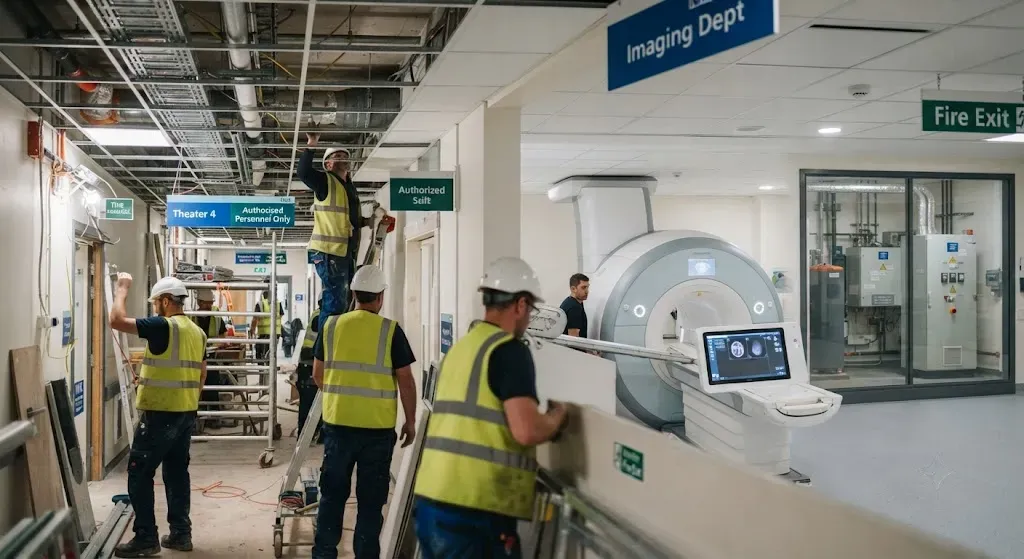
The strategic capital allocation is divided across four key operational priorities. Approximately £215 million is slated for four major site-specific improvement projects across Charing Cross, Hammersmith, Queen Charlotte’s & Chelsea, and St Mary’s hospitals. A further £128 million will fund new clinical equipment and technology, including surgical robotics. The Trust has earmarked £80 million for urgent backlog maintenance across its aging estate, alongside £20 million dedicated to acquiring a facility adjacent to St Mary’s Hospital to house administrative functions and virtual care services, freeing core hospital floor space for direct clinical delivery.
The development addresses persistent infrastructure bottlenecks stemming from structural deferrals in the UK government’s New Hospital Programme (NHP). With full-scale site redevelopments originally pushed back to the 2040s, the Trust’s interim plan aims to maintain care standards while accelerating long-term capital projects. At St Mary’s Hospital, where planning for an 800-bed facility is underway, a joint taskforce established with local authority and university partners is exploring alternative funding mechanisms to target a construction start following expected planning consent in 2028.
In addition to clinical improvements, the initiative incorporates £19 million dedicated to environmental sustainability as part of a broader decarbonisation framework exceeding £110 million since 2021. Upgrades to heating, ventilation, and energy controls are projected to reduce operational greenhouse gas emissions by 43 percent compared to 2020–21 baselines. For healthcare suppliers, medical technology vendors, and construction contractors, the investment signals substantial procurement opportunities across facilities management, digital healthcare infrastructure, energy transition engineering, and advanced surgical instrumentation.