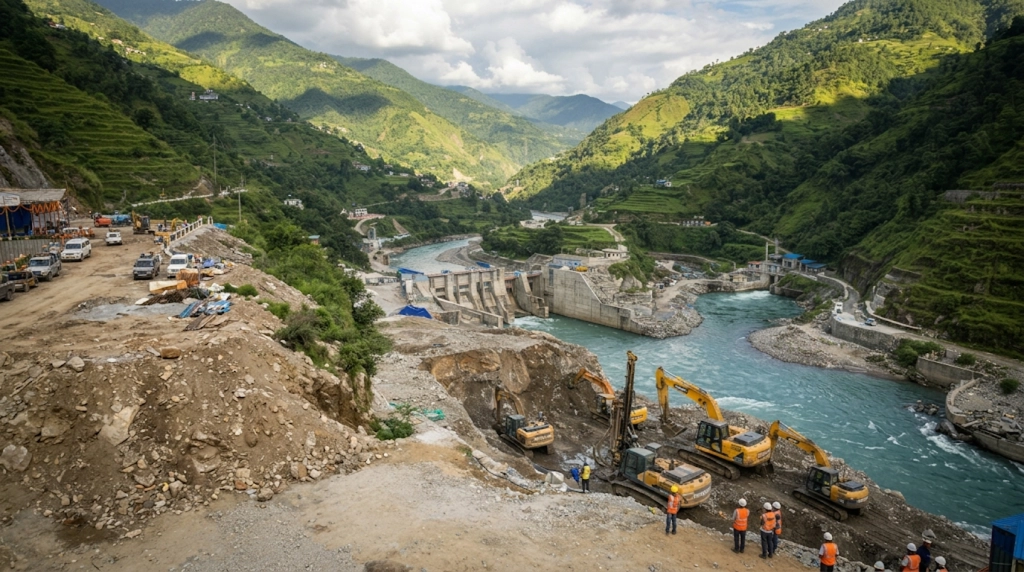
INDIA; NEPAL —Cross-border energy infrastructure between India and Nepal reached a major milestone as Indian Prime Minister Narendra Modi and Nepalese Prime Minister Balendra Shah jointly initiated construction of the 669 MW Lower Arun hydroelectric project in eastern Nepal. Backed by an estimated capital outlay of INR 57.92 billion, the run-of-the-river facility is slated for commercial commissioning in the 2030–31 fiscal period and will generate approximately 2,901 million units of electricity annually at a tentative tariff of INR 4.99 per unit.
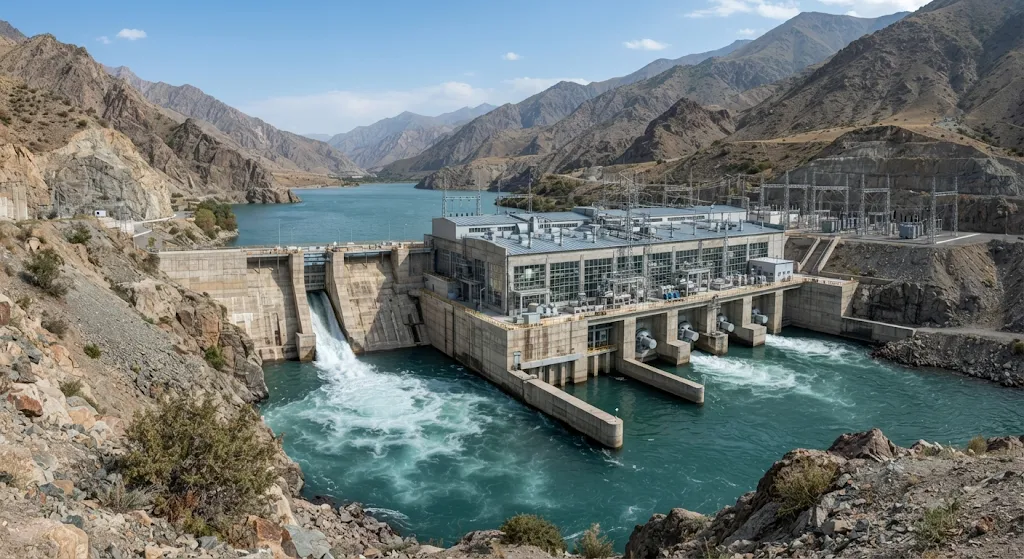
This development underscores a strategic shift toward integrated river-basin optimization in South Asia, enabling clean power expansion without the ecological and financial burdens of building new storage dams. Engineered as a tandem cascade scheme, the facility will harness water discharged directly from the upstream 900 MW Arun-3 hydroelectric station. By eliminating the need for a separate reservoir, the design maximizes hydrological efficiency along the Arun River across the Sankhuwasabha and Bhojpur districts while accelerating project delivery timelines.
Execution is being led by SJVN Lower Arun Power Development, a wholly owned subsidiary of Indian state-run power producer SJVN. Established as a joint venture between the Government of India and the state government of Himachal Pradesh, SJVN specializes in hydroelectric and renewable energy generation across domestic and neighboring markets. Under the governing project development agreement structured on a build, own, operate, and transfer model, Nepal will receive 21 percent of the generated power free of cost, alongside long-term fiscal inflows from royalties and corporate taxation.
For regional energy policy and bilateral trade, the project reinforces grid synchronization and clean energy transition targets across the Himalayan corridor. The plant will feature four generating units rated at 167.25 MW each, supported by a 17.4-kilometer headrace tunnel and a surface powerhouse. Beyond expanding renewable baseload capacity for regional power markets, the construction phase is projected to stimulate local employment and ancillary civil infrastructure in eastern Nepal.
For engineering, procurement, and construction contractors, equipment manufacturers, and institutional infrastructure investors, the commencement of Lower Arun signals sustained capital deployment in South Asian cross-border transmission and generation assets. The tandem operational framework establishes a replicable commercial blueprint for multi-stage river basin developments, lowering hydrological risk profiles and enhancing tariff competitiveness for long-term power purchase agreements.