INDIA; NEPAL —India and Nepal have launched a bilateral economic, energy, and connectivity framework anchored by a 150 billion INR-equivalent to 240 billion NPR-development cooperation package and eight memoranda of understanding (MoUs) signed during Nepalese Prime Minister Balendra Shah's State visit to India. Designed to accelerate Nepal's reconstruction and long-term infrastructure expansion, the agreements span cross-border transport corridors, hydropower generation, petroleum logistics, maritime transit access, and institutional capacity building.
The Government of India is the federal executive authority formulating foreign policy, cross-border infrastructure financing, and regional trade integration across South Asia. The Government of Nepal is the national executive administration overseeing economic development, public infrastructure planning, and bilateral trade agreements in Kathmandu. Participating institutional stakeholders include the Indian Institute of Technology (IIT), India's National Forensic Sciences University, Rashtriya Raksha University, Nepal Police's Crime Investigation Department, and Nepal's National Police Academy.
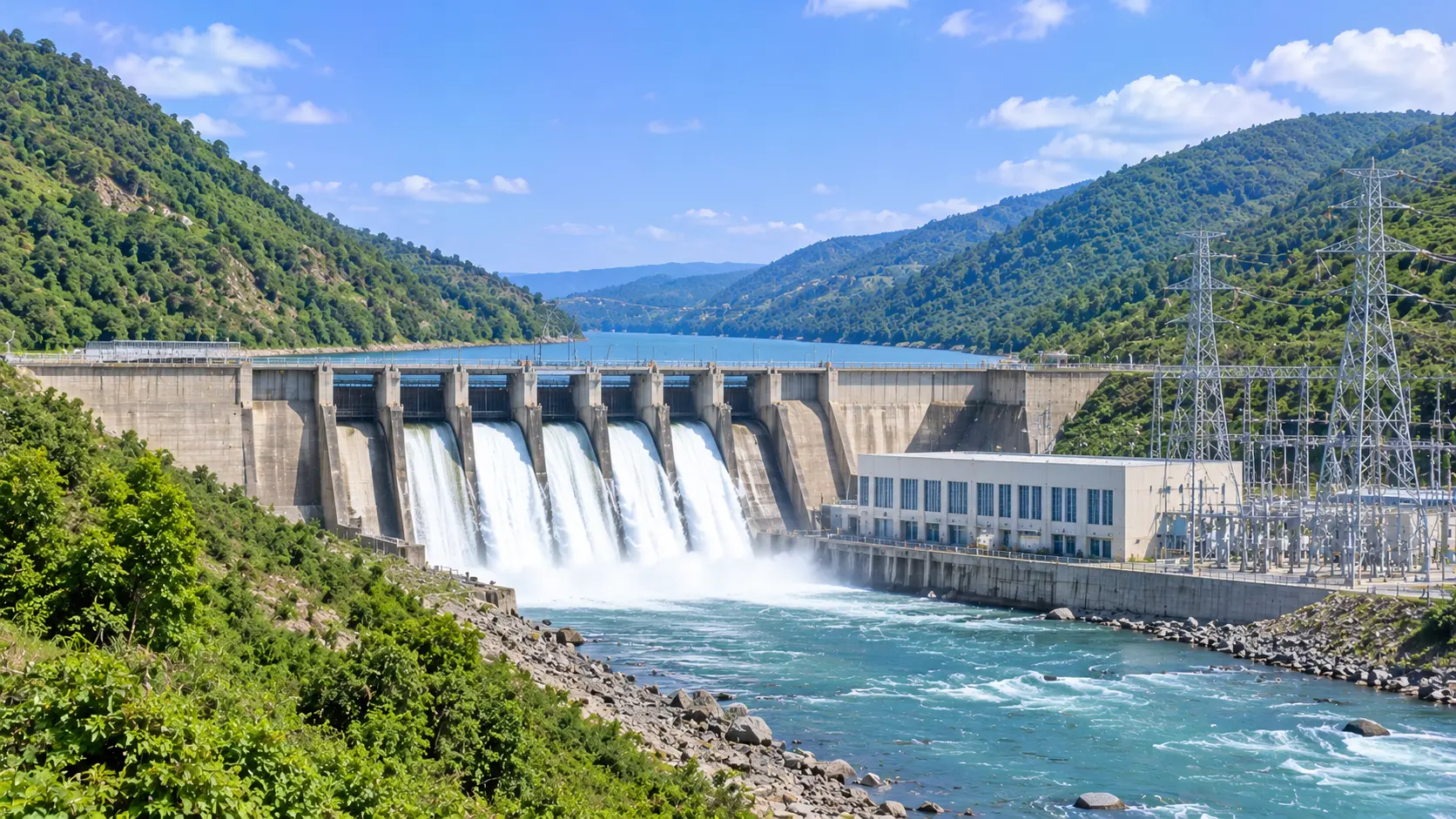
In transport and trade facilitation, both nations inaugurated a motorable bridge linking Dharchula and Darchula, launched the Sarayu-Kamala Express passenger rail service between Ayodhya and Janakpur, finalized the location survey for the electrified Raxaul-Kathmandu broad-gauge railway, and laid the foundation stone for an Integrated Check Post (ICP) at Banbasa while advancing ICPs at Bhairahawa, Sunauli, and Dodhara Chandani. India also granted Nepal transit cargo access to Deendayal Port at Kandla and Paradip Port in Odisha. In energy and industry, officials laid foundation stones for the 669 MW Lower Arun Hydroelectric Project and a petroleum terminal at Jhapa under the planned Siliguri-Jhapa pipeline, dedicated Phase II of the Motihari-Amlekhgunj Oil Pipeline, and approved an Agro-Industrial Park in Chitwan alongside an offshore IIT campus in Nepal. The eight MoUs further formalize technical cooperation in satellite communications via the South Asia Satellite, sustainable urban development, traditional medicine, healthcare, livestock and fisheries, civil service training, and law enforcement forensics.
Expanding maritime gateway options on India's western and eastern coasts alongside pipeline and rail connectivity lowers transit times and logistics costs for landlocked Nepal. For engineering and EPC contractors, energy utilities, maritime logistics operators, and agribusiness investors, sovereign-backed cross-border capital commitments unlock substantial procurement pipelines and deepen regional supply chain integration across South Asia.