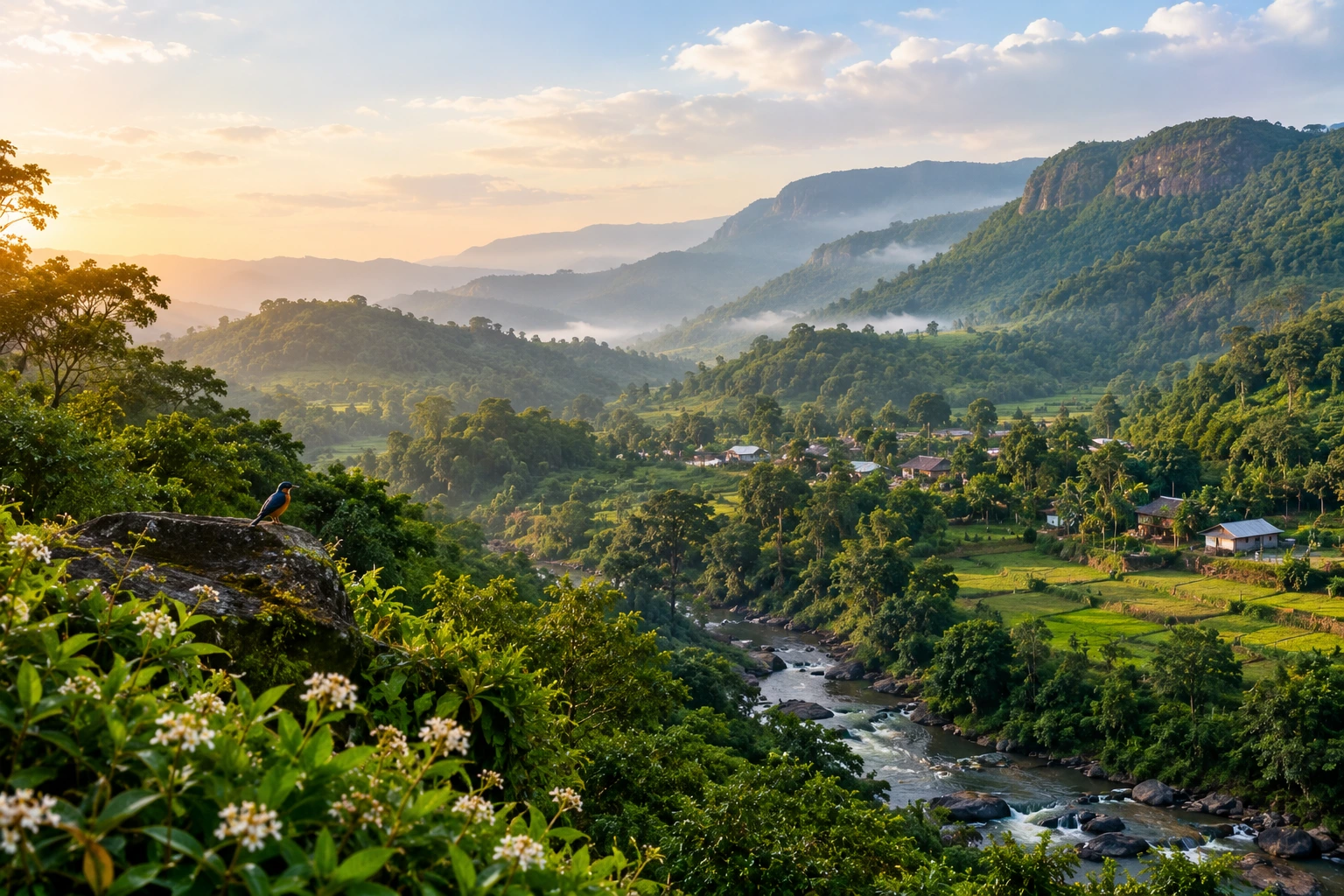
INDIA —India is expanding the role of local governments and communities in biodiversity protection through a five-year programme scheduled for 2025–2030, backed by grant funding exceeding $4.88 million. The initiative, titled Strengthening Institutional Capacities for Securing Biodiversity Conservation Commitments, is being undertaken jointly by the Government of India, the Global Environment Facility (GEF) and the United Nations Development Programme (UNDP), with implementation involving the Ministry of Environment, Forest and Climate Change and the National Biodiversity Authority.
The programme will concentrate on two biodiversity-rich regions with distinct ecological characteristics. In Tamil Nadu, activities will cover the Sathyamangalam landscape, including Mudumalai Tiger Reserve and Sathyamangalam Tiger Reserve. In Meghalaya, the project will focus on the Garo Hills, encompassing Nokrek Biosphere Reserve, Balpakram National Park and Siju Wildlife Sanctuary. These locations place the initiative at the intersection of habitat conservation, wildlife protection and local development planning.
A central component is the integration of biodiversity objectives into Gram Panchayat Development Plans. This approach is intended to bring conservation considerations into local decisions on land use, infrastructure, natural resource management and community development. Strengthening the capacity of village-level institutions could improve coordination between local administrations and environmental authorities, while giving communities a more formal role in identifying and addressing pressures on ecosystems.
The project will also explore innovative financing mechanisms to support conservation commitments. Such mechanisms are relevant because protected-area management and landscape-level biodiversity programmes require sustained resources beyond initial grant funding. Linking local planning with financing options could help participating institutions incorporate environmental priorities into development budgets and improve the continuity of conservation activities.
For India's environmental governance framework, the initiative supports implementation of the country's National Biodiversity Strategy and Action Plan and contributes to the global objective of conserving 30% of land and sea by 2030, commonly known as the 30×30 target. It also complements India's climate commitments under the Paris Agreement and the state-level development priorities of Tamil Nadu and Meghalaya.
The programme has implications for state agencies, local governments, conservation organisations and communities whose livelihoods depend on surrounding natural resources. Improved institutional capacity and coordinated planning could help reduce conflicts between development activity and ecological protection, although outcomes will depend on implementation quality, community participation and the availability of long-term funding. For development partners and environmental investors, the initiative illustrates the importance of directing resources towards governance systems and locally embedded conservation measures, rather than relying exclusively on protected-area interventions. Its performance may also provide lessons for integrating biodiversity objectives into rural development planning in other Indian states.