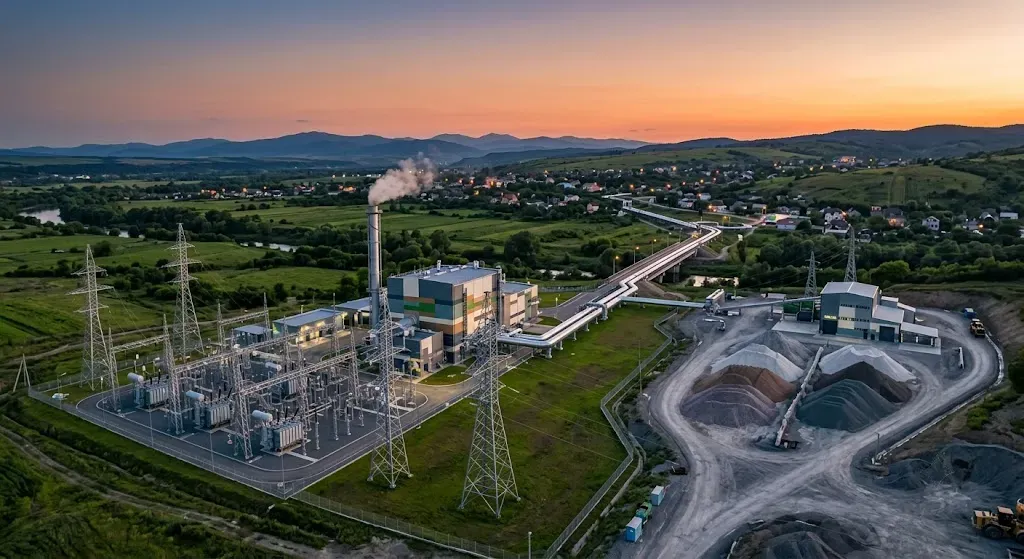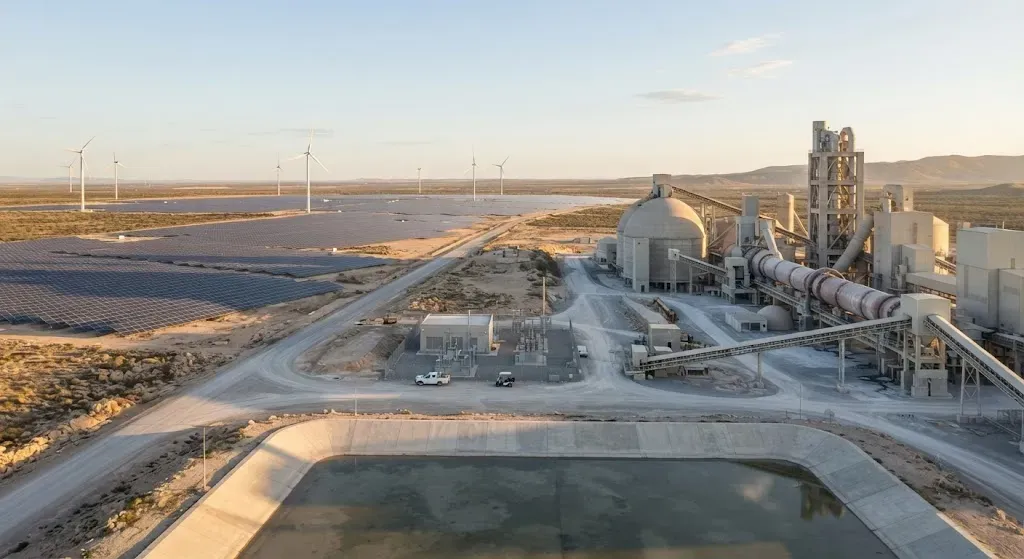
INDIA —UltraTech Cement, the flagship building materials arm of Aditya Birla Group, operates as the world's largest cement producer outside China with a total grey cement manufacturing capability exceeding 210 million tonnes per annum. The company has officially expanded its internal energy generation capabilities by commissioning a 116.55 MW wind unit in Rajasthan alongside a 10 MW waste heat recovery plant in Karnataka. These latest additions have elevated the producer's aggregate operational green power portfolio to 2,024 MW, marking a major milestone for captive industrial power deployment within the domestic building materials sector.
This expanded infrastructure framework comprises 1,580 MW of utility-scale renewable installations and 444 MW of waste heat recovery systems. Through this multi-technology integration strategy, the business now fulfills roughly 48% of its total operational electricity demands from clean generation sources. Over a third of its domestic manufacturing sites now source more than half of their power needs through sustainability initiatives, while select top-performing facilities achieve over 95% green energy reliance.
Industrial reliance on self-generated clean energy provides substantial structural advantages for heavy manufacturing operations facing global pressure to lower emission intensities. Transitioning to dedicated captive renewables substantially mitigates enterprise vulnerability to fossil fuel price spikes and power grid instability. Furthermore, combining wind, solar, waste recovery, and advanced energy storage systems creates a resilient operational template for hard-to-abate industrial sectors struggling with carbon abatement targets.
Looking ahead, the enterprise plans to scale its clean power mix to 85% by 2030, supported by continuous investments in battery storage technologies and absolute restriction on new thermal power capacity expansion. This long-term strategy underscores a broader corporate trend toward complete operational decarbonization, establishing financial predictability while reinforcing compliance with international environmental standards across heavy manufacturing ecosystems.