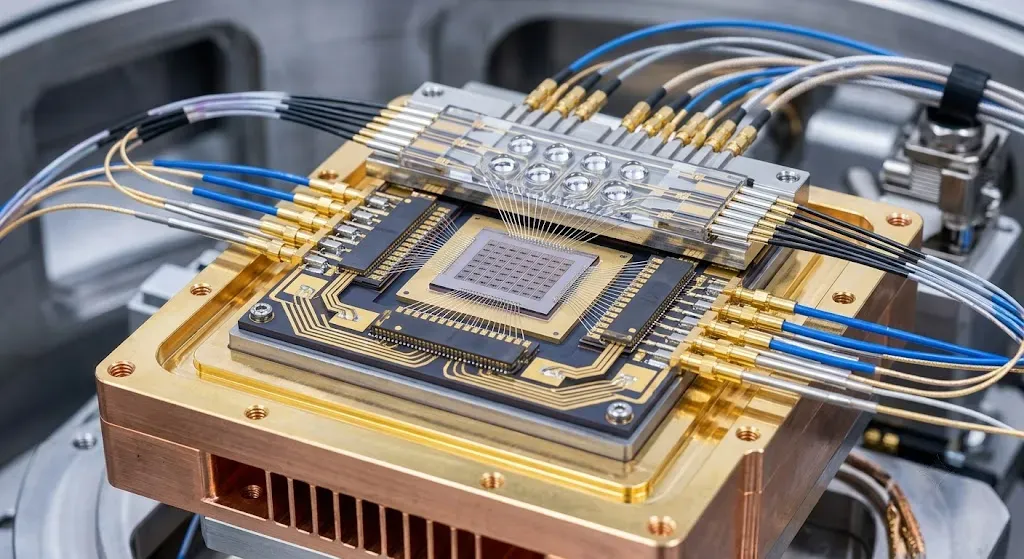
INDIA —A fresh USD 10 million equity financing round led by venture capital firm Chiratae Ventures will accelerate the development of indigenously produced photonic quantum computers in India. Existing investor Pi Ventures provided follow-on capital alongside participation from Rainmatter by Zerodha. The capital injection will allow deeptech firm Quanfluence to combine its proprietary photonic integrated circuits, control electronics, and system software into a unified full-stack architecture, advancing towards planned commercial processor deployments by 2027.
Founded in 2021 and headquartered in Bengaluru, Quanfluence is an Indian quantum hardware enterprise incubated at the IIT Madras Incubation Cell that specializes in designing optical processors, integrated circuits, and quantum optics solutions. The entity was established by semiconductor industry veterans and academic researchers with previous commercial exits in chip design.
This capital allocation underscores a broader shift within the global technology sector toward photonic quantum computing, which utilizes light particles rather than superconducting loops to process information. By operating predominantly at ambient temperatures and leveraging established semiconductor manufacturing techniques, optical quantum architectures present a distinct, highly scalable path away from traditional cryogenically cooled hardware designs. The startup's parallel commercialization of intermediate hardware components, such as photonic Ising machines and specialized optics, provides near-term cash flows that help mitigate the extensive capital requirements typical of hardware development.
The successful development of commercial-grade domestic quantum processors holds substantial strategic implications for critical sectors such as pharmaceutical discovery, financial modeling, logistics optimization, and defense communications. Sovereign technical capabilities in advanced photonics reduce reliance on foreign hardware supply chains and position the regional ecosystem as an active developer of critical next-generation computing infrastructure rather than merely an end user.