
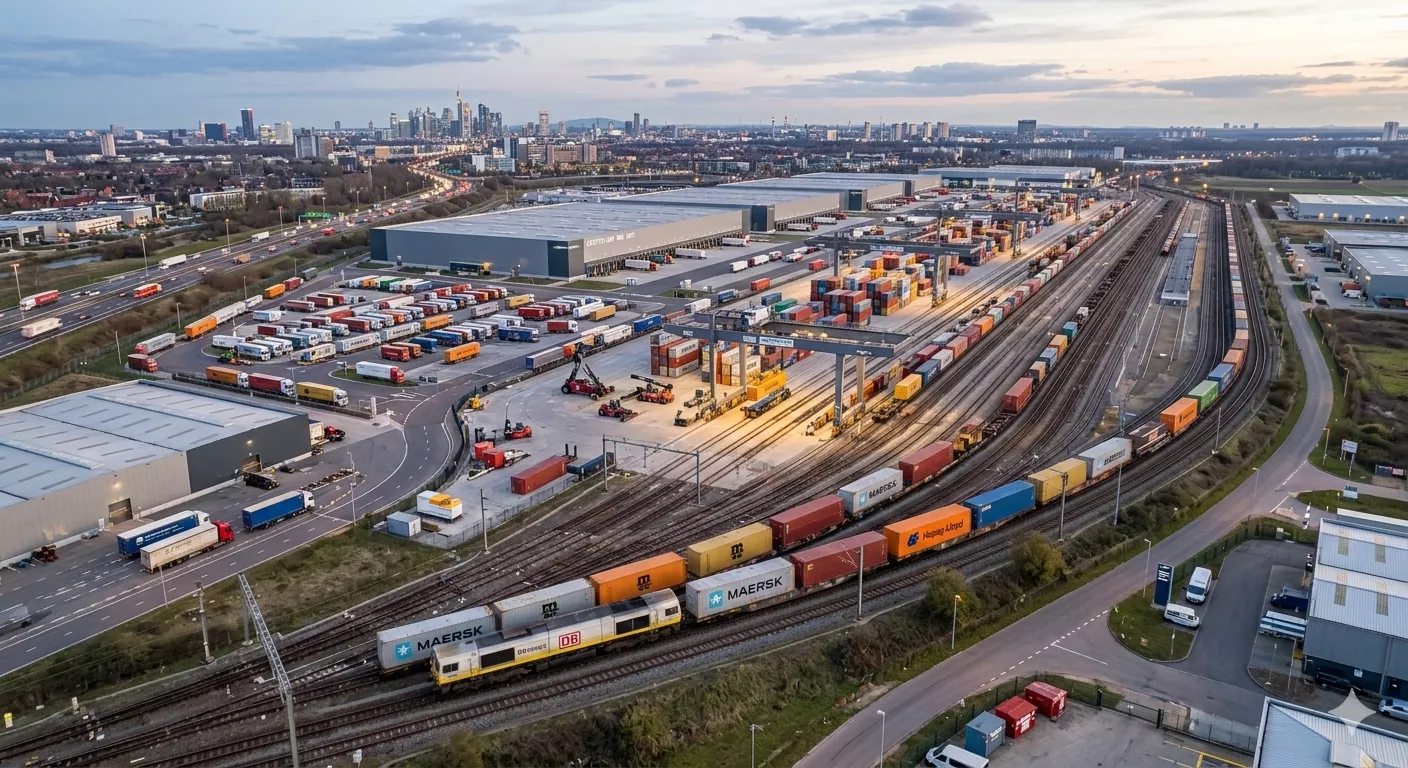
Indian Railways has undertaken 2,455 kilometers of infrastructure projects and survey works to enhance rail evacuation capacity at Haldia Port in eastern India. The initiative covers line doubling, feasibility studies, and route expansion to streamline freight movement, improve port-hinterland logistics, and support regional industrial growth.
Indian Railways has undertaken 2,455 kilometers of infrastructure development and survey projects to strengthen freight evacuation capacity and rail connectivity to Haldia Port, according to official disclosures. The multi-track expansion program encompasses feasibility surveys, line augmentation, and structural works along critical transit routes, including the Tamluk-Panskura third and fourth rail lines. Indian Railways, operated by the Ministry of Railways, is the state-owned entity managing the national rail network and heavy freight corridors across India. Haldia Port, managed under the Syama Prasad Mookerjee Port Authority, serves as a primary deep-water maritime hub in eastern India, handling major bulk commodities, industrial raw materials, and containerized trade for the eastern hinterland.
The capital expenditure and planning push directly addresses long-standing freight traffic congestion along port-bound rail routes in West Bengal. Expanding evacuation capacity enables Haldia Port to manage higher cargo throughput with improved turnaround times, enhancing multimodal freight movement across West Bengal, Jharkhand, Odisha, and northeastern trade corridors. Establishing higher line capacity is essential for preventing supply chain bottlenecks at maritime gateways handling heavy imports of coking coal, petroleum products, and industrial inputs vital for regional manufacturing hubs.
From an industry and policy perspective, the initiative supports the federal government's broader strategy under the PM Gati Shakti master plan to modernize transport infrastructure and reduce national logistics expenses. Project execution involves a multi-tiered regulatory framework requiring Detailed Project Report approvals, inter-ministerial evaluations by NITI Aayog and the Ministry of Finance, state government consultations, and financial viability assessments. These structured reviews ensure that rail corridors are prioritized based on projected freight traffic density, missing link integration, and economic feasibility, reinforcing systemic planning in state-funded transport projects.
For shipping lines, logistics providers, and industrial bulk commodities traders, upgraded rail infrastructure ensures more predictable transit schedules, lower freight costs, and improved port-hinterland connectivity. Heavy industries such as steel manufacturing, power generation, and chemical processing across eastern India stand to gain from efficient raw material delivery and finished goods distribution. Moreover, the extensive project pipeline of 2,455 kilometers opens substantial engineering, procurement, and construction (EPC) opportunities for private infrastructure firms and railway equipment suppliers involved in track laying, electrification, and modern signaling installations.
About GlobeNewsInfo
GlobeNewsInfo.com is a business news platform providing latest updates on global business developments, projects, and contract opportunities across diverse sectors and regions. The platform is designed to serve as a trusted source of information for companies, investors, and professionals worldwide.