INDIA —The Technology Development Board (TDB), operating under India's Department of Science & Technology, has executed a financial agreement with Maharashtra-based Multi Nano Sense Technologies Private Limited. TDB will provide 375.1 million rupees via Optionally Convertible Debt to support a project valued at a total cost of 750.2 million rupees. The capital allocation, issued under the Research Development and Innovation (RDI) Fund, aims to elevate an indigenous micro-electro-mechanical systems (MEMS) and analog front-end (AFE) system-on-chip (SoC) multi-gas sensor platform from technology readiness level 4 (TRL-4) to full commercial readiness (TRL-9).
The Technology Development Board is a statutory body under the Government of India's Department of Science & Technology that provides financial assistance to domestic enterprises commercializing indigenous technologies. Multi Nano Sense Technologies Private Limited is an Indian deep-technology company specializing in the design and manufacture of advanced MEMS sensors and integrated semiconductor architectures for industrial monitoring applications.
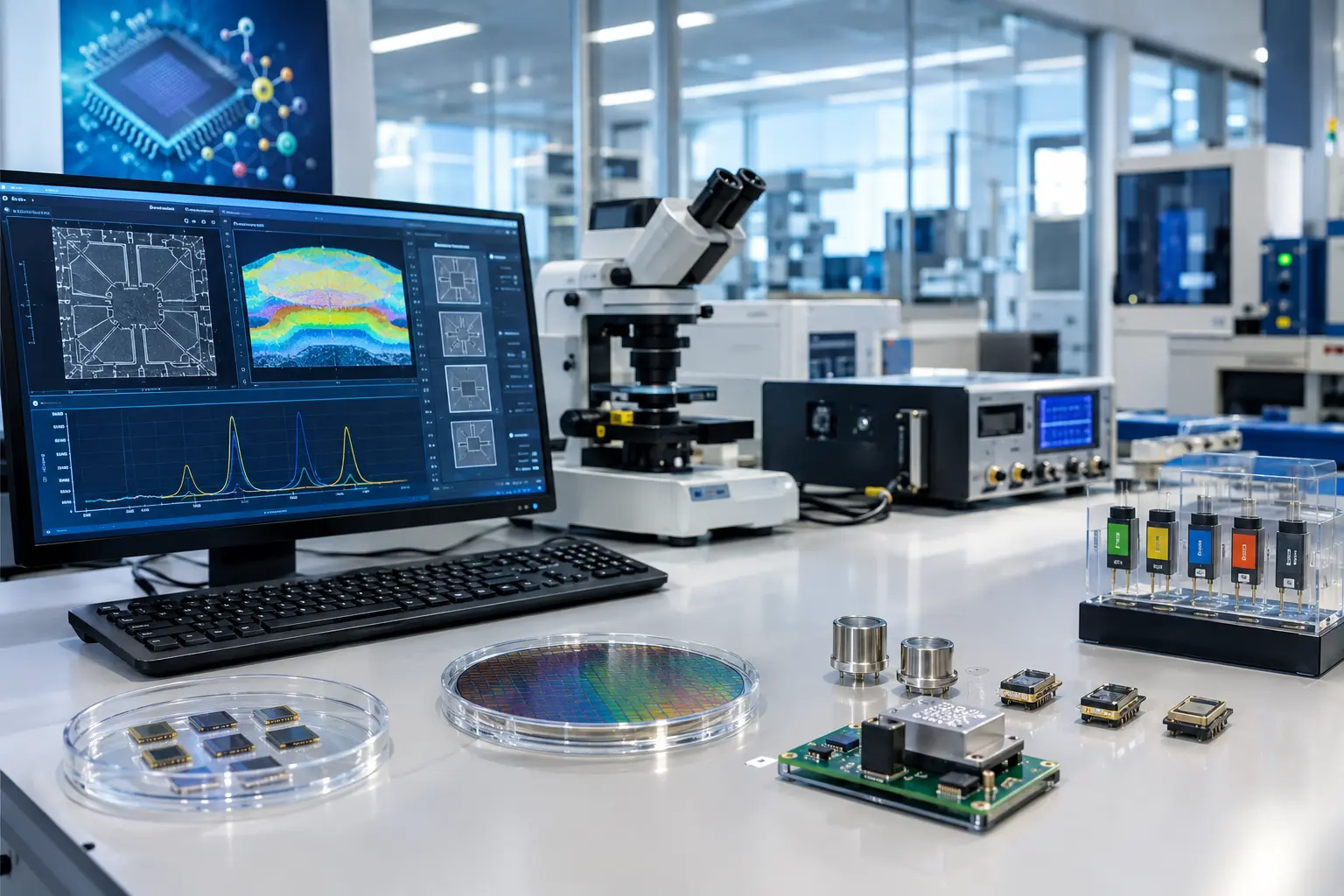
This initiative addresses growing industrial demand for precision gas detection across clean energy infrastructure, chemical process control, and hazardous environment safety. The underlying platform integrates a thermal conductivity and infrared (TCDIR) MEMS sensor with a custom CMOS signal-processing chip into a miniaturized package measuring under 25 mm by 25 mm by 15 mm. Capable of sub-200 millisecond response times and automated environmental calibration, the system is designed to operate in extreme industrial conditions, including hydrogen distribution networks, piped natural gas infrastructure, petrochemical facilities, and battery storage plants.
The funding highlights India's strategic push to localize critical semiconductor design and sensor supply chains under its national deep-tech directives. For industrial equipment manufacturers, energy producers, and automated process facilities, localized production lowers reliance on foreign hardware suppliers while accelerating deployment across high-growth domestic sectors like the hydrogen economy and advanced battery manufacturing. For technology investors, the funding framework lowers development risks for complex semiconductor ventures transitioning from pre-commercial pilot stages to industrial manufacturing.