
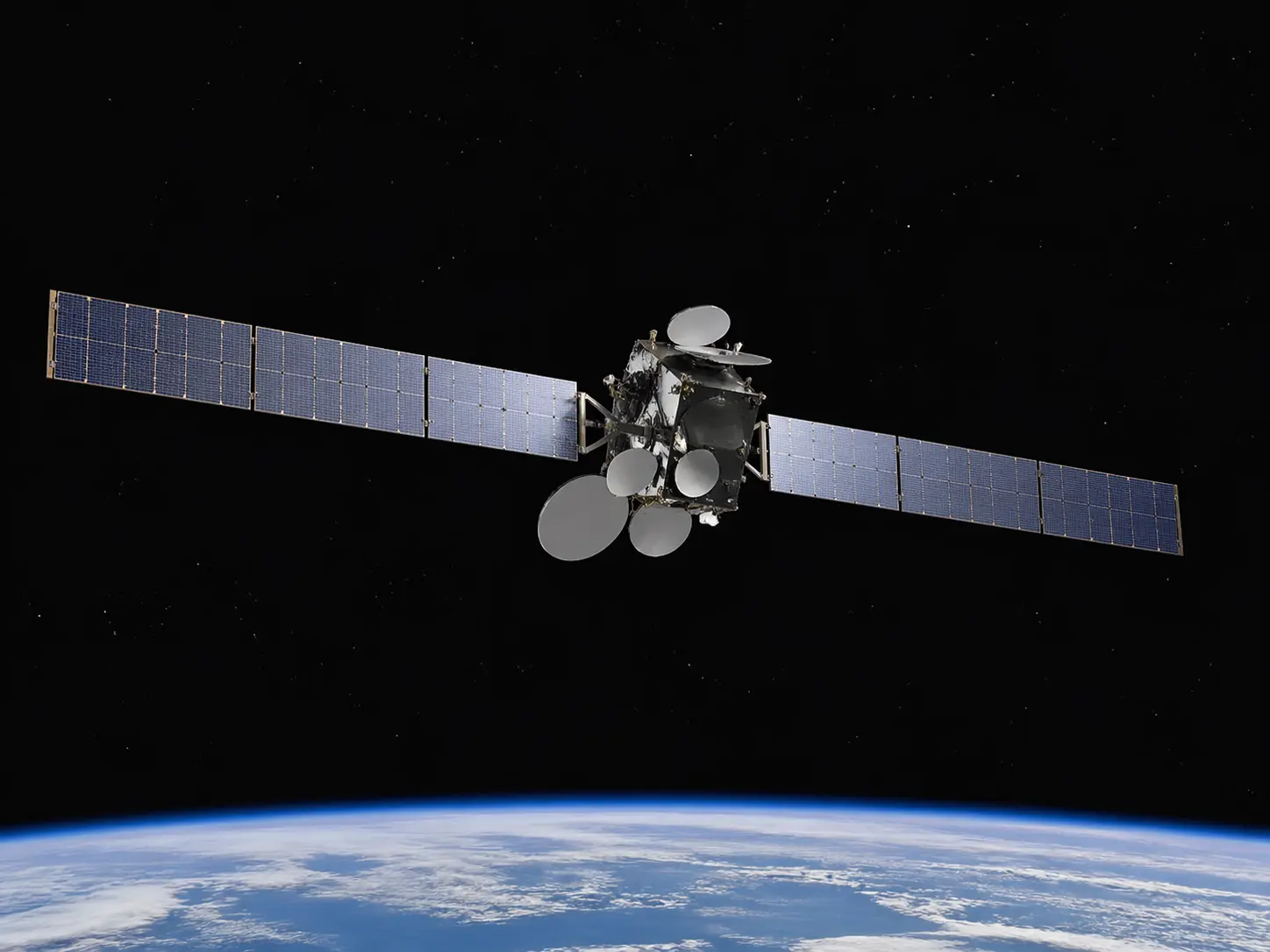
Capella, an operating entity under Maryland-based quantum computing company IonQ, has secured a commercial radar augmentation contract from the National Reconnaissance Office. The agreement enables the U.S. government to leverage high-resolution, all-weather synthetic aperture radar imagery for defense missions, highlighting growing federal demand for private space observation platforms.
The U.S. National Reconnaissance Office has selected Capella, a space-focused subsidiary of quantum technologies firm IonQ, to provide commercial synthetic aperture radar data and imagery services under the Radar Commercial Augmentation program. According to official disclosures released on August 6, 2026, the contract integration allows U.S. national security agencies to incorporate private satellite radar capabilities directly into federal Earth observation networks. Under the terms of the agreement, the company will deliver day-and-night radar observation feeds to enhance operational awareness, intelligence monitoring, and tactical planning for government entities.
Headquartered in College Park, Maryland, IonQ, Inc. develops quantum hardware platforms alongside integrated space, sensing, and defense systems. Its specialized subsidiary, Capella, operates a constellation of synthetic aperture radar satellites capable of penetrating cloud cover, smoke, and nighttime conditions to capture continuous high-resolution Earth images. The procuring agency, the National Reconnaissance Office, functions as the primary U.S. government organization responsible for designing, building, launching, and operating military and intelligence satellite systems.
This contract allocation underscores a pivotal shift in military intelligence architecture toward hybrid observation networks that merge governmental space assets with commercial radar constellations. Synthetic aperture radar provides persistent observation independent of solar illumination or atmospheric interference, making it a critical asset for real-time threat detection, environmental monitoring, and tactical reconnaissance. By tapping into commercial radar providers, intelligence agencies can achieve higher revisit rates over key geographic zones without assuming the entire capital expenditure of deploying additional government-owned orbital hardware.
The award reflects broader U.S. Department of Defense policy initiatives designed to accelerate the integration of commercially sourced space data into defense procurement workflows. Federal defense strategies increasingly prioritize resilient, multi-layered space architectures capable of maintaining operational continuity during geopolitical conflicts or satellite disruptions. For the broader aerospace and commercial defense sector, structured procurement frameworks like the Radar Commercial Augmentation initiative establish predictable revenue channels and validate commercial Earth observation technology for mission-critical operations.
For commercial technology developers and institutional investors, the expansion of government radar contracts highlights the expanding intersection between specialized space infrastructure and national security spending. As commercial operators secure long-term government contracts, non-defense applications in maritime logistics, disaster response, critical infrastructure monitoring, and supply chain management are expected to benefit from increased constellation scale and sensor fidelity. The agreement reinforces the growing market reliance on hybrid defense-commercial revenue models across the commercial space domain.
About GlobeNewsInfo
GlobeNewsInfo.com is a business news platform providing latest updates on global business developments, projects, and contract opportunities across diverse sectors and regions. The platform is designed to serve as a trusted source of information for companies, investors, and professionals worldwide.