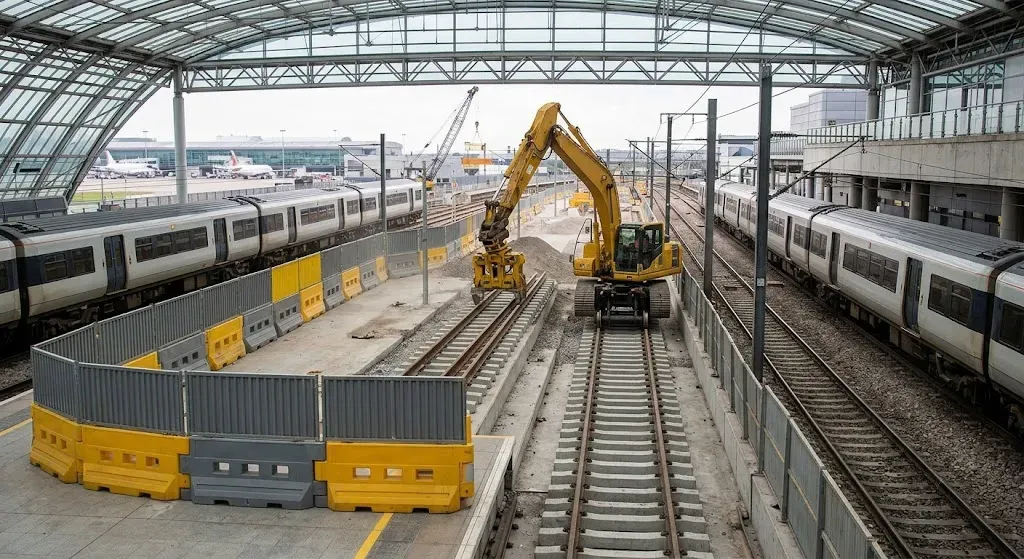
INDIA —Ircon International Limited has secured an engineering, procurement, and construction contract valued at INR 8.62 billion from East Central Railway (ECR) for track upgrading and ballast supply works. Established as a specialized infrastructure public sector undertaking under the administrative control of the Ministry of Railways, the company executes diverse domestic and international engineering projects. This major order encompasses track laying, linking operations, and permanent way material supply tailored for heavy-axle load requirements across designated regional divisions.
The development highlights sustained capital deployment toward heavy-haul freight corridor enhancements, targeting critical bottlenecks in regional logistics networks. By upgrading track infrastructure to handle heavier axle loads, the initiative directly supports freight efficiency improvements and network throughput expansion for industrial freight operations. Regional connectivity and logistical reliability across key freight arteries stand to benefit substantially from these specialized track enhancements.
Engineering, procurement, and construction contractors specializing in heavy railway infrastructure stand to gain from continued public sector capital allocation toward network modernization. The mandate underscores sustained demand for specialized permanent way materials, heavy ballast supply, and mechanized track laying capabilities within domestic railway corridors. Industry participants focusing on heavy-haul logistics infrastructure can anticipate steady order inflows as rail authorities prioritize network augmentation.
For investors and sector stakeholders, this multi-billion rupee contract reinforces the visibility of infrastructure order books for major engineering enterprises. Execution capabilities and adherence to strict milestone timelines will remain critical performance metrics for stakeholders monitoring heavy civil construction contracts. Market participants closely evaluate such capital outlays as key indicators of broader infrastructure expenditure trends within the heavy rail segment.