
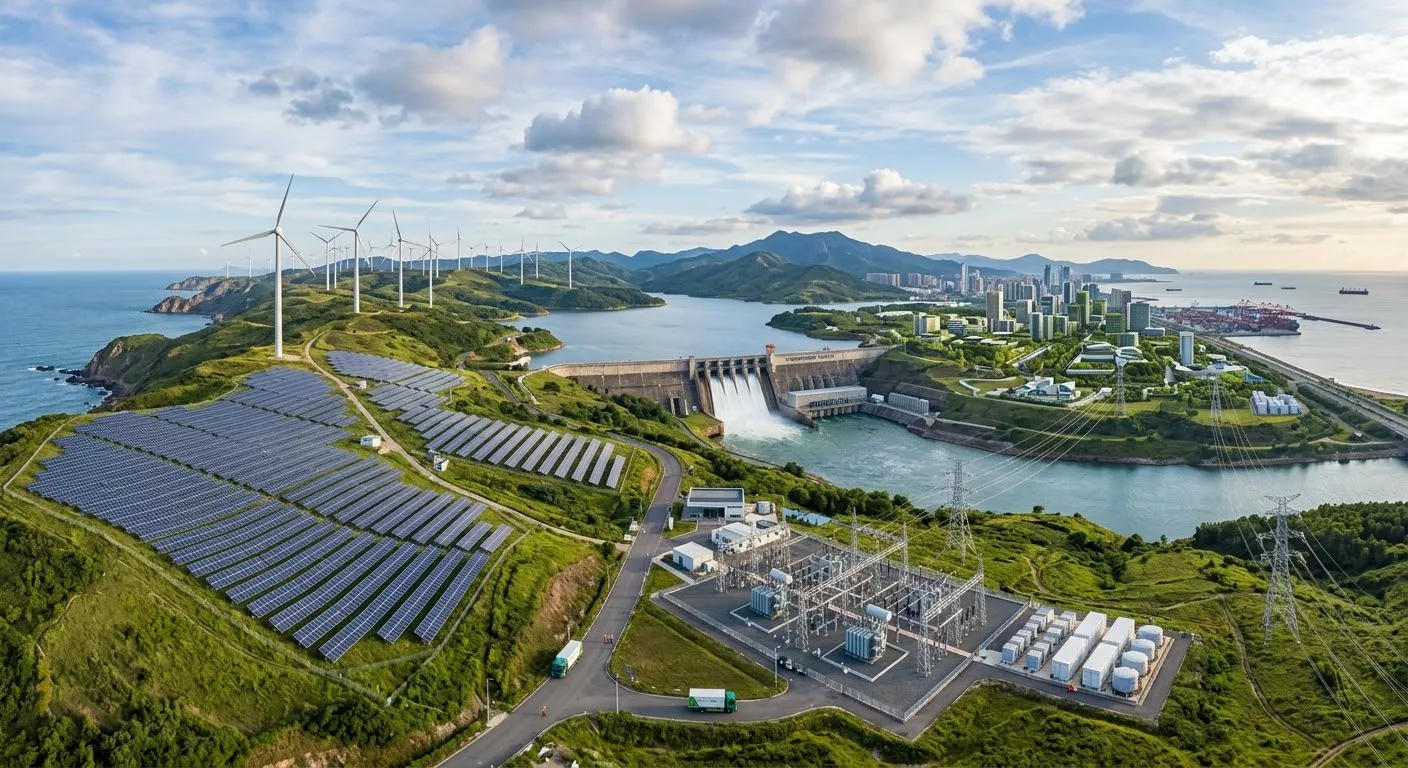
The International Union for Conservation of Nature and China Renewable Energy Engineering Institute have launched a joint initiative in Beijing to establish global ecological safeguards for renewable energy deployment, focusing on sustainable hydropower standards and river-basin environmental frameworks.
The International Union for Conservation of Nature (IUCN) and the China Renewable Energy Engineering Institute (CREEI) have formally initiated a joint project aimed at embedding ecological safeguards into large-scale renewable energy systems. Launched during an executive meeting in Beijing, the partnership operationalizes a bilateral agreement established in early 2025. The collaboration centers on two main research workstreams: standardizing parameters for nature-positive energy systems and formulating comprehensive environmental impact assessment guidelines for hydropower and related grid infrastructure.
The International Union for Conservation of Nature is a membership union composed of government agencies and civil society organizations that provides scientific data and policy frameworks for biodiversity conservation. The China Renewable Energy Engineering Institute operates as a specialized technical institution in China, providing engineering consulting, renewable energy planning and policy technical support for energy and infrastructure projects.
Integrating strict environmental benchmarks into clean energy development is vital as global power expansion increasingly collides with ecological protection imperatives. Unregulated construction of generation and transmission assets can disrupt river basins, fragment critical habitats and provoke regulatory backlash. By establishing standardized frameworks for environmental flows, fish passages, and cumulative lifecycle assessments, this joint effort seeks to minimize ecological risks while scaling up power capacity to support broader decarbonization targets.
This initiative directly affects energy infrastructure developers, utility operators, multilateral development banks and environmental regulators across Asia and developing energy markets. The integration of basin-wide environmental management standards will likely modify permitting procedures, baseline environmental impact assessments, and operational protocols for hydropower projects. Consequently, engineering firms and power companies face stricter compliance expectations regarding riverine ecosystem preservation, fish migration pathways, and adaptive environmental monitoring.
For global investors and energy project sponsors, the establishment of clear, science-based biodiversity metrics provides greater regulatory predictability and mitigates environmental, social, and governance (ESG) compliance risks. Project developers incorporating these standardized ecological frameworks early in the planning phase can reduce capital delays, streamline environmental approvals, and attract international green financing aimed at sustainable infrastructure. Additionally, power utilities will need to adjust lifecycle management strategies to meet emerging environmental performance expectations across power planning, operation, and decommissioning stages.
About GlobeNewsInfo
GlobeNewsInfo.com is a business news platform providing latest updates on global business developments, projects, and contract opportunities across diverse sectors and regions. The platform is designed to serve as a trusted source of information for companies, investors, and professionals worldwide.