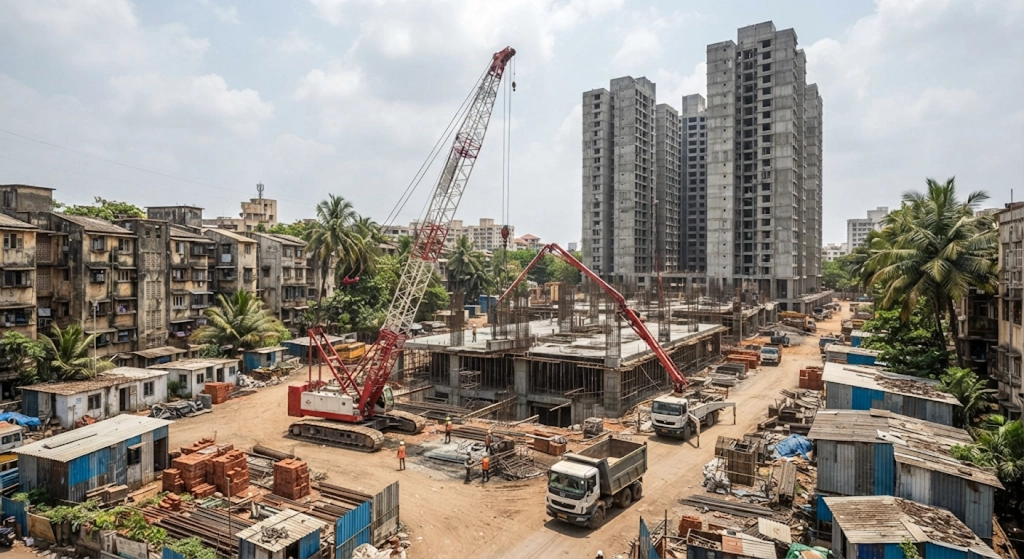
INDIA; JAPAN —Cross-border institutional funding into India's urban housing market has gained momentum following a joint commitment of INR 2 billion by Japanese property major Mori Trust and an investment vehicle advised by Route78 Partners. The capital is earmarked specifically for the free-sale residential portion of a 23.5-acre redevelopment initiative in Mumbai's Chembur suburb, which is being developed by domestic builder Chandak Group. This transaction marks Mori Trust's inaugural direct capital deployment in India and represents the second occasion Chandak Group has secured backing from Japanese institutional investors.
The inflow highlights sustained foreign appetite for large-scale urban renewal assets in land-constrained Indian metropolitan centers. By channeling structured development equity into the commercializable segment of a rehabilitation scheme, international funds gain access to prime suburban land parcels that would otherwise be difficult to aggregate through greenfield acquisitions. For domestic builders, institutional partnerships mitigate upfront liquidity pressures associated with multi-phase slum or society rehabilitation mandates, improving execution certainty in high-density corridors.
Mori Trust is a Tokyo-based real estate developer specializing in large-scale mixed-use complexes, commercial facilities, residential properties, and luxury hotels across Japan and international markets. Route78 Partners operates as a specialized real estate investment management platform backed by Japanese institutional capital, focusing on structured financing and development equity across established micro-markets in major Indian cities. Founded in 1986, Mumbai-headquartered Chandak Group has delivered over 21 million square feet across more than 45 residential and commercial projects throughout the Mumbai Metropolitan Region.
The deal underscores a broader structural shift within India's property financing landscape, where overseas pension funds, developers, and private equity platforms increasingly favor structured joint ventures over passive debt exposure. Suburbs such as Chembur have emerged as focal points for institutional capital due to upgraded transit connectivity linking central business districts with eastern Mumbai and Navi Mumbai. As regulatory oversight tightens and capital requirements rise for large redevelopment undertakings, established domestic developers with proven delivery track records are positioned to capture a disproportionate share of incoming foreign institutional allocations.
For regional stakeholders and competing real estate operators, the transaction signals intensifying competition for viable redevelopment mandates across the Mumbai Metropolitan Region. Institutional investors evaluating Indian real estate are expected to continue prioritizing scalable, multi-acre urban regeneration projects where risk-adjusted returns are supported by end-user housing demand and established local execution partners.