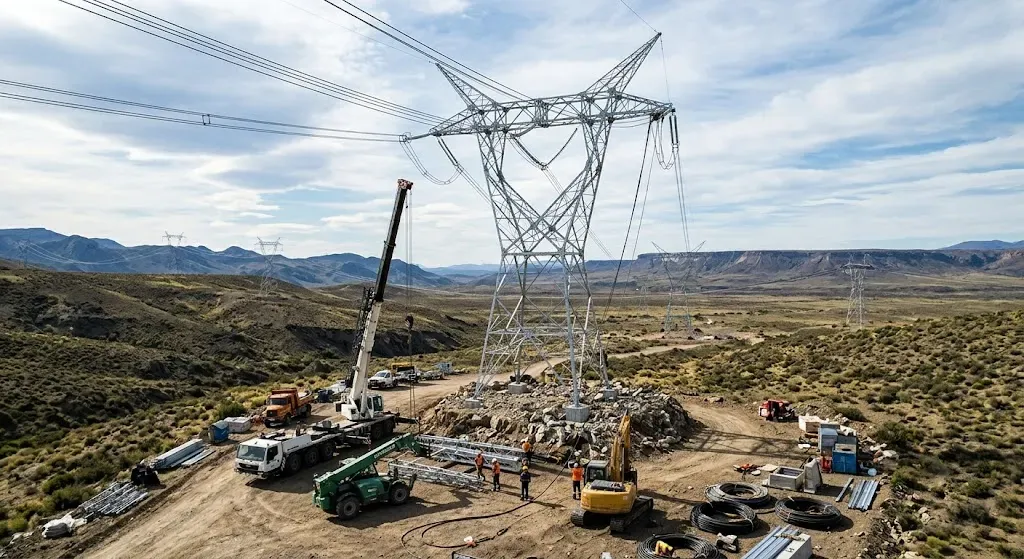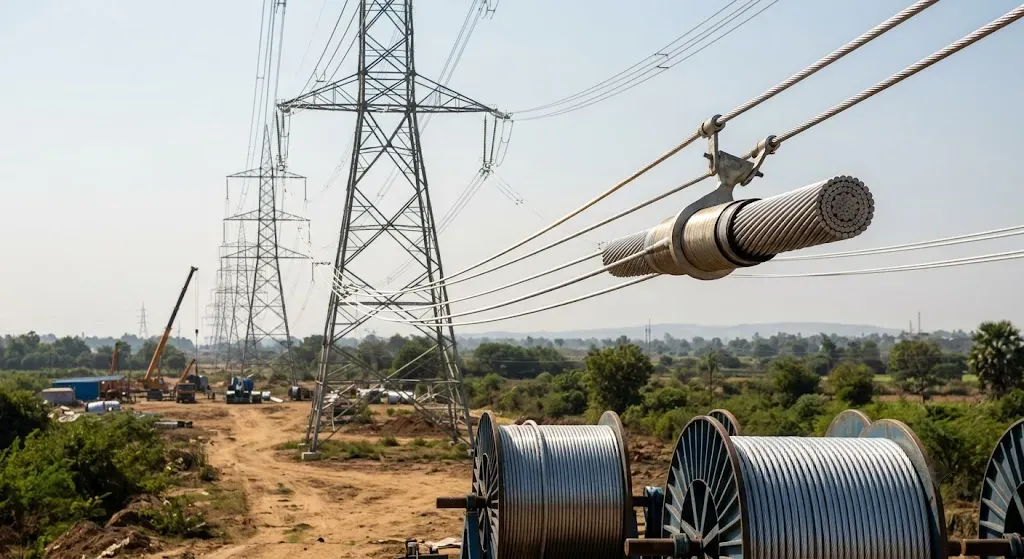
INDIA —Gujarat Energy Transmission Corporation Limited (GETCO) has officially awarded a major infrastructure agreement to Jyoti Structures Limited for the development of high-voltage power transmission assets in India. The assignment encompasses the complete lifecycle of a 765kV double-circuit power line connecting Pachchham and Saykha within the state of Gujarat. Valued at INR 6.89 billion excluding goods and services tax, the project requires comprehensive execution on a turnkey basis, spanning detailed design, material procurement, physical erection, rigorous testing, and final commissioning. Established in 1974, Jyoti Structures Limited is an Indian engineering enterprise specializing in power transmission solutions, manufacturing operations and testing infrastructure.
This substantial capital commitment highlights ongoing efforts to strengthen regional power grids and accommodate escalating industrial electricity demand. Securing high-voltage transmission mandates reinforces corporate order backlogs and stabilizes medium-term operational visibility for specialized engineering enterprises. Large-scale utility awards also stimulate localized manufacturing supply chains for metallic towers, conductors, and substation hardware.
The regional power transmission sector plays a vital role in regional industrialization by facilitating the seamless evacuation of electricity from generation hubs to high-demand manufacturing zones. Regional utility providers continuously upgrade grid infrastructure to minimize transmission losses and ensure network stability. Public procurement frameworks in this sector typically demand rigorous technical qualification and execution track records, favoring established engineering contractors.
For institutional investors and market participants, multi-billion-rupee utility awards offer clear indicators of corporate revenue generation capacity over multi-year horizons. With a mandated completion window of 42 months, execution efficiency and disciplined cost management remain critical for maintaining profit margins against raw material price fluctuations. Financial analysts closely monitor such large-scale contract realizations to evaluate the health of power sector capital expenditures.