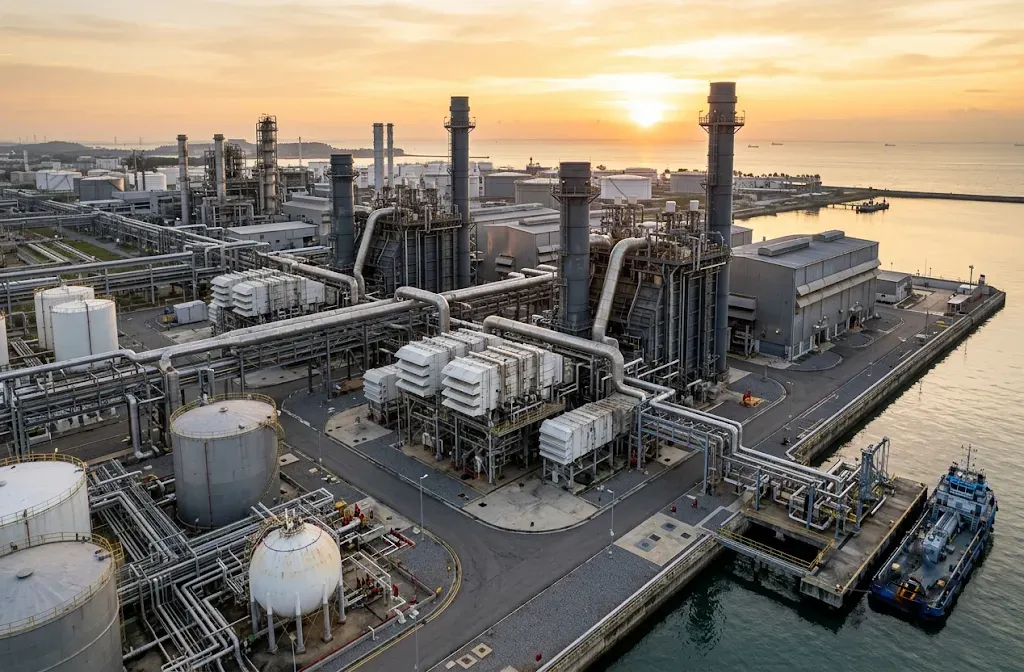
SINGAPORE —Keppel Infrastructure Trust (KIT) has initiated proceedings to secure a 70% equity interest in the Keppel Sakra Cogen Plant, marking a major portfolio consolidation within Singapore's energy sector. The transaction involves purchasing shares from Keppel Asia Infrastructure Fund (KAIF) and an associated co-investor for a base purchase price of 105 million Singapore dollars alongside a variable ticker amount reaching up to approximately 6.6 million Singapore dollars. Prior to transaction finalization, the facility is scheduled to refinance approximately 650 million Singapore dollars in debt facilities, yielding an implied enterprise value exceeding 780 million Singapore dollars on a 100% basis. The remaining 30% stake will continue to be held by the infrastructure division of Keppel Ltd., which will also maintain day-to-day operations under a long-term operations and maintenance agreement.
This structural reorganization carries profound significance for the regional power market by locking the facility into a thirty-year availability-based capacity tolling agreement. By anchoring revenue generation to plant availability rather than volatile merchant pricing, the mechanism effectively insulates the asset from fuel supply fluctuations and spot market volatility. The transaction further consolidates essential generation capacity alongside existing assets like the Keppel Merlimau Cogen Plant, creating a combined operational capacity of one point nine gigawatts under aligned management structures. For institutional investors, the arrangement guarantees predictable cash distributions while supporting broader corporate energy transition objectives through newly integrated hydrogen-compatible infrastructure.
The deal directly impacts institutional investors, energy regulators, and industrial utilities operating within dense urban markets seeking decarbonization pathways. By deploying assets equipped to co-fire up to thirty percent hydrogen at the outset, the arrangement sets a regulatory and operational benchmark for industrial power generation in land-constrained economies. Stakeholders across the energy supply chain must evaluate how long-term capacity tolling models alter competitive dynamics, particularly as institutional trusts increasingly absorb capital-intensive, low-carbon generation facilities to satisfy environmental mandates and secure predictable yield profiles.
Market participants face shifting capital allocation strategies as private equity infrastructure funds successfully realize asset values to return capital to limited partners. For Keppel Asia Infrastructure Fund (KAIF), this divestment represents its third major realization, demonstrating a repeatable lifecycle model of taking capital-intensive energy projects from construction through commercial operations to institutional monetization. Concurrently, business trusts are expanding their exposure to essential utilities, utilizing debt refinancing and internal liquidity to acquire modernized assets that enhance distribution per unit metrics while navigating strict regulatory approval processes.