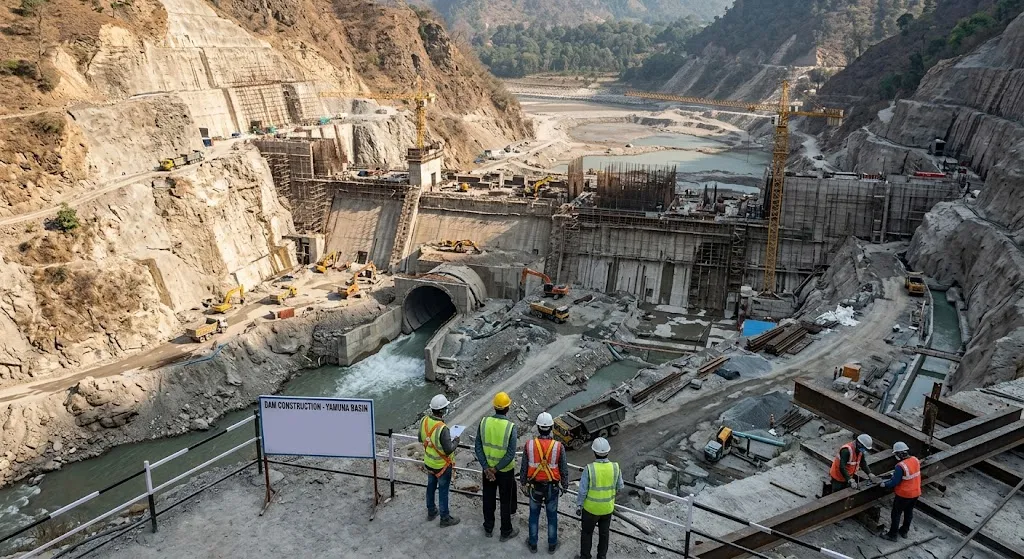
INDIA —Six northern Indian states - Uttar Pradesh, Uttarakhand, Himachal Pradesh, Haryana, Rajasthan, and the National Capital Territory of Delhi, have formally executed an agreement to implement the Kishau Multipurpose Dam Project. Declared a National Project by the central government, the infrastructure initiative will receive 90 percent of its total financial backing from central funds, while the remaining 10 percent will be shared among the beneficiary states. The project is designed to store excess water, regularize flow along the Yamuna River basin, and mitigate regional water scarcity.
This development marks a crucial step in resolving long-standing inter-state water distribution conflicts across northern India. By securing cooperative participation and establishing a federally backed funding mechanism, the project stabilizes resource rights for major municipal and agricultural centers. Improved water security in the Yamuna basin directly addresses growing urban consumption demands in Delhi and surrounding industrial hubs while enhancing seasonal irrigation predictability for primary agricultural regions in Haryana, Rajasthan, and Uttar Pradesh.
The Ministry of Jal Shakti is the primary union government agency responsible for overseeing national water resources, river development, and water sanitation initiatives in India. The ministry formulates national policies, manages inter-state river disputes, and directs major hydro-infrastructure projects aimed at expanding water security and sustainable management across the country.
The agreement strengthens long-term economic resilience by laying the infrastructure foundation for reliable water management, which is vital for sustained urban expansion, industrial manufacturing, and agri-business productivity. Furthermore, controlled river flows and enhanced reservoir capacity are projected to spur opportunities in hydro-engineering, construction, and sustainable municipal infrastructure operations across the participating northern states.