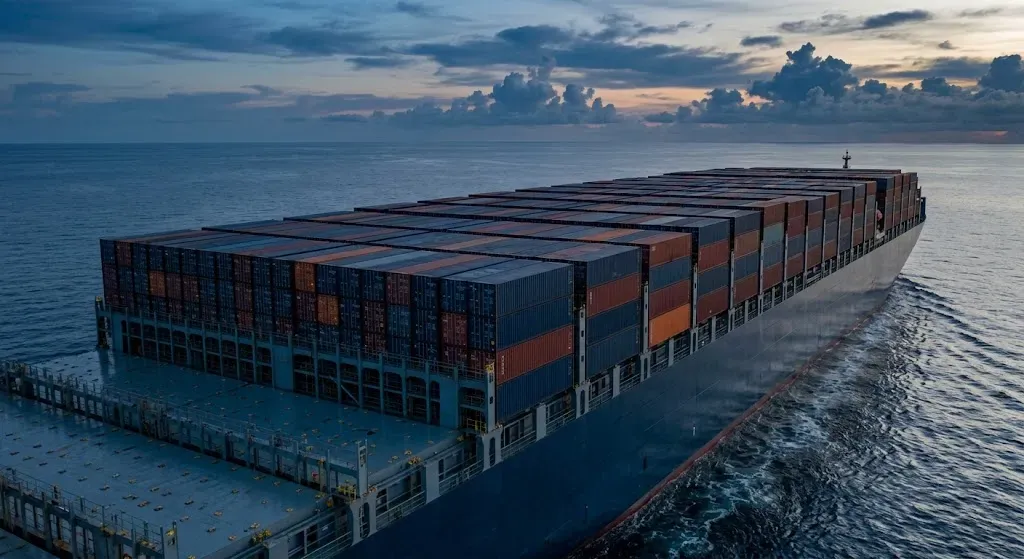
KOREA (SOUTH) —A South Korean shipbuilder has delivered a 13,000-TEU container vessel equipped with an automated cargo securing framework, marking a operational transition away from manual deck lashing. Constructed for a French maritime transport enterprise, the vessel incorporates extended vertical guide structures and standardized deck support units that allow container stacks to remain secured without conventional lashing bridges or manual steel rod fastenings.
HD Hyundai is a South Korea-based heavy industry and shipbuilding group specializing in commercial vessel construction, offshore engineering, and industrial machinery. Headquartered in Seongnam, the enterprise operates multiple specialized shipbuilding divisions serving global commercial shipping markets.
Traditional container operations require dockworkers and crew members to secure deck cargo using heavy manual lashing equipment, a process that presents safety risks and increases turnaround times at port terminals. The newly deployed system integrates extended guide rails alongside specialized securing mechanisms that link containers directly to the ship's primary frame. Operational trials demonstrated reduced vessel vibration during transit and enhanced stability under severe weather conditions.
The structural modifications allow the ship to carry more than 10 percent additional cargo weight on deck compared to standard designs of equivalent size. By eliminating manual securing requirements on deck, the technology enables full compatibility with automated port cranes and uncrewed logistics systems, supporting long-term automation targets across intermodal supply chains.
The adoption of automated securing systems is expected to influence commercial ship design standards, port infrastructure planning, and maritime safety regulations. Commercial fleet operators face growing pressure to improve crew safety, minimize container loss at sea, and reduce port stay durations. The technology offers shipowners potential gains in operational efficiency and cargo capacity while establishing a pathway toward autonomous vessel operations in global trade corridors.