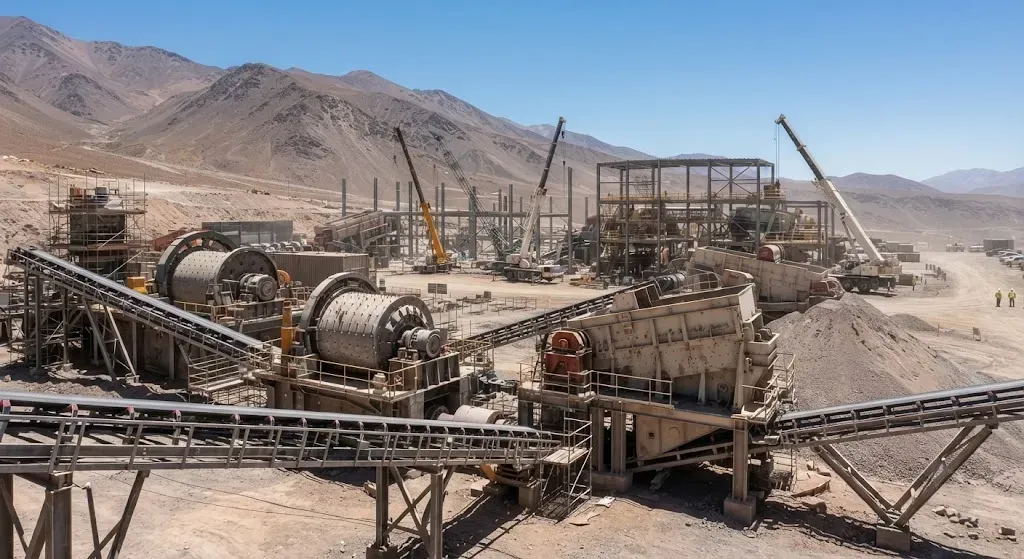
NAMIBIA —Koryx Copper S.A. has announced substantial operational refinements in the pre-feasibility study for its wholly owned Haib Copper Project situated in southern Namibia. Under the updated metallurgical design, the company has eliminated the heap leach component to transition all mineral processing entirely to a milling and flotation circuit. Metallurgical testwork has yielded consistent results supporting key process assumptions, while integration of coarse particle flotation and Jameson cells is expected to optimize copper feed grades and decrease overall energy and spatial footprint requirements.
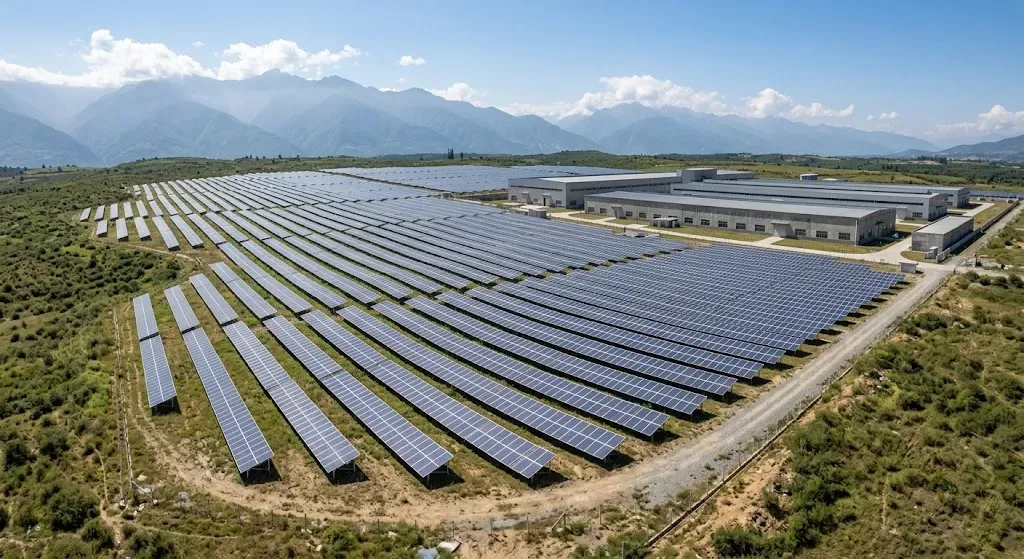
A debottlenecking evaluation has expanded the baseline crushing capacity to forty-eight million tonnes per annum. Through coarse particle flotation, the circuit will reject approximately twelve million tonnes per annum of low-grade gangue prior to flotation, leaving thirty-six million tonnes per annum of high-grade material for primary processing. In addition, the developer has executed a Memorandum of Agreement with NamPower to establish a sixty-eight-kilometer, two-hundred-and-twenty-kilovolt transmission line supported by solar photovoltaic and battery storage, along with a Memorandum of Understanding with NamWater for bulk water infrastructure.
Koryx Copper S.A. is a Luxembourg-headquartered mineral exploration and development entity focused on advancing large-scale base metal deposits across Africa. Listed on the Toronto Stock Exchange and Namibian Stock Exchange, its principal asset is the Haib copper deposit in southern Namibia.
The transition to advanced flotation technology addresses widespread technical bottlenecks associated with processing large-scale, lower-grade porphyry copper deposits. Rejection of barren waste prior to intensive flotation significantly reduces energy consumption and chemical reagent usage per tonne of recovered metal. This capital-efficient flow sheet alignment highlights a broader mining sector movement toward low-carbon, highly automated mineral processing solutions in remote sub-Saharan mining districts.
From a strategic standpoint, securing long-term power and water framework agreements significantly reduces execution risk for prospective debt financiers and institutional investors. The enhanced throughput capacity and simplified metallurgical flowsheet enhance project economics, positioning the asset as a prospective long-life source of copper concentrate amid expanding global demand for transition metals.