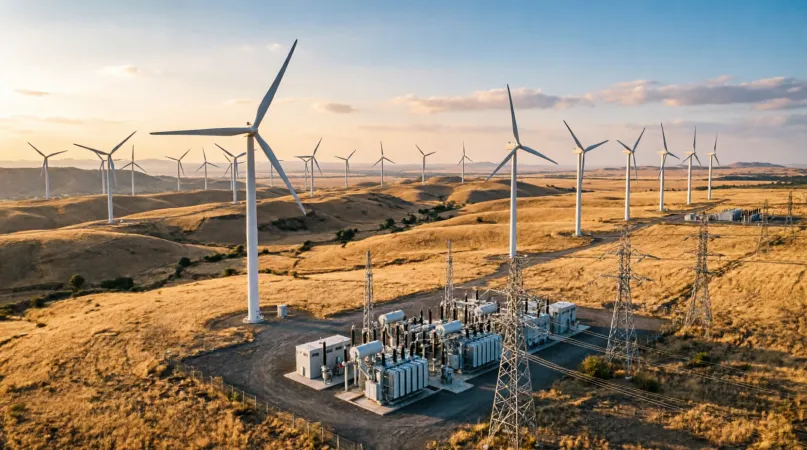
INDIA —KPI Green Energy has initiated a major consolidation move in India's renewable sector by entering an agreement to take over Alfanar Energy and Netra Wind for an enterprise valuation of approximately INR 24.1 billion. The transaction will grant the buyer complete ownership of 507.9 megawatts of active wind generation facilities situated within the Kutch wind corridor in Bhuj, Gujarat. The deal encompasses 301.4 megawatts from the Alfanar portfolio and 206.5 megawatts from the Netra holding. The acquisition process is anticipated to conclude by late February 2027, pending standard regulatory and lending clearances.
Established in 1994, KPI Green Energy operates as the renewable energy division of the KP Group. The entity develops and manages solar, wind, and hybrid power installations across India, functioning both as an independent power producer and a service provider for captive power projects.
This consolidation highlights a growing trend among mid-tier renewable energy developers to bypass greenfield construction risks by acquiring fully operational, revenue-generating assets. By securing these specific wind farms, the buyer gains immediate scale without the customary delays associated with land acquisition, supply chain bottlenecks, and commissioning uncertainties. Crucially, the acquired installations are backed by 25-year power purchase agreements with the state-backed Solar Energy Corporation of India (SECI). With an average of 21 years remaining on these contracts, the acquiring firm secures a highly predictable, long-term cash flow profile that enhances its balance sheet stability.
The transaction underscores the maturation of the Indian renewable energy market, where secondary market transactions for operational assets are accelerating. Such deals facilitate the exit of early-stage developers while allowing ambitious independent power producers to rapidly aggregate capacity. It also reinforces the strategic importance of the Kutch region as a premier hub for wind energy generation, supported by favorable state policies and robust evacuation infrastructure. The government's push for reliable green energy procurement through central nodal agencies continues to make such contracted portfolios highly attractive to institutional and corporate investors.
For the broader energy market, this acquisition signals aggressive portfolio expansion strategies by domestic developers aiming to capture market share. The addition of the new wind assets will expand the buyer's independent power production capacity from 1.16 gigawatts to nearly 1.67 gigawatts. This rapid inorganic growth positions the firm closer to its short-term benchmark of 2 gigawatts, significantly elevating its competitive standing against larger national renewable energy corporations. The move is likely to prompt competing developers to explore similar buyout opportunities to accelerate their capacity addition timelines in a capital-intensive industry.