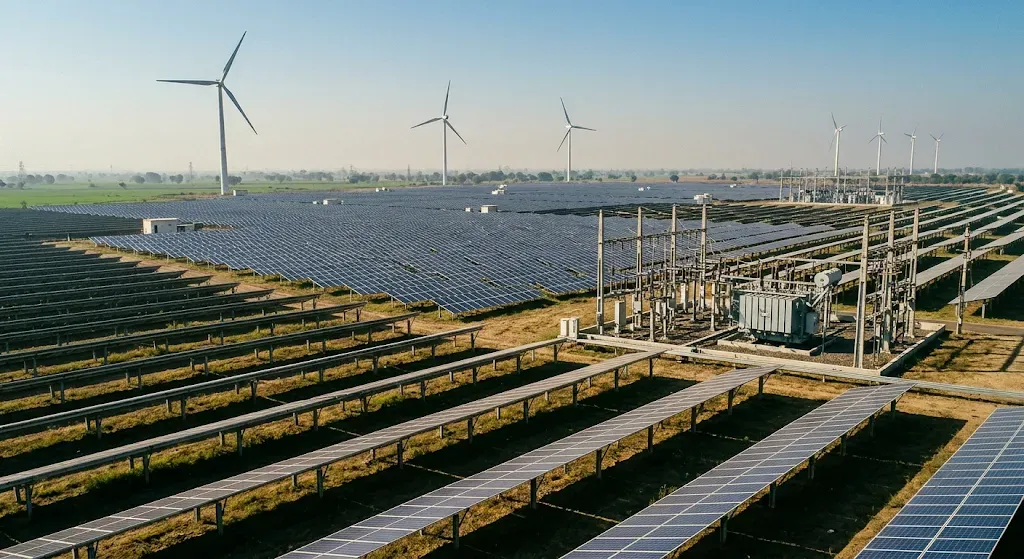
INDIA —KPI Green Energy Limited has successfully activated additional generation capacity across its utility-scale clean energy installations located in Bharuch, Gujarat. The deployment comprises 49.7 megawatts of photovoltaic capacity added to an existing solar power facility alongside 121.8 megawatts integrated into a multi-technology hybrid power plant. With these additions, the enterprise has brought online cumulative operating thresholds of 300.8 megawatts for the solar project and 510.7 megawatts for the hybrid facility, which integrates solar installations with wind generation capabilities. Established in 2008 and headquartered in Surat, India, KPI Green Energy Limited operates as an independent power producer and engineering contractor, specializing in the development and management of large-scale renewable power generation assets. These assets are constructed to supply electricity directly to state utilities under long-term bilateral purchase frameworks.
The continuous scaling of operating capacity carries substantial significance for the clean energy sector by reinforcing the financial model of independent power generation. Transitioning gigawatt-scale project pipelines into active commercial operation mitigates execution risk and establishes predictable cash flow generation over extended operational lifespans. For institutional investors and market analysts, progressive energization validates project execution capabilities, signaling that capital expenditure commitments are successfully translating into revenue-generating assets. Furthermore, the systematic expansion of utility-scale generation infrastructure supports broader regional decarbonization targets by integrating high-capacity renewable installations into the transmission network.
This development directly impacts domestic power utilities, regional transmission operators, and institutional stakeholders involved in renewable infrastructure finance. State distribution companies benefit from the steady influx of green energy capacity, which assists in fulfilling mandatory renewable purchase obligations without relying on fossil-fuel alternatives. Concurrently, the regional supply chain supporting solar module manufacturing, wind turbine assembly, and balance-of-plant engineering experiences sustained demand. Engineering, procurement, and construction contractors operating within the renewable sector closely monitor such milestones as benchmarks for deployment velocity and operational execution efficiency.
From a strategic perspective, the steady commissioning of generation assets enhances corporate earnings visibility by expanding annuity-based revenue streams that remain insulated from short-term market volatility. By balancing independent power production with engineering services, the organization diversifies its operational risk profile, securing a stable financial foundation while continuing to deploy capital into future greenfield developments. Market participants view these incremental capacity additions as critical indicators of long-term asset valuation, reflecting the broader industry trend toward predictable, contractually secured utility operations.