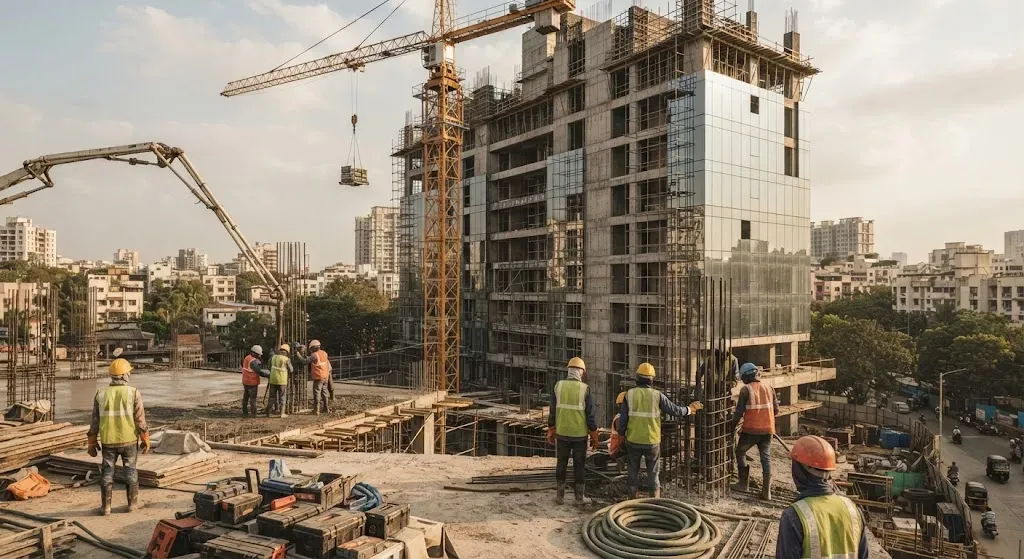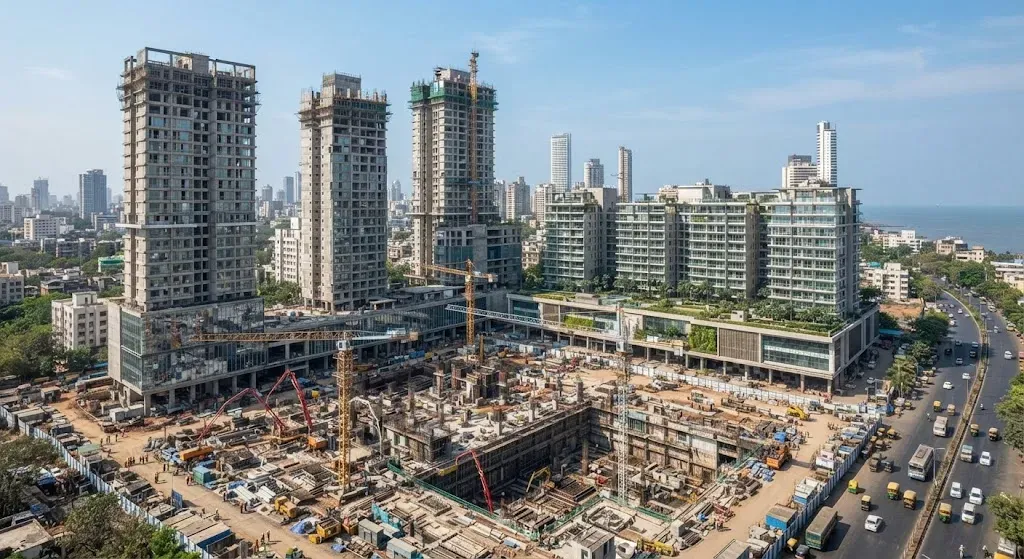
INDIA —Larsen & Toubro (L&T) has secured high-value infrastructure contracts spanning New Delhi and Andhra Pradesh, awarded by federal and state public authorities. The initial assignment, commissioned by the Central Public Works Department, involves the execution of the Common Central Secretariat structures along Kartavya Path in the national capital. This undertaking entails building two multi-floor facilities spanning a total built-up expanse of 3.28 million square feet under an engineering, procurement, and construction framework, with project finalization targeted within a 24-month duration followed by a five-year upkeep period. Concurrently, the state administration of Andhra Pradesh has contracted the engineering major to develop twin high-rise corporate towers adjacent to the Amaravati Quantum Computing Centre. Designed as a shell-and-core engineering assignment encompassing 3.75 million square feet across 47 floors, this regional development is slated for completion in 30 months.
These large-scale public mandates carry considerable strategic weight for India's urban commercial landscape, as they accelerate the deployment of high-density government infrastructure and high-tech corporate real estate in key administrative corridors. By consolidating bureaucratic facilities along the capital's central vista and establishing advanced tech-adjacent workspace in Andhra Pradesh, these developments address critical capacity constraints for state bodies while setting new structural benchmarks for large municipal real estate projects.
The initiatives directly engage key participants across the engineering, procurement, and construction sector, as well as municipal authorities, architectural consultants, and mechanical, electrical, and plumbing suppliers. Urban planners, regional real estate developers, and state-level policy makers also experience direct operational and economic impacts as these projects reshape civic architecture, stimulate local supply chains, and set new precedents for public-private execution speed and structural complexity.
For institutional investors and corporate entities, these developments signal sustained government expenditure on foundational infrastructure and high-capacity commercial spaces, offering reliable revenue visibility for major EPC market leaders. The involvement of advanced architectural configurations and extended maintenance phases highlights a broader industry shift toward integrated project life-cycle management, reinforcing confidence in large-cap contractors capable of executing complex multi-million-square-foot public works within strict contractual timelines.