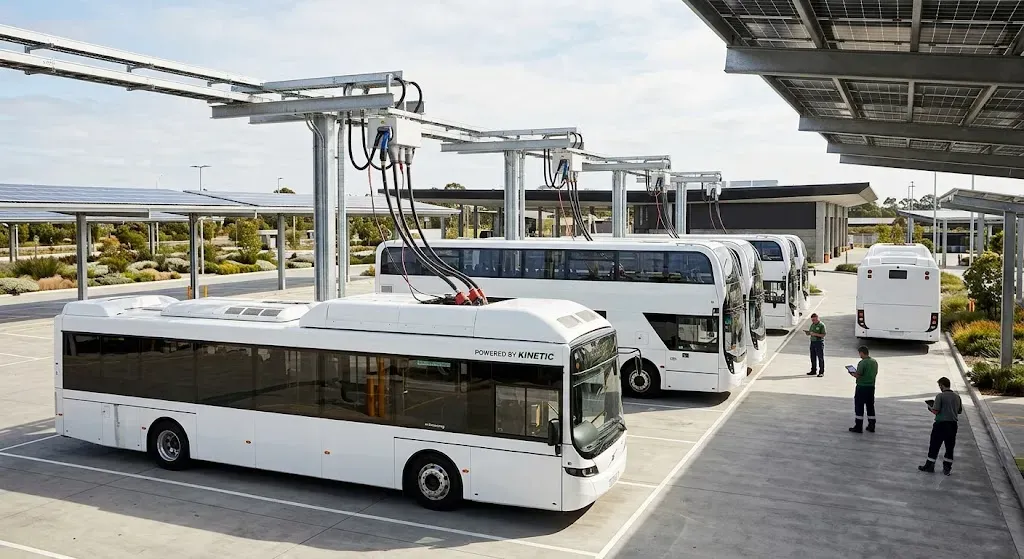
INDIA; MALAWI —Mercury EV-Tech has formalized a strategic preliminary agreement with municipal authorities in Malawi to explore large-scale deployment of zero-emission transit solutions and manufacturing infrastructure. Under the terms established with the Lilongwe City Council (LCC), the initiative targets the introduction of 150 battery-powered buses to bolster sustainable public transit networks across the administrative capital. Beyond fleet deployment, the framework evaluates the construction of a dedicated assembly facility within the region to support localized production capabilities. Mercury EV-Tech Limited is an Indian enterprise specializing in the manufacture of electric vehicles, encompassing diverse segments of the sustainable mobility market. The framework also encompasses provisions for technical knowledge exchange and capacity building aimed at strengthening regional competencies in clean energy transportation.
This cross-border development highlights a growing trend among emerging electric vehicle manufacturers seeking to capture market share in developing economies across the African continent. By targeting localized manufacturing rather than mere product export, the participating organizations aim to address regional infrastructure deficits while mitigating long-term supply chain vulnerabilities. Municipal authorities in rapidly growing urban centers face mounting pressure to reduce carbon emissions and curb urban congestion, making scalable public transport electrification an urgent priority. Establishing domestic assembly plants creates localized economic value, generates specialized technical employment, and fosters regional industrial growth within the clean technology ecosystem.
The agreement positions the manufacturer to diversify its international revenue streams beyond domestic borders by tapping into emerging sustainable infrastructure markets in East Africa. For commercial stakeholders and institutional investors, the venture represents an exploratory phase in capital allocation toward international green corridors, pending definitive commercial contracts and feasibility assessments. Market analysts note that while the memorandum establishes a clear strategic intent, future valuation impacts will depend heavily on subsequent regulatory clearances, financing mechanisms, and finalized implementation timelines. The cross-border collaboration underscores how clean mobility initiatives are increasingly driven by bilateral municipal partnerships rather than traditional trade channels alone.