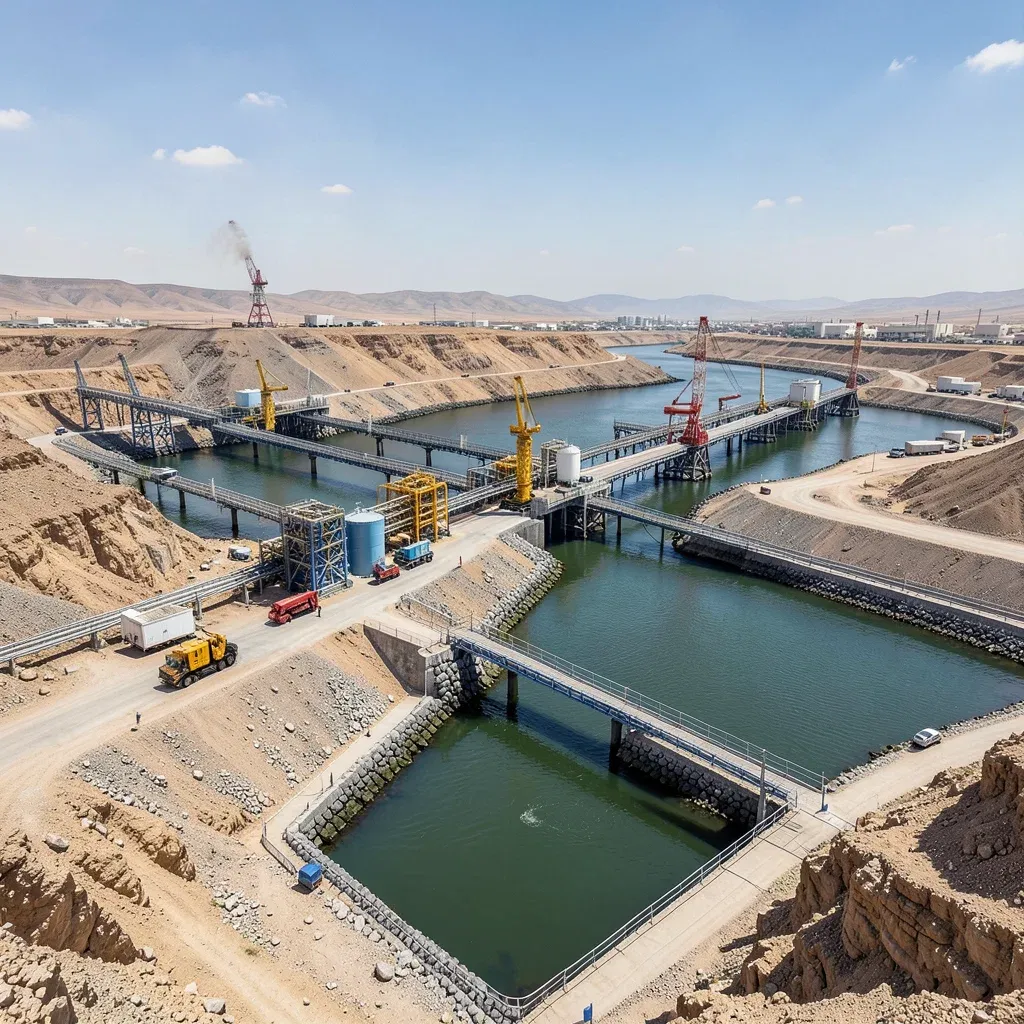
JORDAN —A multilateral financing coalition has secured over $6 billion to develop the Aqaba Amman Water Desalination and Conveyance Project in Jordan. The International Finance Corporation (IFC) played a central role in structuring the capital stack, providing a $375 million loan and mobilizing additional funds from the Japan International Cooperation Agency (JICA) and the OPEC Fund. The Green Climate Fund (GCF) is contributing $295 million in concessional financing, while the Multilateral Investment Guarantee Agency will supply political risk insurance to private equity participants.
This development addresses a critical macroeconomic and environmental vulnerability in Jordan, which currently experiences only 61 cubic meters of available water per capita annually, well below the absolute scarcity threshold. By delivering 110 liters of water per person daily, the infrastructure will satisfy approximately forty percent of the country’s domestic demand. The initiative is also projected to generate over 35,000 direct and indirect jobs, reinforcing local economic stability alongside climate resilience through integrated renewable energy operations.
Execution of the initiative falls to the National Carrier Project Company, a joint venture uniting global infrastructure investor Meridiam, water services provider Suez International, and the Jordanian Social Security Investment Fund. The International Finance Corporation (IFC), the private sector development arm of the World Bank Group (WBG), specializes in mobilizing private capital in emerging markets to create sustainable economic opportunities. Its involvement underscores a strategic shift toward blended finance models in complex, capital intensive utility sectors.
For institutional investors and development finance institutions, this transaction establishes a replicable framework for private sector participation in historically challenging water infrastructure markets. The successful alignment of commercial banks, regional development banks, and impact funds demonstrates that cross border utility projects can achieve bankability when supported by robust risk mitigation instruments and multilateral guarantees. Stakeholders in the engineering, construction, and renewable energy sectors will likely see increased procurement opportunities as the project advances into its implementation phase.