UNITED KINGDOM —Greater Manchester's regional transport network is set for major capacity upgrades following the appointment of Kier Group to undertake a GBP 54 million rail infrastructure redesign at Manchester Airport station. The contract forms a principal component of a broader GBP 115 million capital improvement initiative aimed at modernizing the transport hub to handle rising passenger volumes and improve rail reliability across Northern England.
Kier Group is a London-listed construction and infrastructure services firm operating across civil engineering, building, and rail sectors. Network Rail, the state-owned owner and manager of Britain's railway infrastructure, oversees track, signaling, and station facilities across England, Scotland, and Wales.
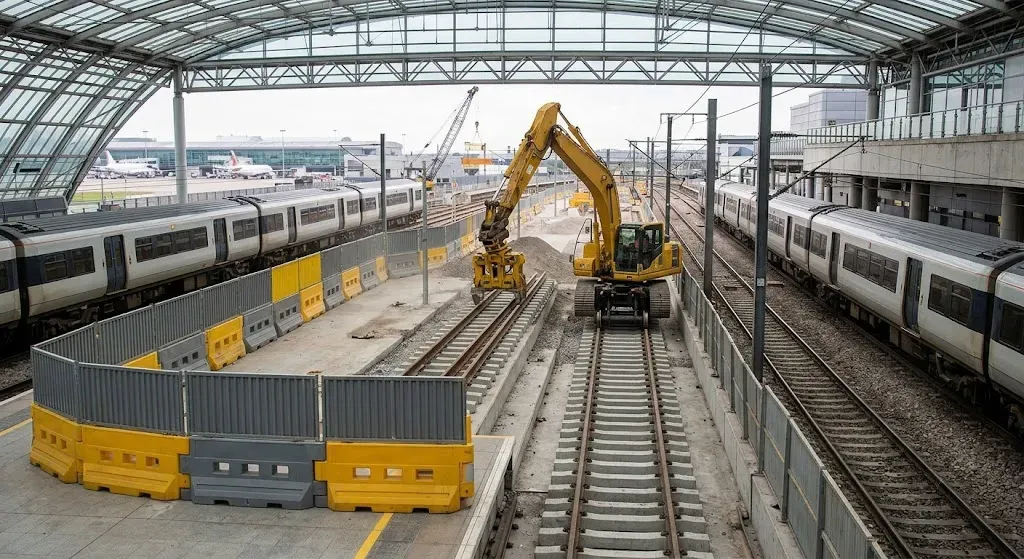
The engineering scope involves extending platforms one through three to allow simultaneously housing two six-carriage trains per platform. To accommodate the wider structural footprint, the delivery team will reconstruct an existing overbridge, adjust surrounding earthworks, install new retaining walls, and reconfigure operational land. Comprehensive system upgrades including overhead power lines, track realignment, signaling, and telecommunications will also be executed alongside underground utility diversions.
Expanding transit throughput at key regional airports is essential for sustaining regional economic development and enhancing intermodal transport efficiency. By enabling higher-capacity train configurations, the project directly resolves passenger congestion bottlenecks between major urban centers in the North and international flight routes, while aligning with wider rail modernization projects currently underway across Greater Manchester.
For the engineering and construction sector, the award underscores persistent public investment in UK transport infrastructure despite macroeconomic headwinds. Contract delivery requires complex logistics planning and localized utility mapping to ensure uninterrupted airport operations and minimal disruption to active rail services, reflecting a growing reliance on specialized contractors with end-to-end design and civil engineering capabilities.