
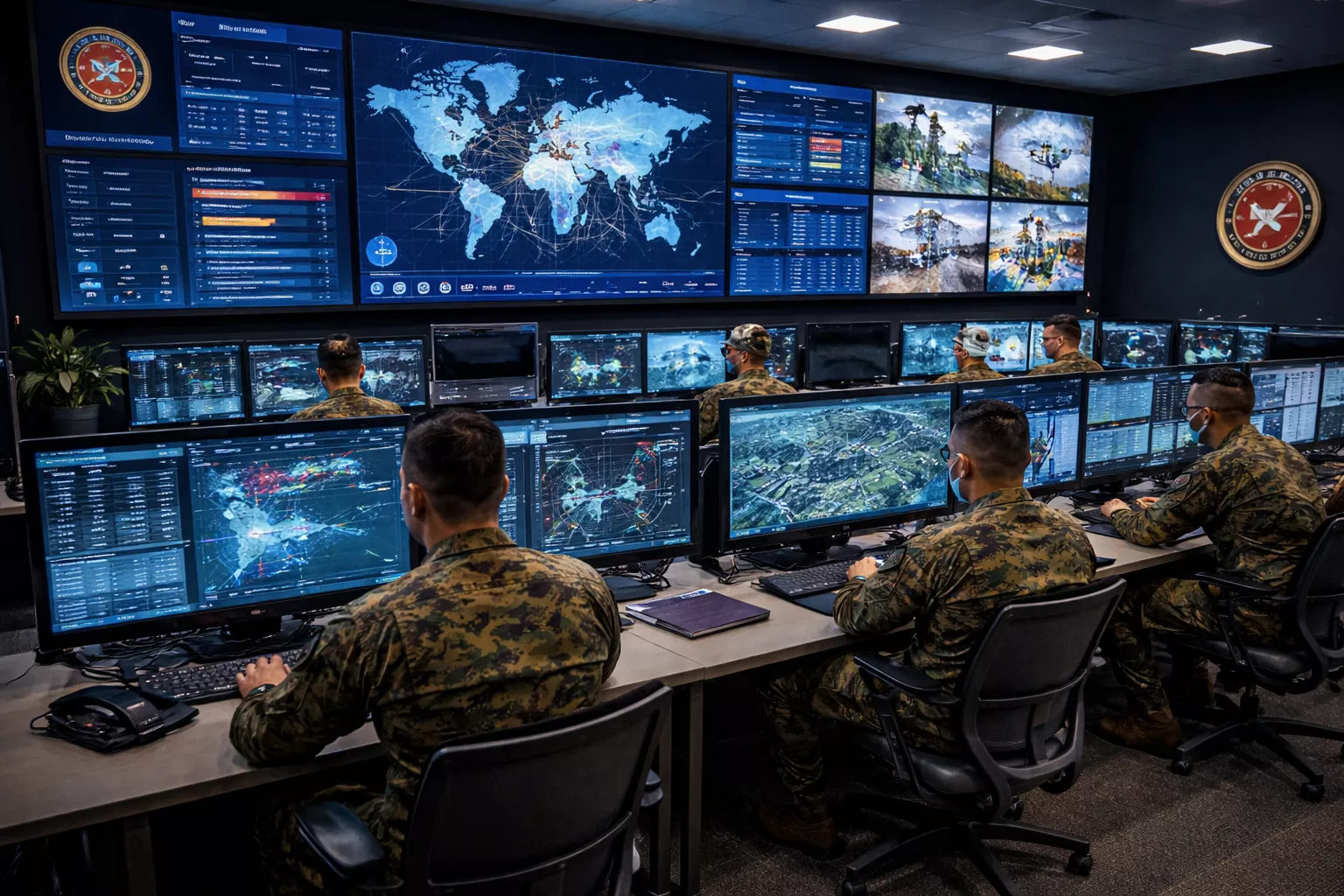
Northrop Grumman has secured a task order valued at up to $606.5 million from the U.S. Missile Defense Agency to advance missile simulation and threat modeling capabilities. The contract transition reinforces homeland defense readiness by integrating artificial intelligence into predictive threat analysis for multi-layered defense architectures.
U.S. defense prime contractor Northrop Grumman has been selected for the Modeling and Simulation Contract - Warfighter Training and Threat Modeling (MSV-TASD) task order, issued under the U.S. Air Force’s Enterprise-Wide Agile Acquisition Contract framework, according to official disclosures. The agreement features an initial two-year base period valued at $68.8 million, with five annual options that could elevate the cumulative deal value to $606.5 million. Headquartered in Falls Church, Virginia, Northrop Grumman is a multinational aerospace and defense technology company specializing in national security systems, autonomous tech, and strategic deterrent assets. Under this initiative, the company will deliver continuously accessible, advanced simulation capabilities and threat modeling frameworks to support round-the-clock operational testing and warfighter training.
This contract expands upon the Specialized Warfighter Development Contract program, through which Northrop Grumman supported missile defense capabilities for nearly a decade. By transitioning to the MSV-TASD framework, the U.S. Missile Defense Agency aims to modernize its predictive analytical tools to anticipate and simulate complex multi-domain air and missile strike scenarios. The integration of artificial intelligence-driven development platforms and scalable agile software engineering methodologies is expected to accelerate technical performance, enhance system reliability, and reduce life-cycle costs. These predictive tools serve as a core technical foundation for prototyping and validating next-generation layered homeland missile defense architectures against evolving hypersonic and ballistic threats.
The development underscores a broader strategic shift within national defense policy toward digital engineering, algorithmic warfare, and continuous simulated readiness. Defense stakeholders across North America and allied nations are increasingly prioritizing software-centric combat modeling over conventional physical testing to address rapidly shrinking decision windows in modern warfare. This modernization effort directly impacts defense technology suppliers, system integrators, and software vendors specializing in defense-grade artificial intelligence and high-performance computing. Furthermore, the reliance on flexible contracting mechanisms like the Enterprise-Wide Agile Acquisition Contract highlights government efforts to streamline procurement cycles and rapidly deploy technical upgrades to operational units.
For institutional investors and defense contractors, this agreement underscores the long-term capital flows directed toward digital transformation, simulation systems, and homeland air defense modernization. Northrop Grumman’s continued anchor position within U.S. missile defense programs stabilizes its mission systems unit revenue stream and reinforces its competitive moat in complex threat modeling software. Defense sector firms seeking subcontracts or adjacent opportunities will likely see expanding demand for scalable cloud infrastructure, machine learning capabilities, and real-time threat emulation platforms. As global geopolitical tensions spur elevated defense spending, integrated threat-simulation capabilities will remain a critical growth area across global aerospace markets.
About GlobeNewsInfo
GlobeNewsInfo.com is a business news platform providing latest updates on global business developments, projects, and contract opportunities across diverse sectors and regions. The platform is designed to serve as a trusted source of information for companies, investors, and professionals worldwide.