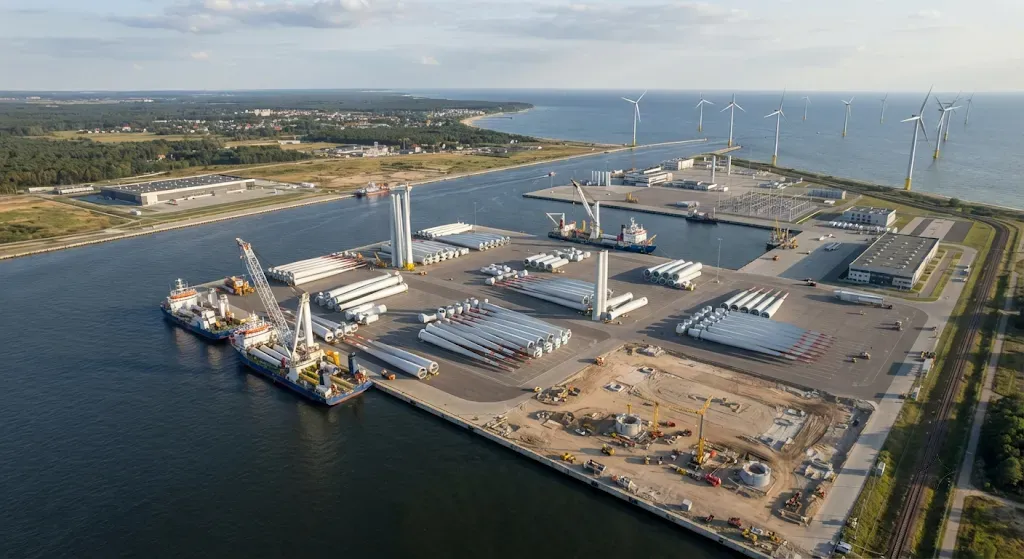
POLAND —The European Commission has issued a conditional positive preliminary assessment on Warsaw's sixth and final EUR 12.7 billion payment request under the Recovery and Resilience Facility (RRF), clearing 76 of 77 milestones and targets while flagging an incomplete objective tied to upgrading and expanding ports serving offshore wind farms. Poland submitted the filing on 30 September 2026 after completing its implementation push ahead of the facility's scheduled year-end 2026 wind-down. The preliminary evaluation now goes to the Economic and Financial Committee (EFC) for a four-week review, while Warsaw has two months to submit observations on the disputed port target before the Commission finalizes its assessment and applies any proportional payment reduction.
NextGenerationEU is the European Union's temporary recovery instrument created to support post-pandemic economic repair and structural transformation across member states, with the Recovery and Resilience Facility (RRF) serving as its core funding mechanism. This partial approval carries weight beyond a single tranche because it tests how Brussels enforces late-stage deliverables right before program closure. Rather than delaying an entire multi-billion-euro disbursement over one missing benchmark, the Commission is applying proportional reduction and suspension rules that separate verified progress from unresolved bottlenecks.
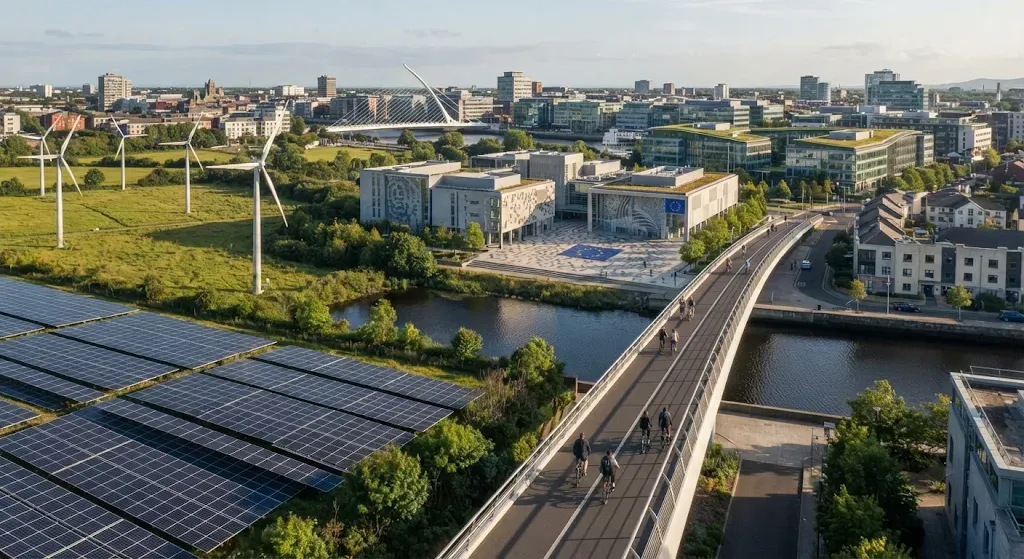
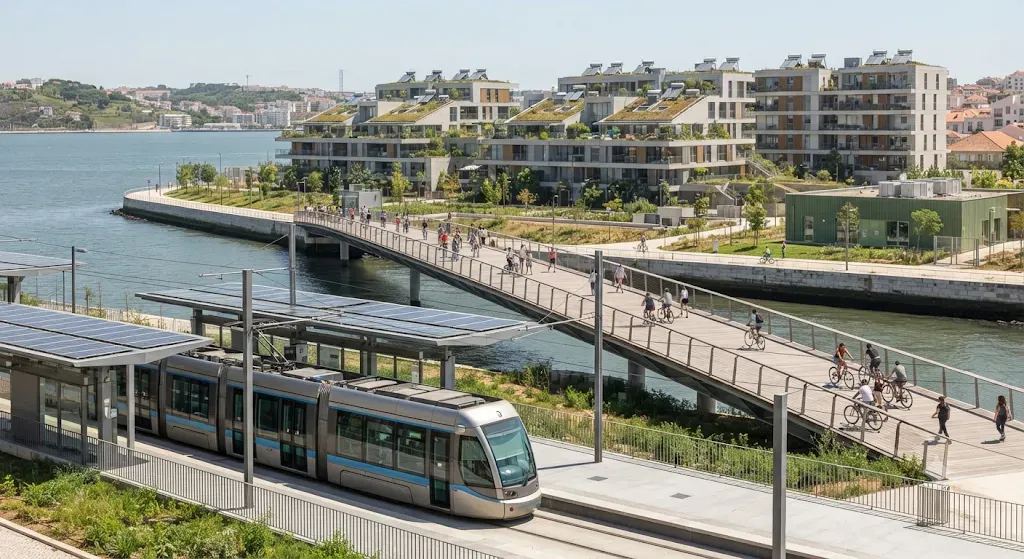
For industrial and infrastructure sectors, the ruling underscores both momentum and execution friction across Poland's green and digital transition. Approved measures span grid modernization across roughly 370 kilometers of transmission lines and 880 kilometers of distribution lines, more than 2,000 megawatt-hours of battery storage capacity, and a District Heating Fund (DHC) projected to mobilize EUR 700 million by 2030. Transport and digital benchmarks include acquiring 1,486 low- and zero-emission buses and 32 trams, launching sector-specific incident response teams supporting over 600 entities, building a renewable-powered data center, and rolling out a Medical Data Warehouse alongside AI-assisted medical imaging tools. Conversely, the offshore wind port gap points to maritime and supply-chain bottlenecks in Baltic energy infrastructure.
For corporate planners and institutional investors, the assessment signals clearer cash-flow visibility on completed grid, transit, healthcare, and cybersecurity initiatives alongside tighter scrutiny on capital-intensive maritime projects. Contractors, utilities, and technology vendors exposed to Polish public investment face heightened compliance and milestone-verification discipline as EU recovery funds wind down. Investors evaluating Baltic offshore wind and port assets should factor potential permitting, construction, or port-readiness delays into project timelines and financing assumptions over the coming months.