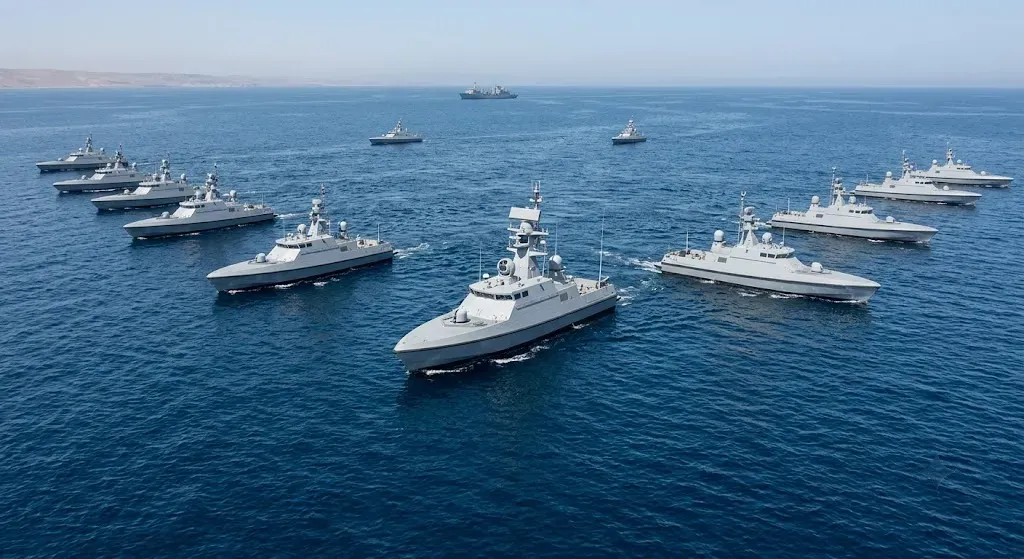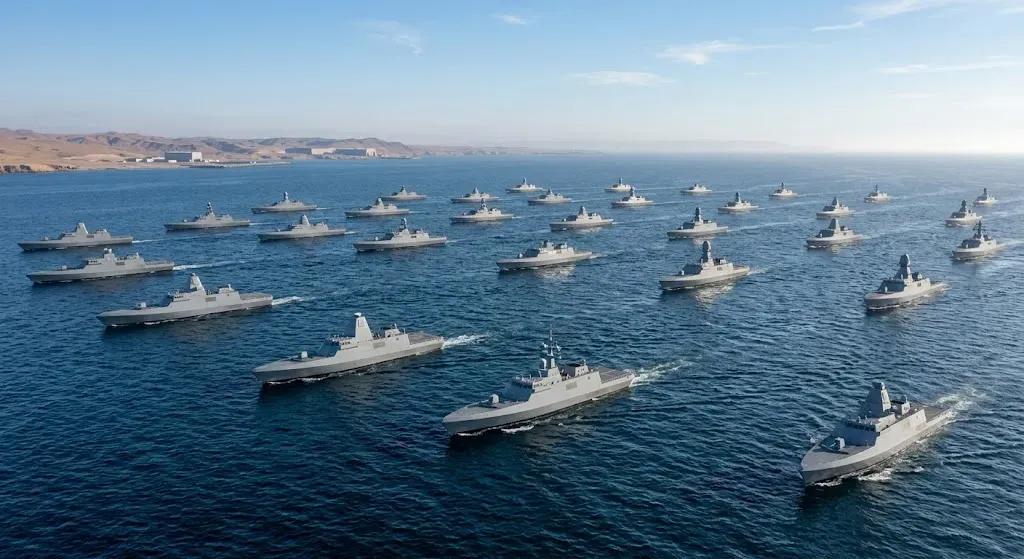
UNITED STATES OF AMERICA —The US Navy is expanding its uncrewed fleet architecture by committing to acquire 30 Medium Unmanned Surface Vessels (MUSVs) following the conclusion of initial sea trial evaluations. Production agreements under Other Transaction Authority (OTA) were granted to Galliano Marine Services, HII, and Saronic Technologies, with each vendor set to deliver 10 vessels at an estimated unit cost of $40 million. Initial deliveries are scheduled to begin before the close of Fiscal Year 2027. Concurrently, Leidos, PAC MAR, and Sea Machines completed prototype project requirements, earning $15 million milestone awards and entry alongside the production awardees into a specialized defense repository for future maritime procurement opportunities.
This initiative reflects a critical shift toward distributed maritime operations designed to counter peer adversaries without exposing naval personnel to high-risk environments. By transitioning autonomous surface platforms from experimental testing into formal acquisition pipelines, defense planners aim to accelerate capability deployment across multi-domain battlefields. The program relies on standardized interfaces through the Navy’s Containerized Capability Campaign, enabling rapid integration of modular weapon systems, surveillance sensors, and electronic warfare suites dynamically tailored to shifting mission requirements.
The procurement significantly impacts defense shipbuilding, autonomous navigation technology, and commercial maritime suppliers. By onboarding multiple non-traditional defense firms and established prime contractors into its maritime marketplace, the military is intentionally broadening its defense industrial base to foster competitive production capacity. Successful execution of these contracts will likely drive further demand for advanced sensing technology, artificial intelligence collision-avoidance software compliant with international maritime navigation rules, and modular mission payloads across commercial and defense industrial domains.
For defense contractors and technology vendors, the multi-sourced procurement model offers actionable entry points into defense hardware supply chains. The move signals stable, long-term government demand for affordable autonomous surface vessels, prompting increased private capital allocation toward autonomous maritime systems. Organizations capable of rapidly scaling vessel manufacturing and developing interoperable software architectures stand to secure follow-on production agreements across broader military acquisition channels.
The United States Navy operates as the maritime service branch of the U.S. Armed Forces responsible for naval warfare and sea control. Overseen by the Department of the Navy, the organization deploys advanced surface ships, submarines, aircraft, and uncrewed systems globally to safeguard international sea lanes and support national defense strategies.