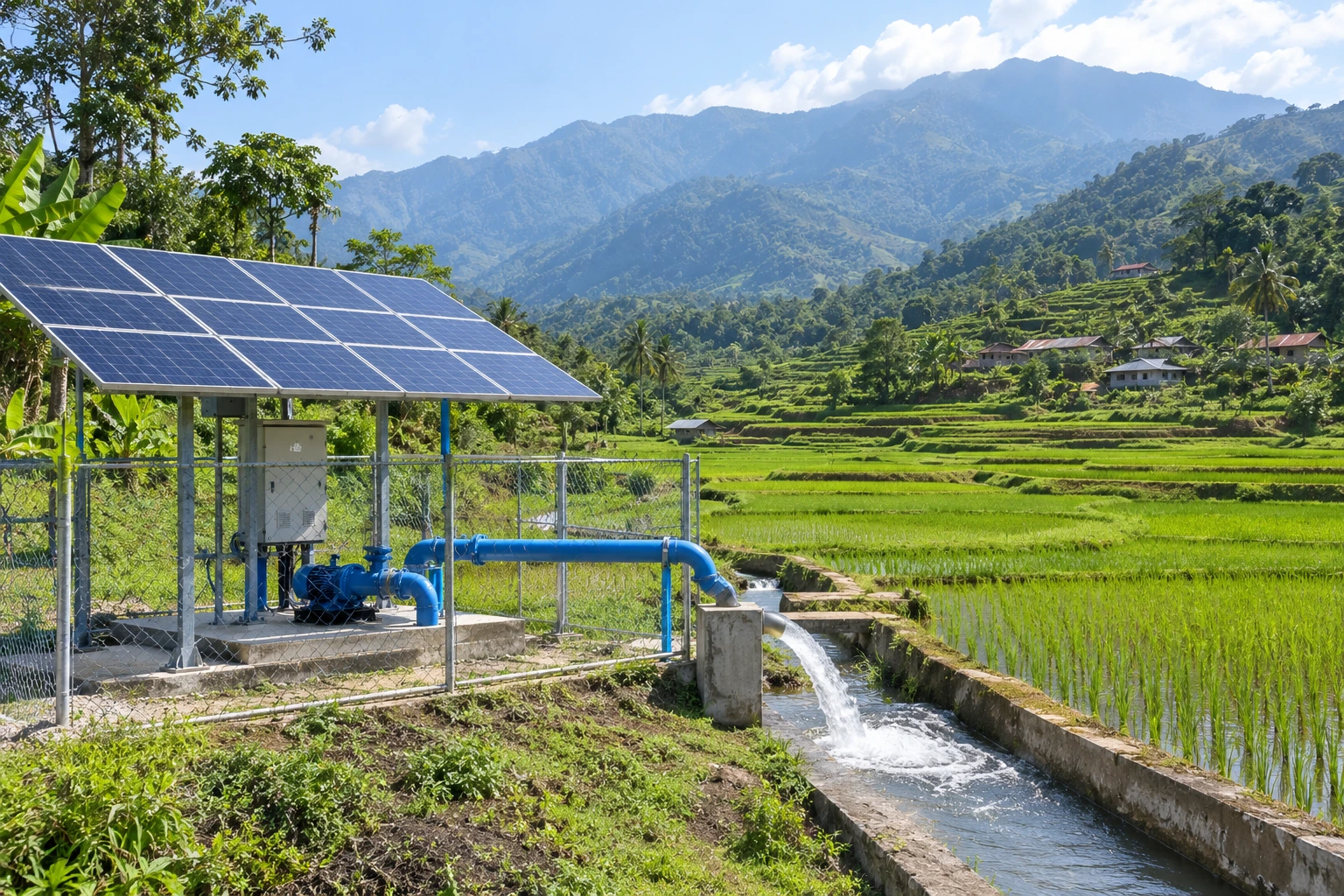
PHILIPPINES —A PHP 1.49 billion infrastructure project drawing water from the Magat Reservoir has officially entered operation in the province of Ifugao, establishing a solar-powered irrigation network designed to mitigate climate risks and stabilize domestic grain output. The Alfonso Lista Pump Irrigation System expands regional coverage from 275 hectares to 2,300 hectares, servicing over 1,300 local farmers across multiple agricultural districts.
The project represents a structural shift toward resilient farming infrastructure in northern Luzon. By shifting local crop production away from seasonal rainfall dependence, the utility ensures a consistent multi-season water supply. Projected annual rice production across the coverage area is expected to scale from 900 metric tons to approximately 26,000 metric tons, expanding regional agricultural economic output nearly tenfold.
The National Irrigation Administration is the primary government agency in the Philippines responsible for public irrigation development and management. It plans, constructs, operates, and maintains irrigation systems nationwide to support rural development and sustain domestic agricultural production.
The deployment of large-scale pump irrigation infrastructure addresses growing vulnerabilities within Southeast Asian agriculture brought about by prolonged dry spells and El Niño weather patterns. Reliable access to water resources allows agricultural operators to transition to two or three planting cycles annually, reducing revenue volatility for rural farming communities.
For agribusinesses, equipment suppliers, and institutional investors, the expansion of modernized irrigation networks signals heightened demand for agricultural inputs, post-harvest logistics, and renewable integration technologies. Continued state capital allocation toward water management infrastructure underpins national food security initiatives and creates stable long-term opportunities for infrastructure contractors specializing in water resources and green energy integration.