FRANCE; UNITED STATES OF AMERICA —Physicl has successfully closed a 10 million USD seed funding round led by Inovia Capital, with participation from US Venture Partners, to scale its synthetic data infrastructure for physical artificial intelligence. Concurrently, the company introduced Studio, a beta platform designed to generate highly controlled, physics-based training environments for machine learning models. This development addresses a fundamental bottleneck in autonomous system development, where real-world data collection often fails to capture rare but critical operational scenarios.
Founded by Alexandre de Vigan, Physicl operates as a specialized developer of simulation-ready, physics-tagged assets aimed at bridging the gap between simulated training and real-world deployment. The organization maintains operational offices in Paris, San Francisco, and New York, employing a multidisciplinary team focused on three-dimensional simulation and machine learning integration. By providing exact ground-truth labels derived directly from scene geometry rather than post-processed estimations, the company offers a distinct alternative to traditional computer vision data pipelines.
The strategic importance of this advancement lies in its capacity to isolate and replicate model failure points. Physical AI systems, including autonomous vehicles and advanced robotics, frequently encounter edge cases that are statistically improbable to capture through conventional data scraping. Studio enables engineering teams to define specific failure conditions and systematically generate thousands of variations by manipulating individual variables such as lighting, object clutter, or camera positioning. This controlled variability ensures models are exposed to comprehensive edge-case scenarios prior to physical deployment, significantly reducing simulation-to-reality performance degradation.
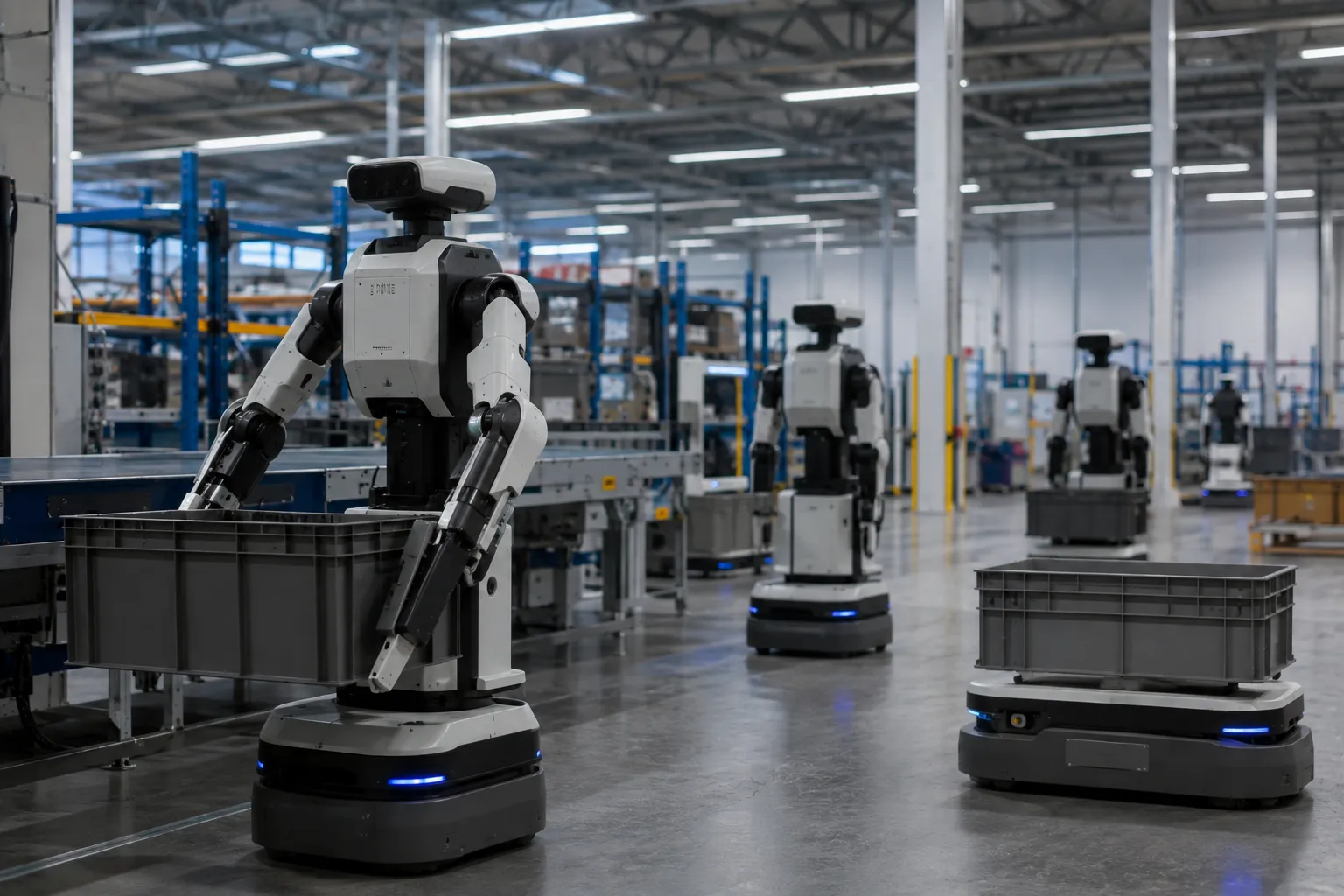
Industries heavily reliant on robust computer vision and world models stand to benefit directly from this infrastructure. Stakeholders encompass academic research laboratories, enterprise robotics developers, and autonomous navigation firms seeking to accelerate model iteration cycles without the prohibitive costs of physical data collection. The injection of seed capital will primarily facilitate team expansion across the United States and France, alongside further technical refinement of the Studio platform.
From a market perspective, this funding event underscores a broader shift in artificial intelligence investment toward foundational data generation tools. As the limitations of scraped internet data become increasingly apparent for spatial and physical applications, investor capital is actively redirecting toward synthetic data solutions that guarantee precision, scalability, and regulatory compliance. This trend positions specialized data infrastructure providers as critical enablers for the next generation of autonomous technologies.