INDIA —Union Agriculture and Rural Development Minister Shivraj Singh Chouhan and Madhya Pradesh Chief Minister Mohan Yadav are set to jointly inaugurate both phases of the Seep-Ambar Irrigation Project at Bhairunda in the Sehore district of Madhya Pradesh. Built at a capital cost of INR 5.36 billion, the two-phase scheme is designed to deliver irrigation water to 30,091 hectares of farmland across 76 villages within the Bhairunda block of the Budhni Assembly constituency, alongside accompanying development and construction works valued at INR 414.4 million in the block. The Government of Madhya Pradesh oversees state-level agricultural and water resource execution across the state, while the Union Ministry of Agriculture and Rural Development leads national rural and agricultural policy initiatives.
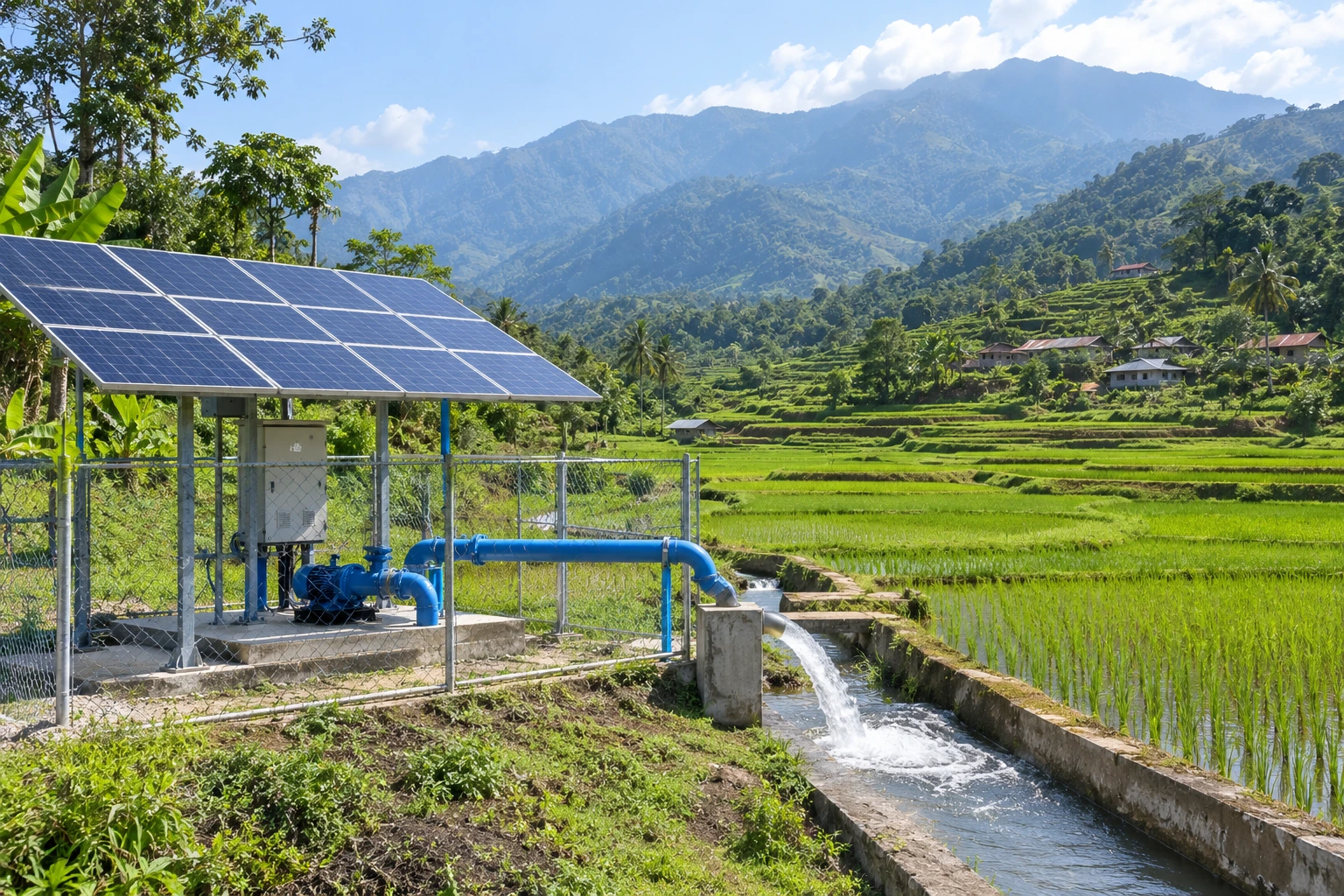
Shifting agricultural water delivery from open channels to lift-based underground pressurised pipelines addresses two persistent bottlenecks in regional farming: transit losses from seepage and evaporation, and uneven water availability during critical crop cycles. By lifting water from the Narmada River through pump houses and routing it via closed conduits, the system supports micro-irrigation methods such as sprinkler and drip setups, allowing cultivators to manage water application more tightly across seasonal cropping windows. Both phases were delivered within a 36-month construction schedule, establishing a defined execution benchmark for medium-scale state lift irrigation assets.
For agriculture and water infrastructure stakeholders in central India, the project underscores how state-backed lift irrigation is evolving from civil canal construction toward engineered water-conveyance and water-use efficiency. Phase one spans 15,284 hectares across 47 villages with a 16.57-km pipeline at a cost of INR 3.46 billion, while phase two covers 14,807 hectares across 29 villages with a 24.09-km pipeline at a cost of INR 1.90 billion. Pairing capital expenditure with micro-irrigation compatibility aligns regional farm output with water-conservation priorities, especially in rain-fed or semi-regulated belts where input reliability shapes crop selection and yield stability.
From a commercial and investment standpoint, the inclusion of a five-year operation and maintenance obligation by the executing construction agencies shifts post-handover performance risk toward project builders during the initial operational years. For EPC contractors, pump and valve suppliers, and micro-irrigation equipment providers, turnkey pipeline projects that bundle multi-year O&M reward reliable engineering, durable pipeline materials, and measurable uptime rather than one-off civil execution. Investors tracking state infrastructure capex should watch how post-commissioning maintenance covenants perform in practice and how complementary rural works in Bhairunda support broader farm productivity.