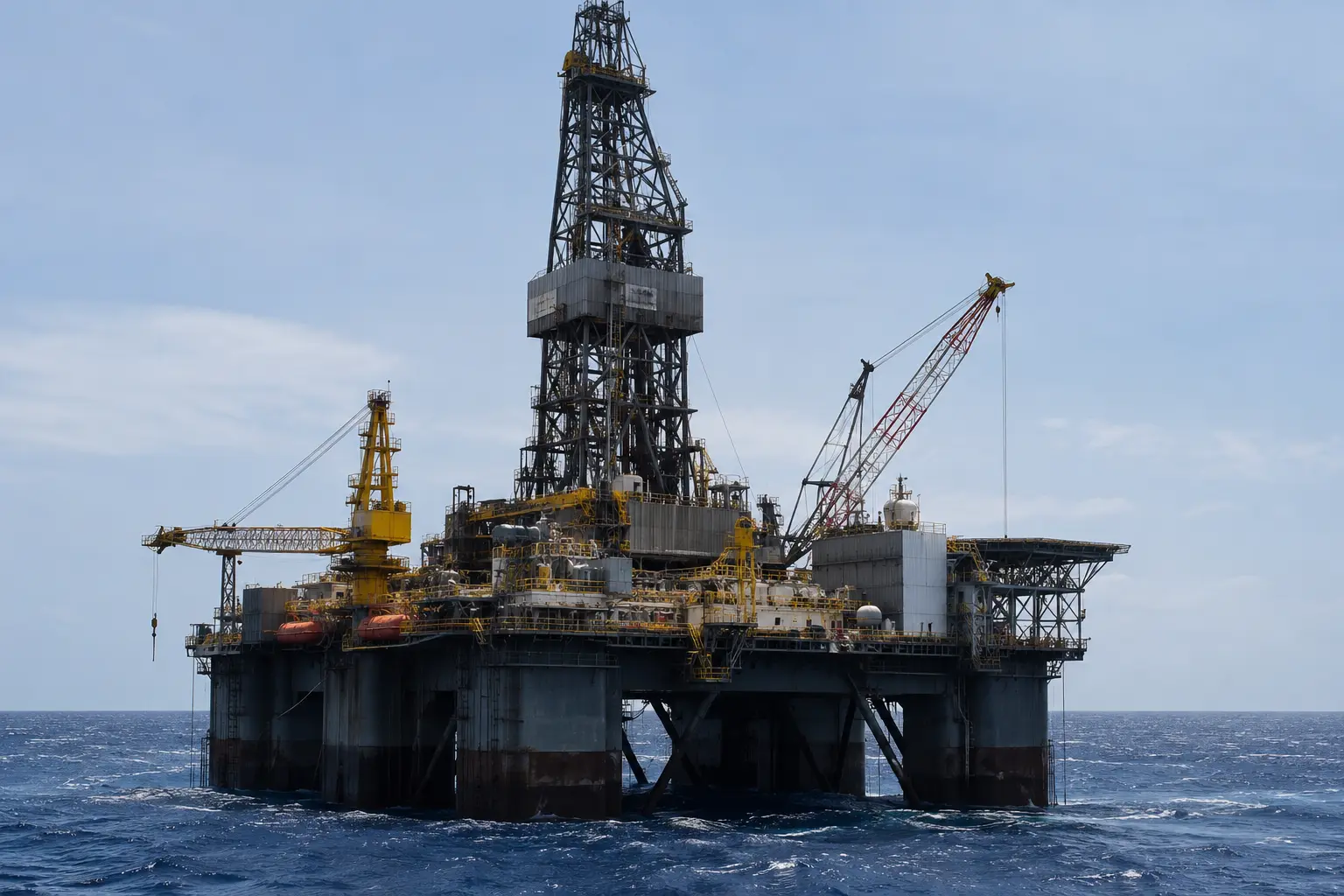
NAMIBIA; QATAR —State-backed hydrocarbon producer QatarEnergy has finalized an agreement to acquire a 25 percent participating interest in an offshore exploration license located off the coast of Namibia. The transaction involves Petroleum Exploration License 0082, commonly known as PEL82, which encompasses blocks 2112B and 2212A. The interest is being acquired from Chevron Namibia Exploration II Limited, a subsidiary of U.S. energy major Chevron. Upon completion, Chevron will maintain operational control with a 55 percent stake, while Namcor E&P and Custos Energy will each retain their respective 10 percent holdings. The agreement remains subject to customary regulatory clearances and administrative approvals.
The acquisition represents a strategic maneuver for stakeholders seeking to expand operations within emerging African hydrocarbon frontiers. The PEL82 license zone covers approximately 11,444 square kilometers in deepwater environments, with water depths ranging from 350 to 2,300 meters. For QatarEnergy, the transaction serves to diversify its international upstream asset portfolio by gaining exposure to prospective Atlantic margin basins. Meanwhile, Chevron continues to consolidate its operational leadership within the region, orchestrating multi-partner exploration frameworks designed to evaluate deepwater potential in Namibian waters.
This development carries significant implications for the global upstream oil and gas sector, particularly concerning exploration expenditures in Southern Africa. Namibia has increasingly emerged as a focal point for offshore deepwater discoveries, drawing substantial capital allocation from major international energy corporations. The entry of a major producer like QatarEnergy reinforces the commercial viability of the region and signals sustained investor confidence in complex deepwater drilling projects despite broader macroeconomic headwinds.
For corporate entities and financial markets, the transaction underscores the ongoing trend of portfolio restructuring and asset rationalization among multinational operators. Joint venture arrangements in high-cost, high-reward frontier basins allow companies to mitigate exploration risk while sharing capital expenditure burdens. Market participants and regional policymakers will monitor the progression of exploration activities within PEL82 closely, as initial seismic and drilling results could heavily influence future capital deployment and valuation benchmarks across the local energy sector.